#async coding agent
321 related articles
 Tech Frontiers
·2 min
GitHub Copilot Cloud Agents Now Support Fully Configured Development Environments
GitHub Copilot Cloud Agents now support fully configured dev environments with repo cloning, dependency installation, and toolchain credentials—evolving AI from code completion to autonomous development.
Read more →
 Tech Frontiers
·3 min
GitLab's Major Restructuring: Layoffs, Flattening, and a Bold Bet on the AI Agent Era
GitLab announces Act 2 restructuring: cutting 30% of operating countries, removing three management layers, splitting R&D into 60 autonomous teams. A deep dive into GitLab's Jevons Paradox bet on the AI agent era.
Read more →
 Deep Dives
·3 min
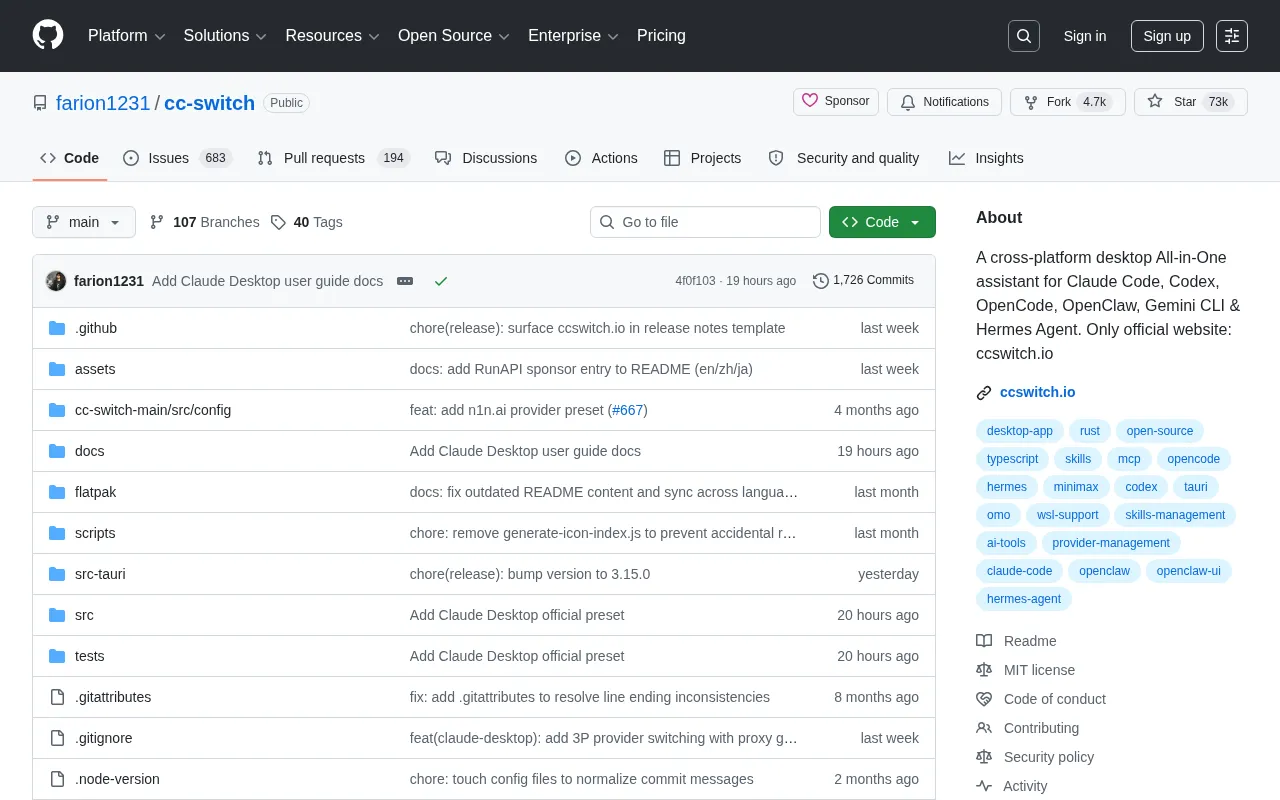
CC-Switch: An Open-Source Desktop Tool to Manage Six Major AI Coding Assistants in One Interface
CC-Switch is a Rust-based cross-platform desktop app that unifies Claude Code, Codex, Gemini CLI, and three other AI coding assistants in one interface, with 67,000+ GitHub Stars.
Read more →
 Product Reviews
·3 min
GSD-2 Open Source Project Deep Dive: How Meta-Prompting + Context Engineering Keep AI Agents Working Autonomously Without Drifting
Deep dive into GSD-2's three core technologies: meta-prompting, context engineering, and spec-driven development — solving the problem of AI agents drifting off-target during long tasks.
Read more →
 Product Reviews
·2 min
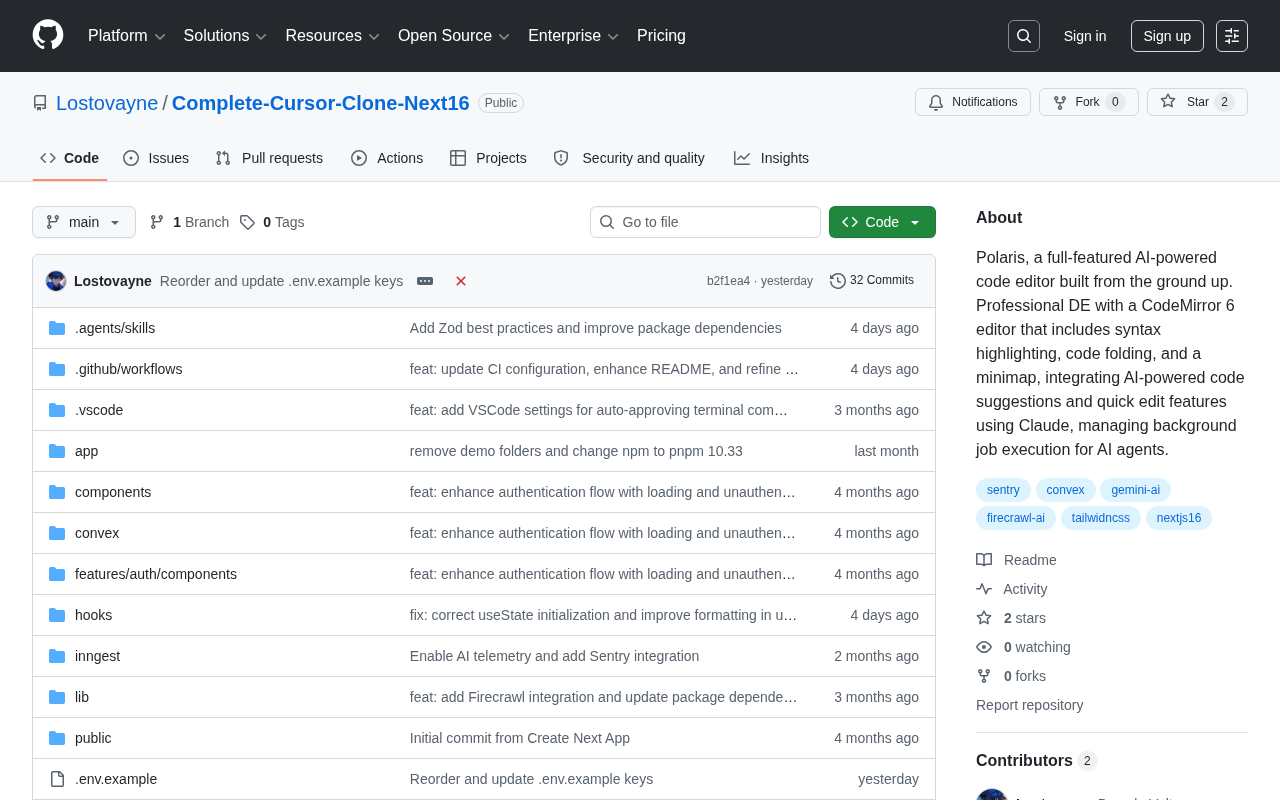
Polaris Open Source Project: Building a Cursor Clone AI Code Editor from Scratch
Deep dive into Polaris, an open-source AI code editor built from scratch with Next.js 16 and CodeMirror 6 to clone Cursor's core features, integrating Claude AI for intelligent completions and background agents.
Read more →
 Product Reviews
·3 min
Refly Open-Source Agent Skills Builder: A New Paradigm for Cross-Platform AI Skill Development
Deep dive into Refly, an open-source Agent Skills Builder featuring Vibe Workflow visual skill definition, cross-platform execution on Claude Code/Cursor, and a new "skills as infrastructure" paradigm for AI Agent development.
Read more →
 Product Reviews
·2 min
LobeHub Deep Dive: The Multi-Agent Collaboration Platform with 75K GitHub Stars
A deep dive into LobeHub, the open-source multi-agent collaboration platform with 75K+ GitHub stars. Explore its Find, Build, and Collaborate capabilities built on TypeScript.
Read more →
 Tech Frontiers
·2 min
Breaking Down the Claude Code SDK Demo Project: Hands-On AI Agent Development from Anthropic's Open Source Release
Deep dive into Anthropic's open-source claude-agent-sdk-demos project, covering Claude Code SDK core capabilities, TypeScript demos, multi-step task orchestration, and tool call integration for AI agent development.
Read more →
 Product Reviews
·2 min
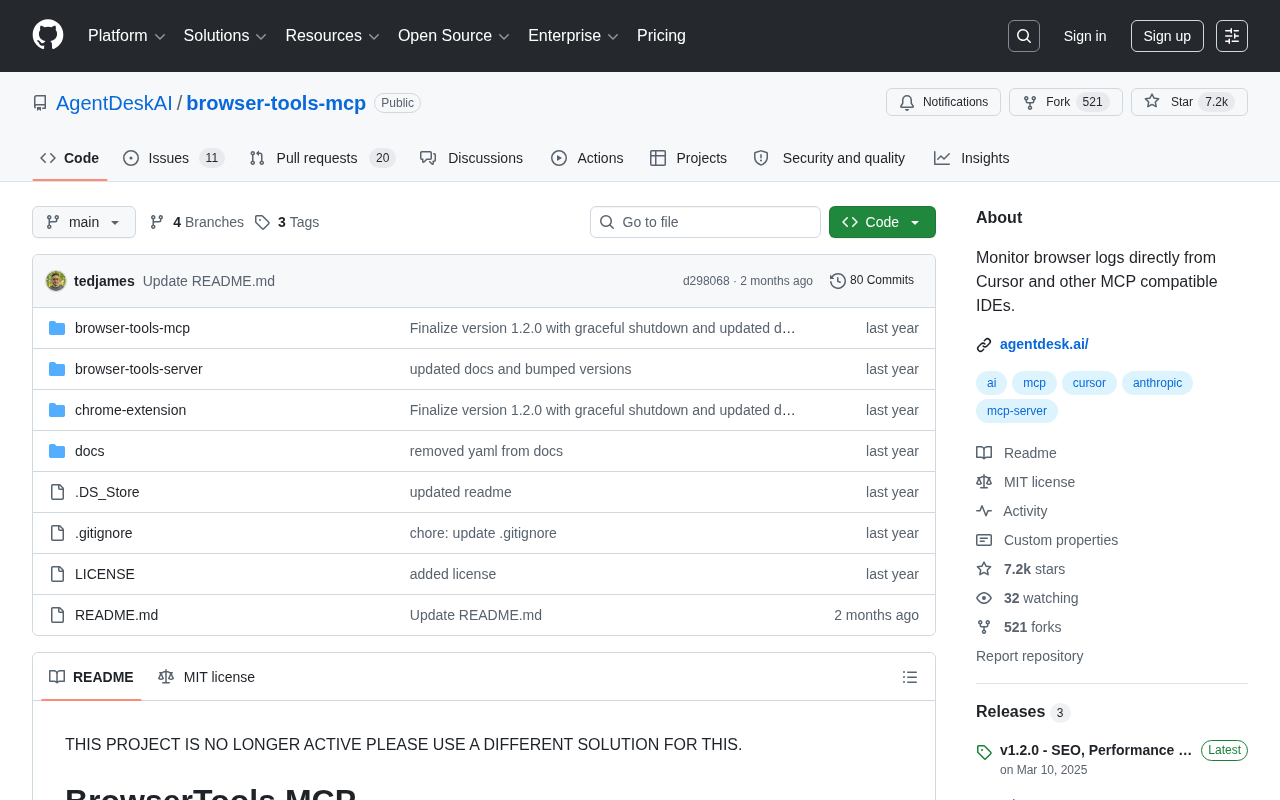
Browser Tools MCP: A Debugging Power Tool That Lets Cursor Read Browser Logs Directly
Browser Tools MCP syncs browser console logs, network requests, and JS errors to IDEs like Cursor via the MCP protocol, enabling AI-powered intelligent debugging.
Read more →
 Product Reviews
·1 min
Codex: An Open-Source Coding Agent Tool with Multi-Model Support
Codex is an open-source coding agent built in Rust that supports OpenAI, Anthropic, and Gemini models, offering developers a flexible multi-model AI programming tool.
Read more →
 Product Reviews
·3 min
Artificial: A Go-Based Framework for Orchestrating Claude Code and Multiple AI Coding Assistants
Artificial is a Go open-source multi-agent orchestration framework that unifies Claude Code, OpenAI Codex, Cursor Agent, and local models for parallel AI coding workflows.
Read more →
 Product Reviews
·3 min
mcproc: A Deep Dive into the MCP-Based AI Agent Process Management Server
mcproc is a Rust-based MCP server that gives AI agents background process management capabilities. This article covers its architecture, use cases, and value in the AI toolchain ecosystem.
Read more →
 Product Reviews
·2 min
Cyrus Open Source Project: A Self-Hosted Claude Code Background Programming Agent
Cyrus is an open-source AI programming agent supporting self-hosted deployment, integrating Linear, Slack, GitHub, and multiple AI models like Claude, Codex, and Gemini for secure automated coding workflows.
Read more →
 Product Reviews
·2 min
nmem Open-Source Project Explained: A Six-Layer Memory Architecture That Makes AI Agents Smarter Over Time
Deep dive into nmem, an open-source AI Agent memory system featuring a six-layer memory hierarchy, hybrid search, confidence decay, cross-agent knowledge sharing, MCP integration, and more.
Read more →
 Product Reviews
·2 min
ccpocket: An Open-Source Client for Remotely Controlling Claude/Codex Programming Agents from Your Phone
ccpocket is an open-source Flutter mobile client using WebSocket bridging to remotely control Codex and Claude AI coding agents from your phone in real time.
Read more →
 Product Reviews
·3 min
Codexia Open-Source Tool Explained: A Multi-AI Coding Agent Collaboration Workstation
Deep dive into Codexia, an open-source AI coding agent workstation supporting Codex CLI and Claude Code multi-agent collaboration with task scheduling, Git Worktree parallel development, remote control, and skill management.
Read more →
 Tutorials
·4 min
Claude Workflow V2: A Hands-On Deep Dive into the Four Core Modules — Agents, Skills, Hooks & Commands
Deep dive into Claude Workflow V2's four core modules: agents for multi-agent collaboration, skills for reuse, hooks for event handling, and commands for unified orchestration—turning Claude Code into an automated workflow platform.
Read more →
 Product Reviews
·3 min
Anything Analyzer: An All-in-One Protocol Analysis Tool Integrating Packet Capture, MITM Proxy, and AI Analysis
Deep dive into Anything Analyzer: an open-source tool integrating browser packet capture, MITM proxy, JS Hook, fingerprint spoofing, AI analysis, and MCP Server for protocol analysis and security research.
Read more →
 Tutorials
·3 min
Codex CLI /goal Command Explained: Set a Goal and Auto-Loop Until Completion
Codex CLI 0.128.0 adds the /goal command for goal-driven auto-loop execution. This article explains its core mechanism, prompt engineering implementation, and Ralph Loop pattern for AI coding agents.
Read more →
 Product Reviews
·4 min
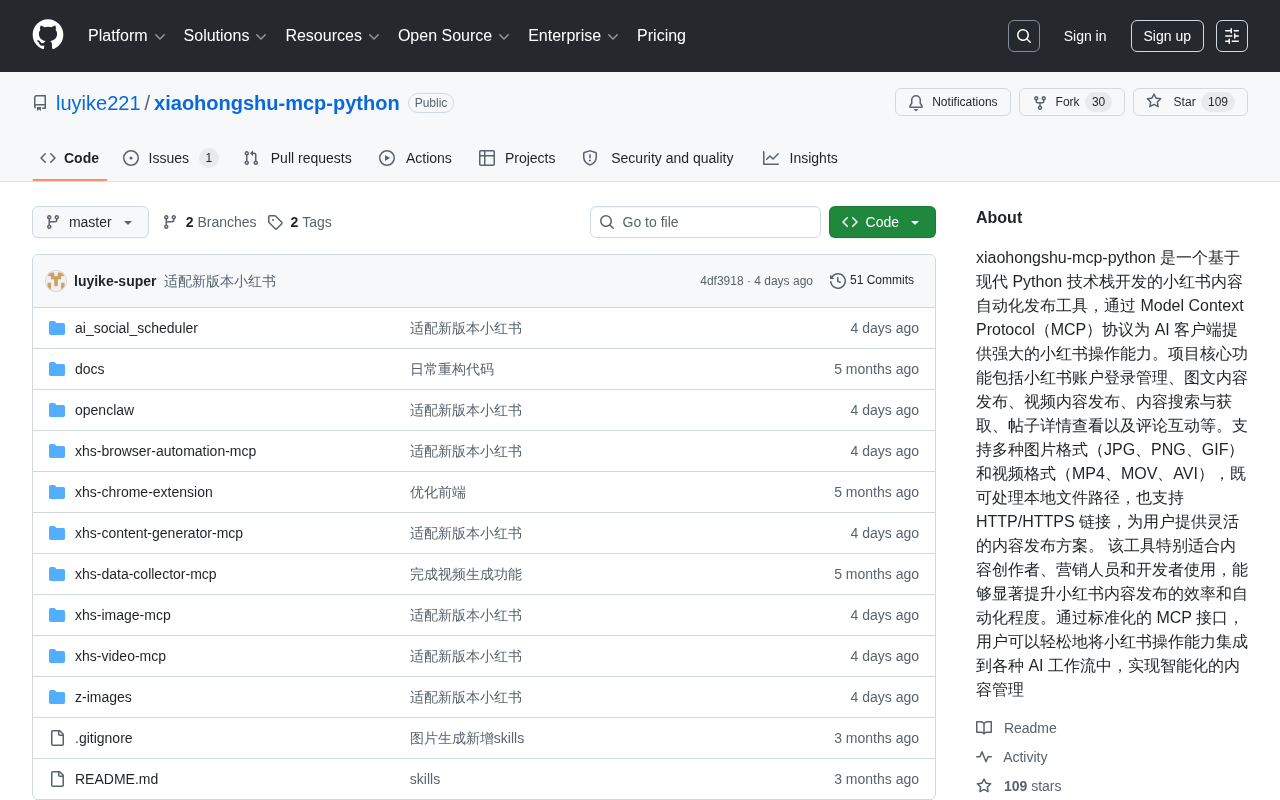
Xiaohongshu MCP Automation Tool: Complete Content Operations Through AI Conversations
Deep dive into xiaohongshu-mcp-python: an open-source tool using MCP protocol for AI-driven Xiaohongshu automation including publishing, search, and engagement.
Read more →