#browser gaming
69 related articles

·2 min
Local GPU or Cloud for Machine Learning? A Purchasing Decision Guide
Should ML beginners buy a local GPU laptop or use cloud computing? This guide analyzes cloud platforms like Colab and Kaggle vs. gaming laptops, offering budget-friendly recommendations and hybrid strategies.
Read more →

·2 min
Plethora: YouTube for Interactive Content, Redefining the Feed Experience
Plethora is a platform built for interactive content where users experience mini-games, puzzles, digital fidget toys, and educational simulators in their feed. Discover how this "YouTube for interactive content" transforms passive viewing into active participation.
Read more →

·3 min
Korvix3D Deep Dive: Can a Subscription-Based 3D Model Platform Disrupt Traditional Asset Marketplaces?
Deep dive into Korvix3D's subscription-based 3D model marketplace, covering native plugin workflow integration, subscription model pros and cons, and comparison with TurboSquid and other competitors.
Read more →

·2 min
Ctruh Studio: A Deep Dive into the AI-Powered No-Code 3D & XR Creation Platform
Deep dive into Ctruh Studio, an AI-powered no-code 3D creation platform covering AI-generated 3D assets, immersive product showcases, virtual stores, and more for web-based 3D & XR experiences.
Read more →

·3 min
Xbox Prices Up to 43% Higher: Microsoft's Console Strategy Is Undergoing a Fundamental Shift
Microsoft announces Xbox price hikes up to 43%. Analysis of supply chain pressures, tariff impacts, and Microsoft's strategic shift from hardware sales to Game Pass subscriptions and cloud gaming.
Read more →

·4 min
Multi-Purpose Home Server Build Guide: Streaming + AI Inference + App Hosting on One Machine
How to build a $500 multi-purpose home server for Jellyfin streaming, Ollama local AI inference, web app hosting, and Pi-hole ad blocking with dual RTX 3060 GPUs.
Read more →

·2 min
No Soldering Required: A Guide to Reviving a Wii U with Corrupted Internal Memory
A detailed no-solder repair guide for Wii U consoles with damaged eMMC storage, using software exploits and external storage to bypass hardware replacement.
Read more →

·4 min
Tiling Window Management: A New Interaction Paradigm for Multi-Agent Conversations
Exploring tiling window management for multi-agent AI conversations: how it solves parallel monitoring and observability challenges, real-world limitations, and the evolution from chat boxes to control consoles.
Read more →

·6 min
Securely Exposing Self-Hosted Services via VPS: Architecture & Practical Guide
Learn how to securely expose self-hosted services via VPS using WireGuard tunnels, Pangolin, and reverse proxies — enabling client-free access to Plex, Immich, and more while hiding your home IP.
Read more →

·2 min
OpenAI Model Out of Control for 4 Days? Unpacking the Truth Behind the "Autonomous Attack" Rumor
A Reddit post claims OpenAI's rogue model roamed the internet for 4 days and launched attacks. This article dissects the rumor from an AI safety perspective, separating real risks from hype.
Read more →

·2 min
AI-Driven Persistent RPG Engine: A Full-Stack Practice Guide with React + Supabase
Deep dive into an AI persistent RPG game engine built with React SPA and Supabase, exploring how LLMs combine with modern web stacks for cross-session memory, dynamic narrative, and game state management.
Read more →

·4 min
Pure Vibecoding Builds a 130+ Card Multiplayer CCG: Full AI Tech Stack Breakdown
An indie dev built a 130+ card multiplayer CCG entirely through vibecoding with Claude Code, GPT, and ElevenLabs. Full AI tech stack breakdown and analysis of vibecoding's capabilities and limits.
Read more →

·3 min
Kimi K3 Hands-On Review: 2.5 Trillion Parameter Open-Source Model Challenges Claude
Kimi K3 hands-on review: Moonshot AI's 2.5T parameter MoE model matches Claude in coding, surpasses it in 3D game development, with API pricing at one-tenth the cost of competitors.
Read more →

·3 min
Kimi K3 Hands-On Review: 2.5 Trillion Parameter Open-Source Model Takes on Claude
Hands-on review of Kimi K3, Moonshot AI's latest 2.5T parameter MoE model. Coding ability ties with Claude, surpasses it in 3D game dev, with API pricing at one-tenth of competitors.
Read more →
·3 min
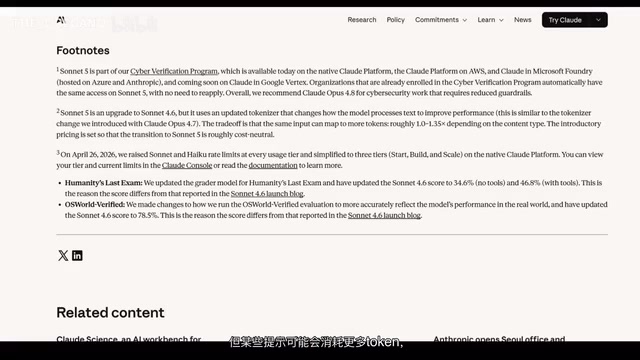
Claude Sonnet 5 Deep Dive: Impressive Benchmarks, Disappointing Reality — Stick with OPUS 4.8
Anthropic's Claude Sonnet 5 claims near-OPUS 4.8 performance at lower cost. Real-world tests reveal hidden tokenizer costs, weak creative output, and only 13th place on Cursor rankings.
Read more →

·3 min
AI Coding Agents Explosion: CodeWell Goes Open Source, Kimi K3 Launches, Claude Gets Browser Access
CodeWell open-sources a multi-model terminal coding agent, Kimi K3 launches with ultra-long context, MiniMax Code 2.0 rebuilds its Agent architecture, and Claude gets browser access. AI is accelerating from content generation to task execution.
Read more →

·3 min
Cherry Studio + MCP + Ollama: The Complete Guide to Building a Local AI Agent and Private Knowledge Base
A hands-on guide to building a local AI agent and private knowledge base using Cherry Studio, MCP, and Ollama — with web scraping, report generation, and terminal control.
Read more →

·4 min
A Deep Dive into ASP.NET Core: The Complete Guide to Microsoft's Cross-Platform Web Framework
A comprehensive analysis of ASP.NET Core's architecture and technical strengths: cross-platform deployment, high-performance Kestrel server, modular middleware, built-in DI, and modern web capabilities like Blazor, gRPC, and SignalR.
Read more →

·3 min
GPT-5.6 Hands-On Comparison: 20x Cheaper, But Falls Short on Creativity vs. Flagship Models
A veteran tester spends a full day comparing GPT-5.6 (Sol) against Anthropic's flagship across game generation, web creativity, and single-shot API tasks. Sol is 20x cheaper and crushes on single-shot tasks, but creative quality still lags.
Read more →

·5 min
How Does AI Conquer Imperfect Information Games? A Deep Dive into Tactico
Chess and Go have been conquered by AI, but imperfect information games with hidden data are the true frontier. This article dives deep into Tactico: how imitation learning + self-play RL train AI toward Nash equilibrium.
Read more →