#citation verification
126 related articles

·4 min
The More Complex the AI Agent, the More It Hallucinates? The Hidden Cost of Architectural Complexity
Why do AI Agents hallucinate more as they grow more complex? This article analyzes the causes from error accumulation, context noise, and model completion nature, with 5 practical production strategies.
Read more →

·3 min
Build RAG and AI Agent Projects at Zero Cost: A Practical Guide to Open-Source Tools
Build high-quality AI projects on a budget. Learn how to use Ollama, Groq, Chroma, and other free open-source tools to build RAG systems and multi-Agent workflows from scratch.
Read more →
·3 min
Build RAG and AI Agent Projects at Zero Cost: A Practical Guide to Open-Source Tools
Build high-quality AI projects on a budget. Learn how to use Ollama, Groq, Chroma, and other free open-source tools to build RAG systems and multi-Agent workflows from scratch.
Read more →

·2 min
Multi-Agent Collaborative Paper Writing System: End-to-End Automation with FastAPI + Vue 3
An in-depth look at an intelligent paper writing platform built on FastAPI + Vue 3, combining LLM, RAG, and multi-Agent collaboration for full-process automation—an excellent case study for AI developers.
Read more →

·3 min
Kimi K3 Shakes the World: Is Open-Source AI Closing the Gap?
Moonshot AI's 2.8T-parameter open-weight model Kimi K3 rivals Anthropic and OpenAI flagships, sparking a new 'DeepSeek moment' and challenging U.S. AI dominance.
Read more →

·3 min
Connecting Zotero to AI via MCP: A Complete Zero-Cost Guide to Generating Real Literature Reviews
Connect your local Zotero library to AI via MCP protocol to eliminate hallucinated citations. Full guide covering UV, Zotero setup, and OpenCode with free DeepSeek.
Read more →

·2 min
Where Does AI Hallucination Come From — And Why Is It So Hard to Eliminate?
AI hallucination is an inherent product of LLMs' probabilistic generation, not a simple bug. Explore its causes, RAG's limitations, and why "zero hallucination" is nearly impossible.
Read more →

·3 min
Java Developers Transitioning to AI: A Practical Guide to Building RAG Knowledge Bases
How can Java developers break into AI? This guide covers the AI application engineer career path, RAG knowledge base fundamentals, vector database retrieval, and enterprise-grade RAG challenges.
Read more →
Getting Legal AI Right: Why the Coding…
·2 min
Getting Legal AI Right: Why the Coding Agent Paradigm Doesn't Translate
Most legal AI products are just general-purpose models wrapped in RAG and prompt engineering scaffolding. Learn why the coding agent paradigm fails in law and what real legal AI requires.
Read more →
·3 min
Perplexity AI Deep Dive: The Perfect Fusion of Search Engine and AI Q&A
Deep dive into Perplexity AI: real-time web search + multi-model AI, transparent citations, Focus Modes, PDF chat, and collaborative Collections. Can it replace Google and ChatGPT?
Read more →

·2 min
RAG Source Attribution Broken? 5 Battle-Tested Chunk-Level Provenance Lessons
5 battle-tested chunk-level provenance lessons for production RAG systems — covering deterministic IDs, hallucination detection, vector store decoupling, and faithfulness checks.
Read more →

·5 min
Open-Source MCP Server: Automatically Verifying the Authenticity of AI-Generated Paper Citations
AI "citation hallucination" threatens academic integrity—LLMs generate perfectly formatted but nonexistent references. This open-source MCP server verifies AI citations in real time against CrossRef, PubMed, and more, catching fakes at the source.
Read more →
·5 min
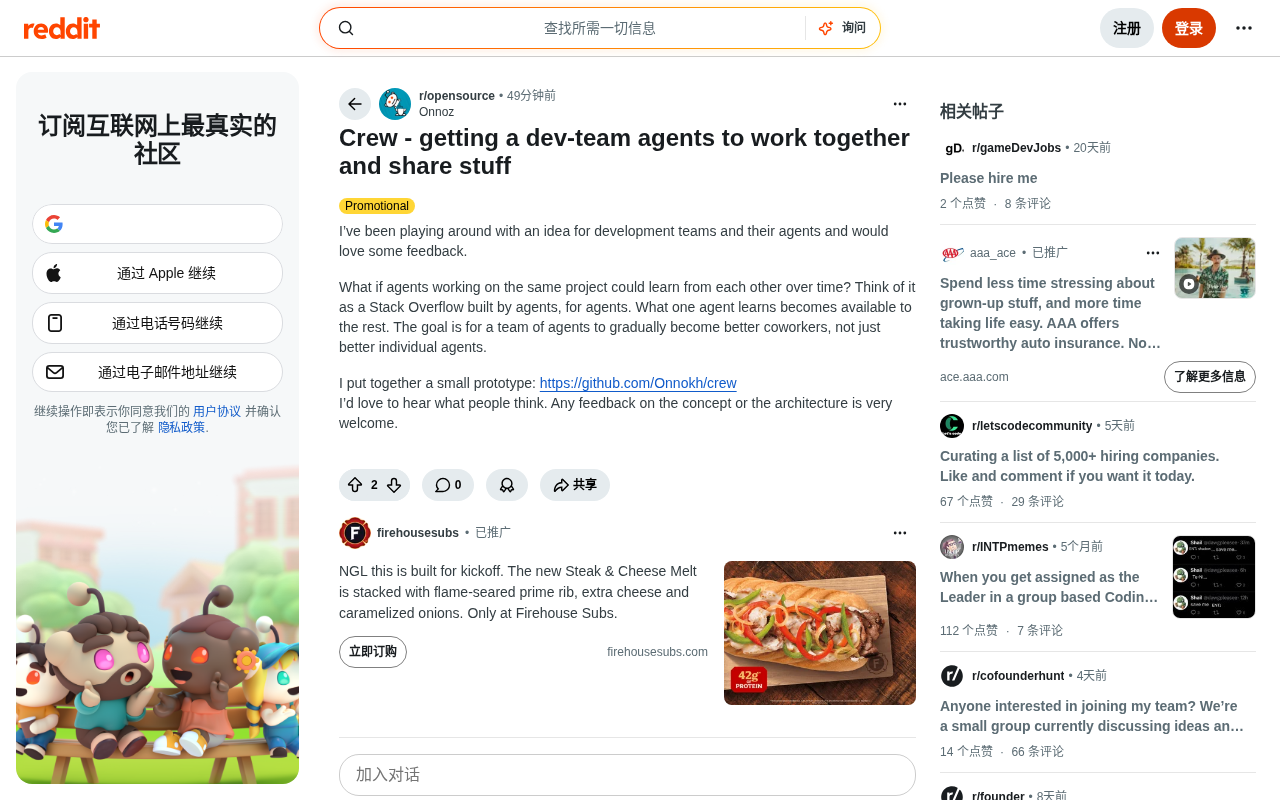
Crew: Enabling Multiple AI Agents to Collaborate and Share Knowledge Like a Team
Crew is an open-source AI agent collaboration framework whose core idea is to build a "Stack Overflow" for agents—letting multiple agents share experience and accumulate knowledge, shifting from optimizing single agents to building evolving teams.
Read more →
·4 min
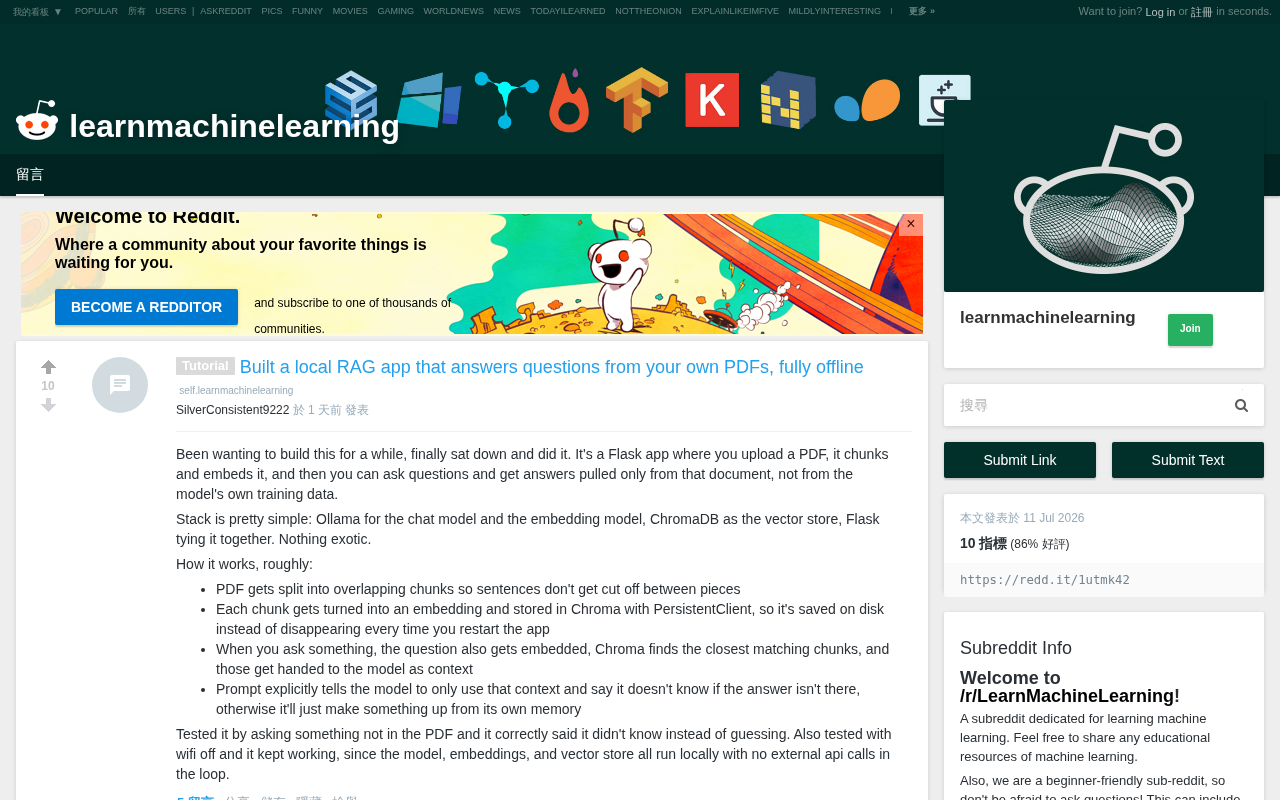
Building an Offline RAG Application from Scratch: A Complete Guide to a Private PDF Knowledge Base
A step-by-step breakdown of building a local RAG app: Ollama local models + ChromaDB vector database + Flask, enabling PDF document Q&A, fully offline operation, and zero data leakage. Perfect for developers new to RAG.
Read more →

·4 min
AI Agents Powering the Full Research Pipeline: A Practical Guide to Automation from Topic Selection to Publication
Learn how to use AI Agents to link the entire research pipeline—from literature management, data analysis, and paper writing to scientific illustration and dissemination—building a reusable research automation workflow with NotebookLM, N8N, and Ollama.
Read more →
Can AI Prove Mathematical Conjectures?…
·5 min
Can AI Prove Mathematical Conjectures? The Truth Behind the GPT-5.6 Incident and the Limits of Large Language Models
A PDF claiming GPT-5.6 Sol Ultra proved the Cycle Double Cover Conjecture sparked debate on Hacker News. We unpack the truth and the limits of LLMs in math proofs.
Read more →

·3 min
GPT-5.6 Deep Dive: Sol Flagship Model Performance, Weaknesses, and Competitive Analysis
Deep dive into GPT-5.6 (Sol/Terra/Luna): one-shot complex coding, agentic workflows, benchmark wins over Claude — but hallucination and vision still lag. Must-read for developers.
Read more →

·7 min
50 AI Research Job Applications to FAANG, 0 Replies? Unpacking the Truth Behind the Job Search Struggle
An AI research engineer with 3 years of experience sent 50 applications to FAANG with zero replies. This article breaks down the hidden barriers of top-tech AI roles, the truth about LinkedIn ghost jobs, and the MLE vs. Research Engineer divide.
Read more →

·4 min
LLMs as Technical Editors: Real-World Strengths, Limitations, and Hidden Risks
Can LLMs handle technical documentation editing? Drawing on Hacker News practitioner discussions, this article analyzes the real strengths and risks of using ChatGPT and Claude for technical writing.
Read more →

·7 min
Previewing the AI Engineer Summit: Industry Signals of AI Engineering Reaching Maturity
An exclusive look at the AI Engineer Summit dress rehearsals, decoding the paradigm shift from research to production. A deep dive into AI Engineer challenges, RAG, agent systems, and AI engineering as a distinct discipline.
Read more →