#codebase understanding
1520 related articles

·3 min
Arcaide: Understanding Codebase Structure Through Multi-Level Call Graph Visualization
Arcaide is a code comprehension tool based on multi-level call graphs, helping developers explore function calling relationships from macro to micro, speed up onboarding, assess change impact, and identify technical debt.
Read more →

·3 min
The Rise and Fall of Programming Languages: The Interplay of Ecosystems, Markets, and Communities
An in-depth analysis of the forces driving programming language rise and fall—ecosystems, market shifts, corporate backing, and technical inertia—to help developers make rational technology choices.
Read more →

·2 min
Cursor Pro vs SuperGrok: Which Is More Cost-Effective? A Deep Dive into Grok 4.5 Token Economics
Deep comparison of Cursor Pro vs SuperGrok for Grok 4.5 token value. Analyzes platform metering differences, provides testing methods, and offers guidance for choosing the best AI subscription.
Read more →

·2 min
AI Writes Better Code Than You — Should Programmers Still Code by Hand or Let Go?
When AI generates better code than you write by hand, should programmers still code themselves? Explore how to balance efficiency with skill growth in the AI coding era.
Read more →
·3 min
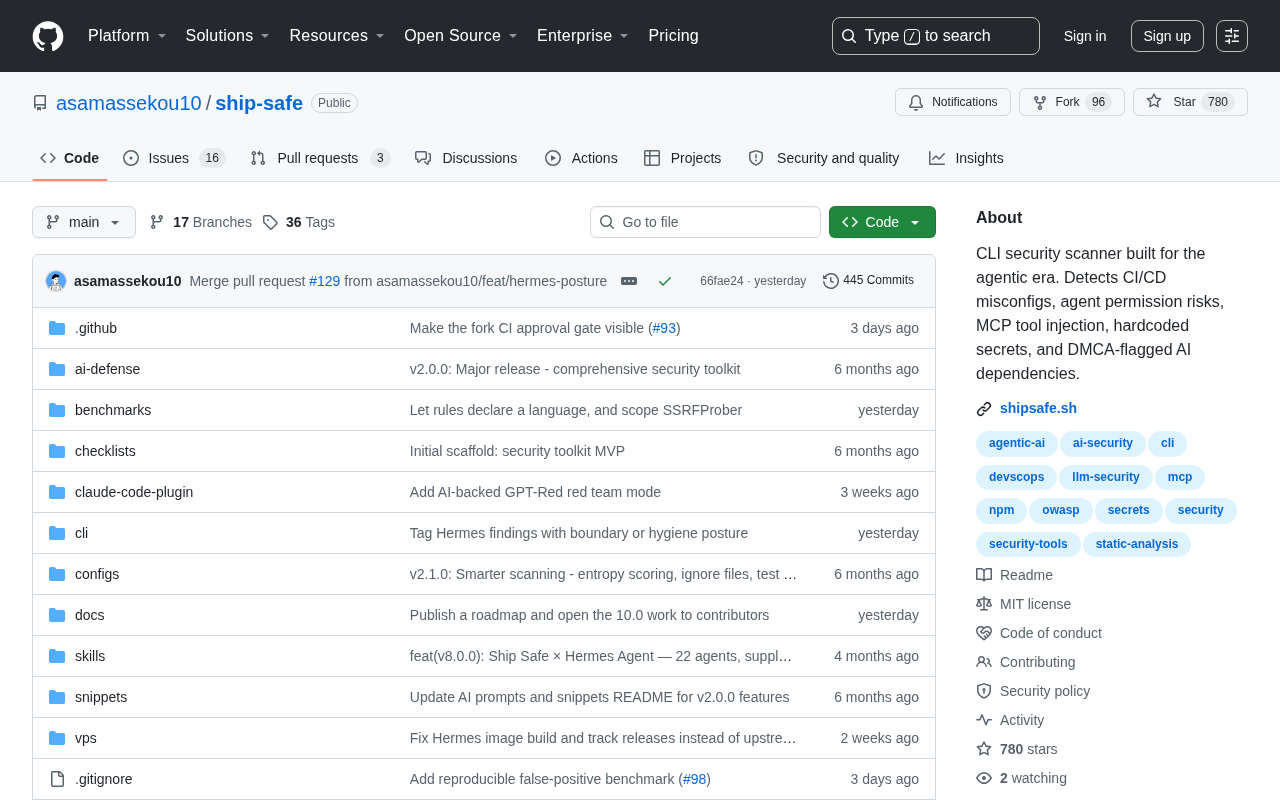
Ship Safe: A Deep Dive into the Open-Source Security Scanner for AI Coding Agents
Deep dive into how Ship Safe provides security scanning for AI coding agents, exploring agent security challenges, closed-loop feedback, and enterprise guardrails.
Read more →

·3 min
Real-World Reliability Test of AI Model GitHub Connectors: Kimi vs Perplexity — Which One Can You Actually Trust?
Real-world comparison of Kimi and Perplexity GitHub Connector reliability. Kimi offers automatic graceful degradation; Perplexity suffers from silent failures. Analysis of tool-call transparency and fault tolerance in AI code review workflows.
Read more →

·3 min
Meta Muse Code: A Terminal AI Agent Built for Long-Horizon Programming
Meta launches Muse Code, a terminal AI agent powered by Muse Spark 1.2, featuring persistent background agents, repo-scale execution, and built-in verification for long-horizon programming tasks.
Read more →

·3 min
DeepSeek V4 Flash Real-World Test: The Secret Behind Spending Only $3 on 120M Tokens
A developer tested DeepSeek V4 Flash 0731, spending only $3 on 120M tokens. Learn how cache hit mechanisms slash API costs and tips for long-context optimization.
Read more →

·3 min
Is Cursor Worth Subscribing To? Real Developer Community Reviews and Usage Strategies
In-depth analysis of AI coding tool Cursor's real-world experience, covering community ratings, multi-model support, BYOK mode, and Chinese LLM integration strategies for developers.
Read more →

·4 min
How Databricks Cut AI Coding Costs by 70%: Strategies and Insights
Databricks cut AI coding tool costs by 70% through intelligent model routing, prompt caching, context optimization, and self-hosted open-source models. Learn actionable strategies for controlling LLM inference costs.
Read more →

·3 min
Reference: A Local Semantic Search Engine Built for AI Agents
Reference is a local semantic search tool for AI Agents that uses tree-sitter code-aware chunking, real-time indexing, and MCP Server integration to eliminate inefficient grep loops in AI coding assistants—all data stays on your machine.
Read more →

·2 min
The Mystery of Composer 3's Disappearance: Replaced by Grok 4.5 or Still in Development?
Cursor's previewed Composer 3 model has vanished from official docs, replaced by Grok 4.5. We analyze three possibilities and the broader build vs. integrate debate in AI coding tools.
Read more →

·2 min
AI Programming Is Like Cooking Steak: It's All About Getting the Heat Right
Exploring the viral Hacker News analogy between AI programming and cooking steak: why developer judgment and experience are the critical "heat" that determines AI coding output quality.
Read more →

·3 min
GitHub Daily · August 8: Self-Evolving Agents Explode on the Charts, Swarm Intelligence and Dev Tools Take Flight Together
GitHub Trending Aug 8: Self-evolving agent prime-agent surges 2293 stars, swarm intelligence and distributed Agent infrastructure dominate the charts.
Read more →

·2 min
GLM-5.3 Imminent Release: Zhipu AI's New Model Called a 'Monster'
Zhipu AI's next-gen LLM GLM-5.3 is reportedly imminent, dubbed a 'monster' by the community. We analyze the GLM evolution, potential breakthroughs, and China's LLM competition landscape.
Read more →

·4 min
The Self-Building Agentic IDE: The Next Evolutionary Direction for AI Programming Tools
Exploring the Agentic IDE concept: a self-building, self-iterating intelligent development environment. A deep analysis of how AI programming tools evolve from passive assistance to autonomous evolution.
Read more →

·3 min
picodl: Technical Analysis of a Deep Learning Library Built from Scratch with Pure NumPy
In-depth analysis of picodl, a lightweight deep learning library built from scratch with pure NumPy. Covers forward propagation, backpropagation, gradient computation, and discusses its educational value.
Read more →

·3 min
Qwen3-Max Deep Dive: How Coding and Collaboration Capabilities Are Redefining AI Development Assistants
Deep analysis of Alibaba's flagship model Qwen3-Max, covering its coding, Cowork collaboration capabilities, and potential for redefining AI-assisted software development.
Read more →

·3 min
A Complete Guide to AI Agent Observability and Evaluation Tech Stacks
Deep dive into three technical approaches for AI Agent observability and evaluation: LangSmith native integration, open-source self-hosted solutions like LangFuse, and unified platforms like Lyzr.
Read more →

·2 min
Spring Framework's 19 Years of Technical Debt: A Deep Reflection on API Design and Backward Compatibility
Exploring how the Spring Framework addresses 19 years of technical debt, examining the costs of backward compatibility in API design and lessons for long-term software engineering decisions.
Read more →