#coding agent evolution
1033 related articles
·3 min
The Next Evolution of Coding Agents: Letting the Brain Break Free from the Sandbox
Exploring the key evolution in coding agent architecture: separating the reasoning core from code execution environments to decouple control and execution planes.
Read more →
·3 min
The Next Evolution of Coding Agents: Letting the Brain Escape the Sandbox
Exploring the next evolution in coding agent architecture: decoupling the reasoning core from code execution environments to separate control and execution planes.
Read more →
The Evolution of Coding Agents: A Para…
·2 min
The Evolution of Coding Agents: A Paradigm Shift from Reactive Response to Proactive Planning
Coding agents are evolving from reactive code completers to proactive planners. Explore the "think ahead of time" paradigm, Plan-and-Execute architecture, and its impact on developer workflows.
Read more →

·2 min
Hermes Agent Local Deployment Guide: An AI Assistant Framework with Built-in Coding Capabilities and Self-Evolution
A detailed guide to deploying Hermes Agent locally, covering built-in Cloud Code capabilities, self-evolving Skill generation, low token usage, multi-platform support, and WeChat remote control.
Read more →

·3 min
The Four Stages of AI Coding Tool Evolution: From Code Completion to Multi-Agent Collaboration
A deep dive into the four stages of AI coding tool evolution: from code completion and chat Q&A to Agentic Coding and multi-Agent collaboration, explaining the design logic behind Claude Code, Cursor, and Codex.
Read more →

·2 min
How Much Work Can You Delegate to AI Agents? A Complete Guide to Delegation Boundaries and Trust Strategies
Explore AI agent delegation boundaries: from code completion to autonomous agents across three levels, analyzing verifiability, error costs, and context to build pragmatic trust strategies.
Read more →

·4 min
Pure Vibecoding Builds a 130+ Card Multiplayer CCG: Full AI Tech Stack Breakdown
An indie dev built a 130+ card multiplayer CCG entirely through vibecoding with Claude Code, GPT, and ElevenLabs. Full AI tech stack breakdown and analysis of vibecoding's capabilities and limits.
Read more →

·3 min
MiniMax Code vs Cursor: Analyzing the Design Advantage of Side-by-Side Code and Agent Layout
In-depth comparison of MiniMax Code and Cursor UI layouts. MiniMax Code's side-by-side code and Agent design reduces view switching and boosts code review efficiency. Choose the right AI coding tool.
Read more →

·3 min
MiniMax Code vs Cursor: Analyzing the Design Advantages of Side-by-Side Code and Agent Layout
In-depth comparison of MiniMax Code and Cursor's UI layouts. MiniMax Code's side-by-side code and Agent design reduces view switching for better code review efficiency, while Cursor's editor-centered approach suits deep coding.
Read more →

·2 min
Transformer²: Achieving Co-Design of Robot Morphology and Control with a Unified Architecture
Deep dive into how Transformer² uses a unified Transformer architecture to integrate robot morphology design and motion control into one model, enabling task-driven end-to-end co-design for embodied AI.
Read more →

·3 min
Gemini Managed Agents API Update: Environment Hooks and Free Tier Fully Explained
Google Gemini Managed Agents API introduces environment hooks, model selection, free tier support, and default model upgrades—empowering AI Agent developers with stronger execution control and lower barriers to entry.
Read more →

·2 min
Bun Now Generates CLAUDE.md by Default: The AI-Native Development Era Has Arrived
Bun runtime now generates a CLAUDE.md file by default with bun init, signaling AI assistants becoming first-class citizens in the development toolchain.
Read more →

·3 min
Lessons from Claude Code's 80% Prompt Reduction: Less Is More in Prompt Engineering
Anthropic cut Claude Code's system prompt by 80% and got better performance. Learn why verbose prompts hurt, how to streamline them, and key takeaways for AI developers.
Read more →

·3 min
Lessons from Claude Code's 80% Prompt Reduction: Less Is More in Prompt Engineering
Anthropic cut Claude Code's system prompt by 80% and got better results. Learn why verbose prompts hurt performance, how to streamline them, and key lessons for AI developers.
Read more →

·3 min
Kimi K3 Reaches 2.5T Parameters, MiniMax M3 Pro Brewing Simultaneously: China's LLM Arms Race Escalates
Kimi K3 adopts new architecture with 2.5T parameters and 1M token context. MiniMax M3 Pro targets 2.7-3T. OpenAI surpasses 7M users, HY-OCR 1.5 achieves SOTA, Amap launches world model.
Read more →
·3 min
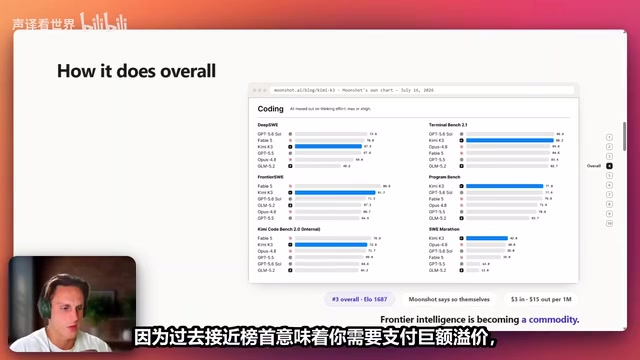
Kimi K3 Hands-On Tutorial: Claude Code Sub-Agent Configuration & GPT-5.6 Comparison Test
Complete guide to configuring Kimi K3 as a Claude Code sub-agent, including API setup, YFlow workflow building, and head-to-head comparison with GPT-5.6 and Claude Fable 5.
Read more →

·3 min
Kimi K3 Hands-On Review: 2.5 Trillion Parameter Open-Source Model Takes on Claude
Hands-on review of Kimi K3, Moonshot AI's latest 2.5T parameter MoE model. Coding ability ties with Claude, surpasses it in 3D game dev, with API pricing at one-tenth of competitors.
Read more →

·5 min
July 24 AI Daily Brief: Flux 3 Multimodal Release, Kimi K3 Lags in Testing, Qwen Tops TTS Rankings
July 24 AI news: Black Forest Labs launches Flux 3 multimodal model, Kimi K3 lags in US-UK gov tests, Alibaba Qwen tops TTS rankings, Etched raises $300M, AMD unveils MI430X.
Read more →

·3 min
Claude Code vs Codex: Hands-On Comparison and Installation Guide for AI Programming Tools
In-depth comparison of Claude Code and Codex AI programming tools covering accuracy, installation, and network setup tips to help developers choose the best solution.
Read more →

·6 min
Harness Engineering: From Context Engineering to the Third Phase of AI Programming
Explore Harness Engineering: the next evolution beyond context engineering for AI programming. Learn how to build enterprise-grade Skill systems and deliver real projects with mid-tier models.
Read more →