#cross-session AI memory
170 related articles

·2 min
Segue: A Deep Dive into the Cross-Platform AI Conversation Context Migration Tool
Segue is an AI context migration tool that uses short handles to seamlessly transfer conversation context across ChatGPT, Claude, and other AI platforms, solving the cross-platform context reset problem.
Read more →
·3 min
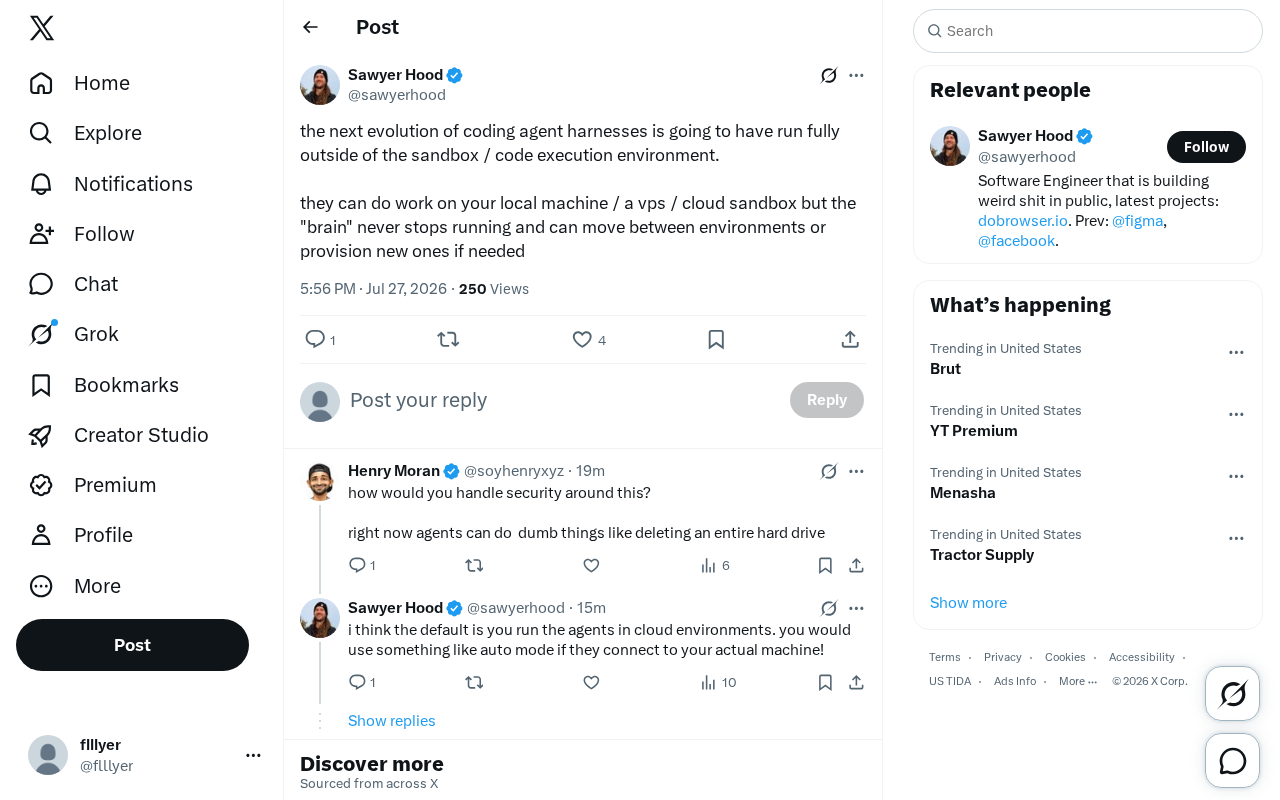
The Next Evolution of Coding Agents: Letting the Brain Break Free from the Sandbox
Exploring the key evolution in coding agent architecture: separating the reasoning core from code execution environments to decouple control and execution planes.
Read more →
·3 min
The Next Evolution of Coding Agents: Letting the Brain Escape the Sandbox
Exploring the next evolution in coding agent architecture: decoupling the reasoning core from code execution environments to separate control and execution planes.
Read more →

·2 min
ag-kit: A Deep Dive into the TypeScript-Based AI Agent Development Toolkit
An in-depth analysis of ag-kit, a TypeScript-based AI Agent development toolkit covering core architecture, modular design, use cases, and tech selection advice for full-stack developers.
Read more →
·1 min
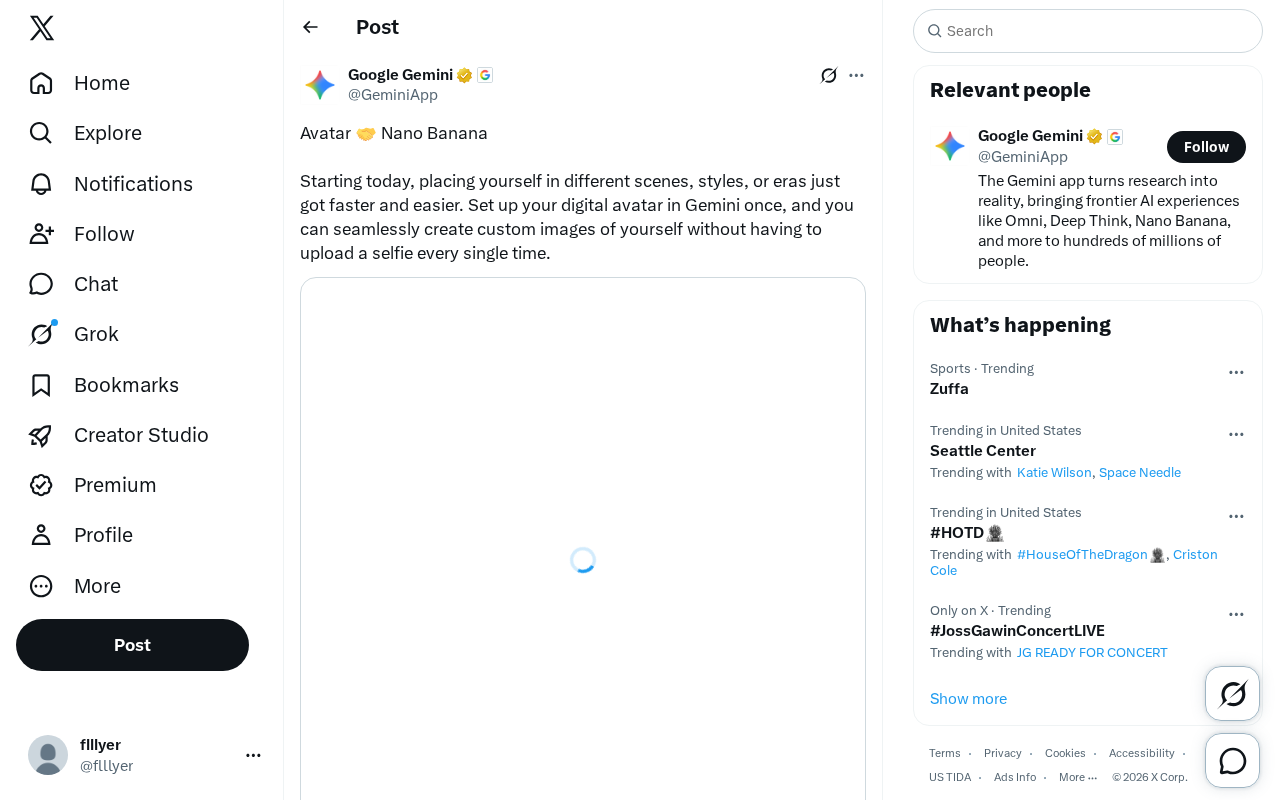
Gemini Avatar Feature Explained: Set Up Once, Never Upload Selfies Again
Google Gemini launches Avatar feature — set up your digital likeness once to generate personalized AI images anytime without re-uploading selfies. Powered by Nano Banana for identity consistency.
Read more →

·7 min
Getting Started with Claude Code: Five Dimensions to Understand Why It Outperforms Regular AI
Claude Code isn't just a chat AI—it can directly read projects, modify code, and run commands. This article compares Claude Code with regular AI across five dimensions to help you decide if it's worth trying.
Read more →

·7 min
Getting Started with Claude Code: Five Dimensions That Show Why It Outperforms Ordinary AI
Claude Code isn't just a chat AI—it can directly read projects, modify code, and run commands. This article compares Claude Code with ordinary AI across five dimensions: interaction, context, execution, memory, and tool calling.
Read more →

·6 min
30-Minute Hands-On: Building a Working AI Agent from Scratch
Skip the dry theory and get hands-on! This article demonstrates step by step how to build a working AI Agent from scratch in 30 minutes using AI coding tools—covering the agent skeleton, tool system, memory mechanism, Flask web UI, and DeepSeek API integration.
Read more →

·2 min
Hermes Agent: A Complete Beginner's Guide to the Self-Evolving Open-Source AI Agent
Hermes Agent is an open-source autonomous AI Agent with long-term memory and self-evolution. Learn its core innovations, how it compares to Open Cloud, and why it hit 121K GitHub stars.
Read more →
Cognee: The Open-Source Knowledge Grap…
·2 min
Cognee: The Open-Source Knowledge Graph Engine for Persistent AI Agent Memory
Cognee is an open-source AI memory platform using knowledge graphs to give AI agents persistent cross-session memory. Self-hosted, graph + vector hybrid retrieval. 28K+ GitHub stars.
Read more →

·2 min
Codex Custom Instructions: Configure Once, Let AI Remember Your Work Habits Forever
Still explaining your coding preferences to Codex every time? Custom Instructions is a built-in global memory feature — configure once, apply across all projects forever.
Read more →

·4 min
Viktor: The AI Employee Living Inside Slack — How to Build a True Company-Wide AI Colleague
Viktor is a Slack-native AI employee with 3,000+ integrations and team-shared context. Learn how it evolved from browser agents to company-level AI, tackling memory, permissions, and proactivity.
Read more →
Capn-hook: Breaking the Cycle of Repet…
·2 min
Capn-hook: Breaking the Cycle of Repetitive Exploration for Coding Agents
Capn-hook is an open-source hook-based tool that helps coding agents retain knowledge across sessions—eliminating redundant exploration and turning one-time discoveries into reusable engineering assets.
Read more →

·2 min
AI Agent Out of Control? A Practical Guide to Building Traceable Multi-Agent Systems
Agent loops burning money, bills spiking unexpectedly? This article breaks down a traceable multi-agent system covering loop detection, behavior classification, cost prediction, and self-healing.
Read more →
·3 min
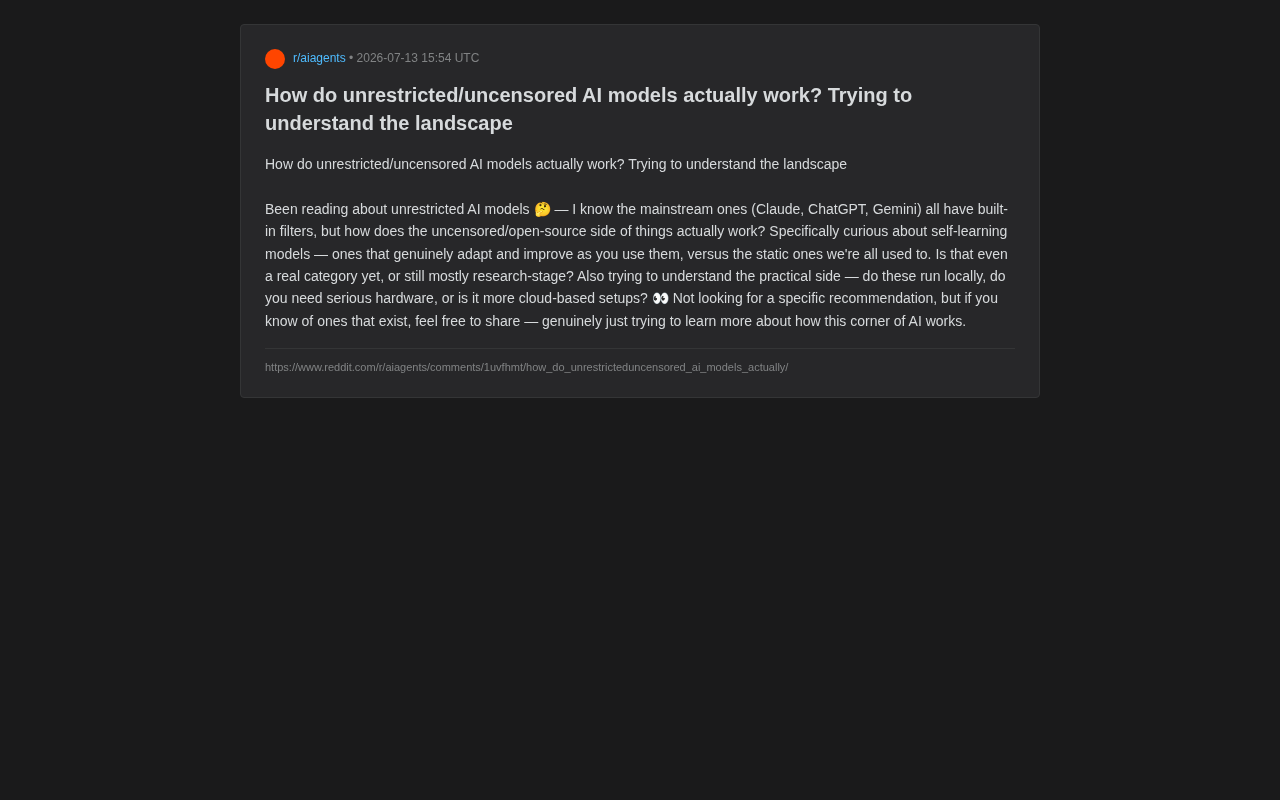
Uncensored AI Models Deep Dive: How They Work, Local Deployment, and the Truth About Self-Learning
A deep dive into uncensored AI models: how censorship is removed, whether self-learning is real, and hardware requirements for local deployment. Covers Ollama, LM Studio, Llama, quantization, and more.
Read more →
Deep Dives
Deep Dive into AI Agent Skill Design: …
·3 min
Deep Dive into AI Agent Skill Design: Engineering Practices from Anthropic and Perplexity
A deep dive into Skill design philosophy from Anthropic's Claude Code team and Perplexity's Agent team, covering the Tax Test, Gotchas Flywheel, progressive disclosure, and Eval-First practices for building high-quality AI Agent skill systems.
Read more →
MemStitch Zero-Copy Context Bridging: …
·2 min
MemStitch Zero-Copy Context Bridging: How It Achieves 25x TTFT Speedup in vLLM
A deep dive into how MemStitch's zero-copy context bridging achieves 25x TTFT speedup in vLLM. Covers KV Cache optimization, prefill acceleration, and practical developer value.
Read more →

·2 min
AI Agent Development for Beginners: A Complete Three-Stage Learning Roadmap
A complete AI Agent development learning roadmap covering three stages: Fundamentals (environment setup, tool use, memory), Advanced (multi-agent systems, RAG, ReAct), and Practical Projects (enterprise chatbots, automation tools).
Read more →

·2 min
Hombre: An Open-Source Visual Dashboard for Honcho AI Memory Server
Hombre is an open-source web GUI for self-hosted Honcho AI memory servers. Features workspace management, semantic search, real-time sync, and RBAC — built with FastAPI and native frontend, MIT licensed, Docker-ready.
Read more →

·3 min
The Deterministic Factual Substrate for Multi-Agent AI: A Deep Dive into Knowledge Kernel's Reproducible Grounding Design
A deep dive into how Knowledge Kernel builds a deterministic factual substrate for multi-agent AI through layered decoupling of reality, evidence, facts, and reasoning — with dataset_hash fingerprinting, atomic reloads, and observable telemetry.
Read more →