#design taste AI
144 related articles

·4 min
Teaching AI to Have "Taste": Exploring Multi-Agent Design with Open-Source Skill Taste
Why does AI-generated UI all look the same? Designer SEN open-sourced a Skill called Taste that uses a four-agent pipeline to reverse-engineer website "taste" into verifiable design principles called Taste DNA.
Read more →

·3 min
Distilling Linus's Code Review Philosophy from 32,000 Emails
The linus-torvalds-skill project distills Linus Torvalds's code review style from 32,000 kernel mailing list emails into an AI Agent-callable skill, with open pipeline and multi-model experiments.
Read more →

·3 min
The NeurIPS Review Dilemma: Why Do Reviewers Refuse to Raise Scores After Rebuttal Resolves Their Concerns?
Examining the structural contradiction in NeurIPS peer review: why reviewers acknowledge rebuttals resolve their concerns yet refuse to adjust scores, and its systemic impact on research.
Read more →

·2 min
AI Video Generation Goes Viral: When AI Editing Makes Professional Creators Feel Outclassed
A viral social media post reveals stunning advances in AI video generation. From Sora to Runway, AI tools are reshaping content creation — a deep dive into the tech, controversies, and creator strategies.
Read more →

·2 min
Joy Review: How an AI Cooking Copilot Tackles the Daily 'What Should I Eat?' Dilemma
Deep analysis of AI cooking assistant Joy's product logic and user experience. It generates menus and shopping lists from existing fridge ingredients, with optional real chef booking in SF.
Read more →

·2 min
Curate: An Anti-Algorithm Taste Space for Tracking Films, Books, and TV
Curate is an ad-free, algorithm-free tracking tool for films, books, and TV. This article analyzes its anti-algorithm philosophy, differentiation from Letterboxd and Storygraph, and its challenges.
Read more →

·2 min
AI Can Write Copy Now — Is Learning Copywriting Still Worth It?
With AI-generated copy reaching passing-grade quality, is learning copywriting still worthwhile? This article analyzes from three dimensions: taste as a moat, mid-tier market value, and skill displacement.
Read more →

·2 min
AI-Generated Space Cartoon Style Images: A Perfect Blend of Bright Colors and Imagination
Explore AI-generated space cartoon style image creation techniques, analyzing strategies for combining bright colors, cartoon design, and space themes in stylized AI art.
Read more →

·2 min
RecipeBook: A New Paradigm for Buying AI Video Training Data by the Hour
RecipeBook is a video data marketplace with 25M+ clips, featuring semantic search and preference learning, letting developers buy AI training data at $3/hour in a self-service, pay-as-you-go experience.
Read more →

·2 min
RecipeBook: A New Paradigm for Buying AI Video Training Data by the Hour
RecipeBook is a video data marketplace with 25M+ clips, offering semantic search and preference learning, letting developers buy AI training data at $3/hour in a self-service, pay-as-you-go model.
Read more →

·3 min
Why AI Products Always Fall Short: The Key Is Deletion, Not Creation
jQuery UI creator Paul Bakaus identifies the core quality problem in AI products: it's not insufficient generative power, but a lack of editorial judgment. When AI output density is too high, human aesthetic trade-offs become the key differentiator.
Read more →

·3 min
Code Refactoring and Culinary Evolution: How Software Thinking Explains Cultural Transmission
From Iraqi stew to Singaporean cuisine across centuries—using software refactoring concepts to decode cultural evolution, code reuse, and incremental change.
Read more →

·3 min
Code Refactoring and Culinary Evolution: How Software Thinking Explains Cultural Transmission
From Iraqi stew to Singaporean cuisine: a cross-century journey explored through software refactoring metaphors, revealing universal laws of complex system evolution.
Read more →

·4 min
Pure Vibecoding Builds a 130+ Card Multiplayer CCG: Full AI Tech Stack Breakdown
An indie dev built a 130+ card multiplayer CCG entirely through vibecoding with Claude Code, GPT, and ElevenLabs. Full AI tech stack breakdown and analysis of vibecoding's capabilities and limits.
Read more →

·3 min
Preparation Guide for NLP Research Scientist Internships: Key Focus Areas and Common Pitfalls
A comprehensive guide to preparing for NLP Research Scientist Intern roles, covering evaluation criteria, foundational knowledge, paper reading strategies, hands-on skills, and common pitfalls.
Read more →

·2 min
Aurral: A Smart Discovery Tool Built for Niche Music Enthusiasts
Aurral is a music discovery tool for niche enthusiasts, using Flows, Last.fm data, and Lidarr integration to deliver truly personalized obscure music recommendations beyond mainstream algorithms.
Read more →
·3 min
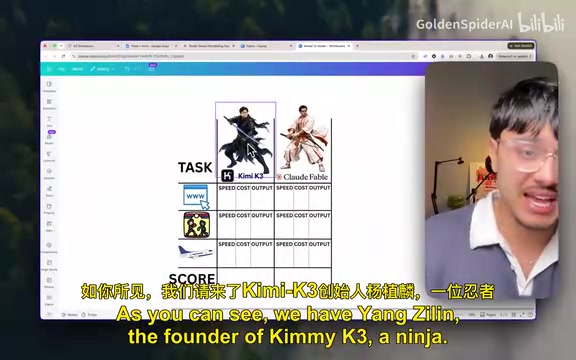
Kimi K3 vs Claude Real-World Test: Near-Equal Performance at 1/8 the Price
Real-world comparison of Kimi K3 vs Claude flagship across e-commerce pages, 3D fighting games, and flight simulators. Kimi K3 delivers 90% output quality at 1/8 the price with faster speeds and local deployment support.
Read more →

·4 min
OpenAI Employee Shares How to Build an AI Work Operating System with Codex
OpenAI's Jason Liu shares how he uses ChatGPT Workbench and Codex to build an AI work OS: Chief of Staff automation, persistent threads, Skills/Plugins, browser control, and app-building methodology.
Read more →
·3 min
Deep Dive into Inkling: The First Frontier Open-Source Multimodal LLM from the West
Thinking Machines releases Inkling, an open-source multimodal LLM with near-trillion MoE parameters, 1M token context, Apache 2.0 license. Deep dive into architecture, benchmarks, and pricing.
Read more →

·3 min
What Is AI Slop? A San Francisco Art Exhibition Redefines AI-Generated Junk Content
San Francisco's TIAT gallery presents "The Epistemologies of Slop," an exhibition exploring AI Slop through human-AI collaboration, interactive installations, and philosophical inquiry into meaning-making in the AI age.
Read more →