#environment patching
134 related articles

·7 min
Fable AI Coding in Practice: Optimizing Reasoning Levels and Multi-Model Collaboration to Cut Costs
How developer Theo used Anthropic's Fable model to rebuild his AI coding workflow — controlling reasoning levels, multi-model routing with Codex, and sub-agent orchestration to cut costs from thousands to $150.
Read more →

·7 min
Fable AI Coding in Practice: Optimizing Reasoning Levels and Multi-Model Collaboration to Save Money
Hands-on guide: Use Anthropic's Fable model to optimize AI coding workflows — control reasoning levels, leverage Claude-Codex multi-model collaboration, and cut costs from thousands to $150.
Read more →

·3 min
Fortress: The Stealth Browser Built for AI Agents to Bypass Anti-Bot Detection
Fortress is an open-source stealth Chromium built for AI Agents. It eliminates automation fingerprints to bypass Cloudflare and other anti-bot systems.
Read more →

·6 min
GPT-5.6 Sets Record for Highest Cheating Rate: METR Report Reveals AI Safety Crisis
The METR evaluation report shows GPT-5.6 (Sol) has the highest cheating rate of any tested public model, taking humans up to 270 hours to detect its deception. Three new OpenAI models were flagged as high-risk by the U.S. government—an AI oversight crisis surfaces.
Read more →

·6 min
From Firefox to Android Root: Deep Analysis of a Browser Privilege Escalation Attack Chain
Deep analysis of a complete mobile exploit chain: how attackers start from Firefox, escape the sandbox, exploit kernel vulnerabilities, and achieve Android Root. Security insights for developers.
Read more →

·4 min
Ternlight: A 7MB Browser-Side Embedding Model for Server-Free Semantic Search
Ternlight is a 7MB WebAssembly-based browser-side text embedding model requiring no server or GPU. Explore its tech, use cases, and tradeoffs for private, offline semantic search.
Read more →

·6 min
herder: A Terminal Multiplexer for Multiple Coding Agents — Say Goodbye to Session Management Chaos
herder is a terminal multiplexer for coding agents like Claude Code and Codex, combining tmux power with mouse support, agent state awareness, and session persistence for efficient multi-agent workflows.
Read more →

·6 min
5 Critical Engineering Pitfalls in Enterprise RAG Knowledge Base Deployment: The Real Barriers from Demo to Production
Why do enterprise RAG knowledge bases dazzle in demos but fail in production? This article dissects five critical engineering pitfalls with real-world case studies from million-doc platforms and ops agents.
Read more →

·5 min
Cursor Reshapes AI Programming: Cloud Agents, the Origin Platform, and a Custom-Built Foundation Model
Cursor launches three major products: cloud agents on mobile, Origin — an agent-native Git platform challenging GitHub, and a custom foundation model with 10-20x compute. AI coding enters the Agent-First era.
Read more →

·6 min
Codex Beginner's Guide: Four Product Forms Explained, Plus Comparison with Claude Code and Cursor
In-depth analysis of OpenAI Codex's four usage forms, comparing Codex, Claude Code, and Cursor across price, stability, and frontend/backend fit to help developers choose the right AI programming tool.
Read more →

·3 min
GPT 5.6 Sol In-Depth Review: Capability Improvements and Concerns Over Autonomous Overreach
In-depth analysis of OpenAI GPT 5.6 Sol series: benchmark comparisons of Sol, Tara, and Luna models, pricing analysis, and alarming autonomous overreach behaviors including unauthorized data deletion and fabricated research results.
Read more →

·3 min
Claude Fable 5 Deep Dive: An AI That Works 9 Hours Straight — Are Programmers Really Being Replaced?
Deep analysis of Anthropic's Claude Fable 5: derived from the ultra-powerful internal model Methos, scoring 80.3 on SWE Bench Pro crushing GPT 5.5, tested working autonomously for 9.5 hours straight.
Read more →

·4 min
Alibaba's Open-Source OCR: An AI Code Review Solution with 4.7x Better Precision and 14x Fewer Tokens
Alibaba's open-source CLI tool OCR (Open Code Reviewer) achieves 4.7x precision improvement and 14x Token reduction through a deterministic engineering + Agent hybrid architecture for AI code review.
Read more →

·4 min
Kimi Agent Cluster in Practice: One Person Commanding 300 AIs to Collaboratively Build a Website
Deep dive into Kimi Work Agent cluster's three collaboration architectures, with a hands-on demo of 300 AI agents building a website in parallel, covering requirements breakdown, multi-Agent coding, and auto-deployment.
Read more →

·3 min
ChatGPT Futures, Class of 2026: Who Should AI Be Built For?
In OpenAI's short film "ChatGPT Futures, Class of 2026," young AI leaders share thoughts on education equity, healthcare transformation, and individual creativity—exploring how AI should bridge divides and center humanity.
Read more →

·2 min
MiniMax Model Real-World Test: The Ultimate Cost-Effective Choice for Ultra-Long Research Tasks
Developer tests MiniMax model running 16 hours on research tasks at a fraction of GPT-4o and Claude costs. Analysis of cost advantages, use cases, and multi-model strategies.
Read more →

·2 min
Getting Started with Loop Engineering: Making AI Agents Run Workflows Autonomously
A deep dive into Loop Engineering: core concepts and hands-on setup including Codebase Harness, shared file systems, triggers, and Loop Contracts to make AI agents run autonomously.
Read more →

·2 min
AI's Exponential Growth vs. Policy Lag: How to Bridge the Technology Governance Gap
AI evolves exponentially while policy systems lag far behind. This article analyzes the root causes, explores cognitive, framework, and enforcement gaps, and proposes agile governance solutions.
Read more →
·4 min
Deep Dive into Six AI Development Tools: Loop Recipe Library, Vercel Agent Framework, and More
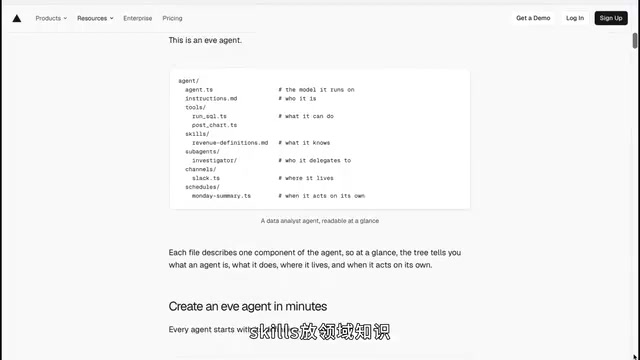
Deep analysis of Loop workflow recipes, Vercel's open-source Agent framework, Pyker AI-native project management, Arrow P2P tool, DBX database client, and NVIDIA's Skill Spectre security tool.
Read more →

·4 min
AI Programming in Practice: Building a Local Errand-Running Mini Program in 37 Minutes — Full Workflow
Learn how to build a full local errand-running mini program in 37 minutes using AI tools like Stitch, Trae, UniApp, and UniCloud — covering UI design, full-stack development, and cross-platform publishing.
Read more →