#faithfulness
58 related articles

·4 min
Faithfulness of the Burau Representation at n=4 Proven: A Key Breakthrough on a Classical Problem
The faithfulness of the Burau representation of braid groups at n=4 has been unresolved for nearly ninety years. Recent research finally proves it faithful, with deep implications for knot theory, topological quantum computing, and cryptography.
Read more →

·4 min
Faithfulness of the Burau Representation at n=4 Proven: A Key Breakthrough on a Classical Problem
The faithfulness of the Burau representation of braid groups at n=4 has been unresolved for nearly 90 years. A recent proof finally settles this critical case, with implications for knot theory, topological quantum computing, and cryptography.
Read more →

·2 min
Chain-of-Thought Reasoning Isn't Always Faithful: Can We Trust What AI Says About Its Reasoning?
LLM chain-of-thought reasoning appears transparent, but research shows models' displayed reasoning may not reflect their true decision logic. Exploring the causes and implications for AI safety.
Read more →

·3 min
Ping: A Deep Dive into the Free AI Search Tool Focused on Accuracy
Ping is a free AI search tool focused on accuracy, combining AI answers with original source quotes to address AI search hallucination. A deep analysis of its design philosophy and how it differs from Perplexity.
Read more →

·3 min
From ML to AI Engineer: A Pragmatic Transition Learning Roadmap
A detailed guide on the core differences between ML and AI engineers, with a complete learning roadmap covering engineering fundamentals, LLM app development, and production deployment including RAG systems and agent development.
Read more →

·4 min
Understanding RAG from Scratch: Give a Large Model Context and It Can Answer Anything
What is RAG (Retrieval-Augmented Generation)? This article explains RAG core concepts with simple analogies, analyzes three LLM pain points, and details RAG's working mechanism and future trends.
Read more →

·2 min
The deep_think Tool Accidentally Leaks Hidden Reasoning Chains from Large Language Models: The Fragility of Chain-of-Thought Security Boundaries
Researchers found that providing a deep_think tool to OpenAI and Anthropic models causes unexpected leakage of hidden reasoning chains, exposing the fragility of CoT security boundaries.
Read more →

·3 min
MiniMax H3 Team AMA Full Breakdown: What's Coming Next and What's Still Broken
MiniMax H3 team's Reddit AMA confirms 2K regeneration model, sparse attention acceleration, and a dedicated image model coming soon, while acknowledging known defects like distant blurring and detail graininess.
Read more →

·4 min
AI Engineer Growth Roadmap: From Programming Fundamentals to RAG and MCP Agent Development
A systematic AI engineer learning roadmap covering programming, math, ML, and data engineering foundations, plus frontier AI technologies like LLM, RAG, Agents, and MCP with free open-source resources.
Read more →

·3 min
Enterprise RAG Development Team Evaluation Guide: Retrieval Quality, Engineering Details & Production Readiness
When evaluating RAG development teams, enterprises should focus on retrieval quality metrics, hallucination detection, chunking strategies, hybrid retrieval, and production observability—not just model and framework support.
Read more →

·2 min
MLflow 3.15.0 Released: MCP Registry, Smarter Assistant & Multimodal Judges Explained
MLflow 3.15.0 introduces MCP Registry for unified Agent tool management, a smarter Assistant to reduce dev friction, and Multimodal Judges for multi-modal evaluation.
Read more →

·3 min
Is AI Reasoning Real or Fake? Right Answers, Wrong Reasons
AI aces reasoning tests but may reason incorrectly. This article analyzes fake reasoning behind correct answers in LLMs, covering data contamination, memory effects, and methods like process supervision and counterfactual testing.
Read more →

·3 min
From Linear Pipelines to State Machines: A Practical Guide to Advanced Agent Architecture
Learn how to advance from linear pipeline to state machine Agent architecture through a YouTube script-to-storyboard case study, covering fault tolerance, LLM evaluation frameworks, and LangGraph vs AutoGen selection.
Read more →

·4 min
11-Node LangGraph in Practice: Complete Architecture Breakdown of a Compliance-Grade RAG Agent
Deep dive into an 11-node Agentic RAG agent built with LangGraph, featuring 6-way intelligent routing, hallucination guards, PII masking, circuit breakers, and zero-cost deployment.
Read more →

·4 min
What Is the True Nature of Large Language Models? A Super Compressor Analogy to Help You Fully Understand
Large models aren't search engines — they're more like super compressors. This article explains how LLMs compress data to learn semantic patterns, and explores the phenomenon of intelligent emergence.
Read more →

·4 min
What Is the True Nature of Large Language Models? A Super Compressor Analogy That Makes Everything Click
LLMs aren't search engines — they're more like super compressors. This article explains how large models compress corpora to learn semantic patterns, and explores the principles and limitations of emergent intelligence.
Read more →

·3 min
Build RAG and AI Agent Projects at Zero Cost: A Practical Guide to Open-Source Tools
Build high-quality AI projects on a budget. Learn how to use Ollama, Groq, Chroma, and other free open-source tools to build RAG systems and multi-Agent workflows from scratch.
Read more →
·3 min
Build RAG and AI Agent Projects at Zero Cost: A Practical Guide to Open-Source Tools
Build high-quality AI projects on a budget. Learn how to use Ollama, Groq, Chroma, and other free open-source tools to build RAG systems and multi-Agent workflows from scratch.
Read more →

·4 min
GenAI Job Interview Gone Wrong: Interviewer Googles Gemini for Questions on the Spot — What's Broken in AI Hiring?
A fresh grad interviewing for a GenAI Trainer role faced prime number coding and activation function questions while the interviewer used Gemini to generate questions live — exposing AI hiring chaos.
Read more →
·2 min
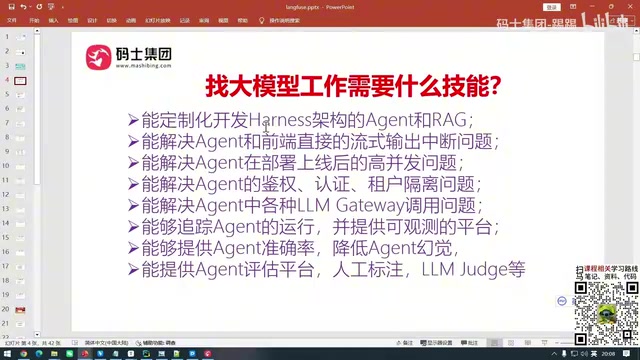
The New Bar for AI/LLM Roles: A Practical Guide to Agent Observability and Evaluation
Enterprise AI/LLM roles now demand engineering skills: streaming recovery, high concurrency, multi-tenancy, LLM gateways, Langfuse observability, and evaluation platforms. Master these 8 core competencies.
Read more →