#gaming industry
141 related articles

·3 min
AMD CDNA5 Architecture Deep Dive: Technical Evolution and the AI Computing Competition Landscape
Deep analysis of AMD's CDNA5 architecture covering Chiplet packaging upgrades, HBM memory evolution, and low-precision compute optimization, examining how AMD challenges NVIDIA's AI chip dominance.
Read more →
·3 min
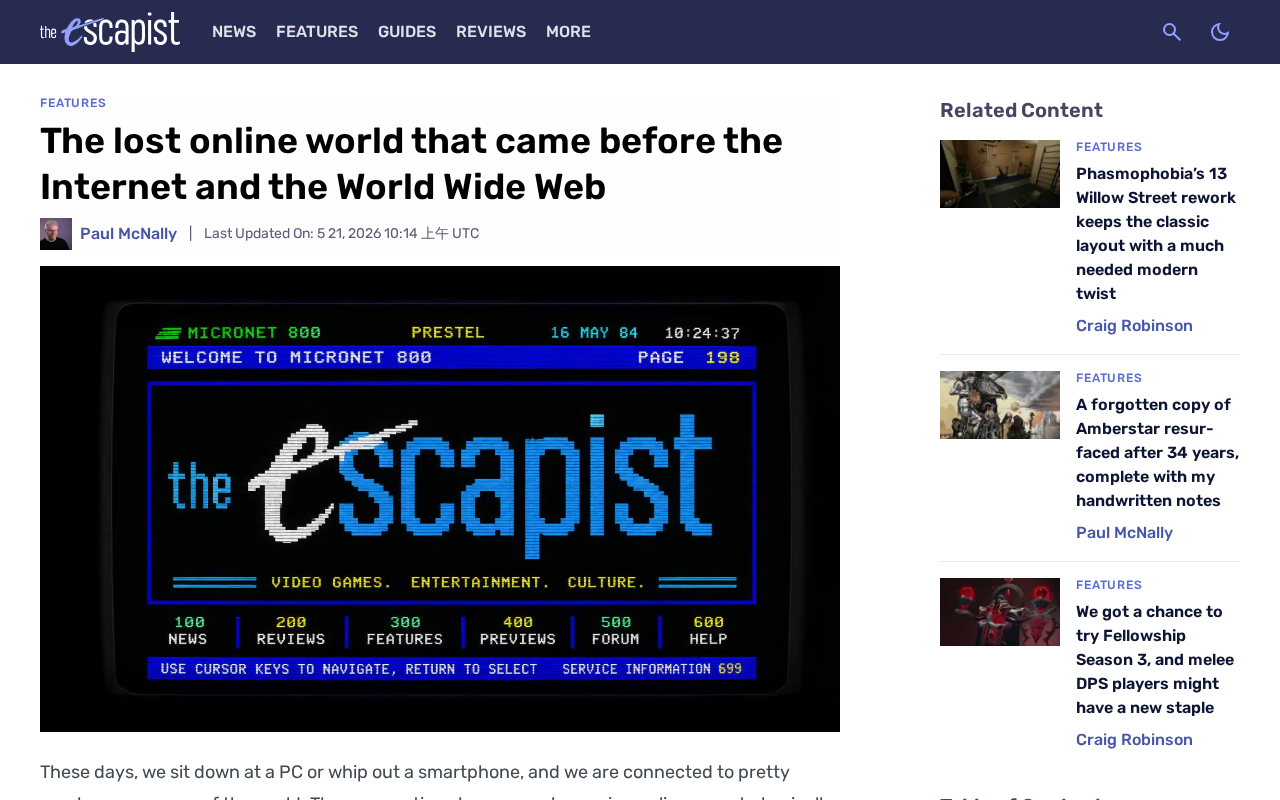
Prestel and Micronet: Britain's Lost Proto-Internet
Explore Britain's 1979 Prestel Viewdata system and its community platform Micronet 800 — an interactive online service that predated the World Wide Web by a decade, and why it lost to the open internet.
Read more →

·4 min
The Dao of DeepSeek: Liang Wenfeng on Vision, Restraint, and the Philosophy of Open Source
Analysis of DeepSeek founder Liang Wenfeng's rare investor dialogue, exploring the company's vision-driven culture, strategic restraint toward AGI, and open-source philosophy in the US-China AI race.
Read more →

·3 min
Prestel and Micronet: Britain's Lost Proto-Internet
Explore the history of Britain's Prestel Viewdata system (1979) and its community platform Micronet 800 — an interactive online service that predated the World Wide Web by a decade, and why it lost to the open internet.
Read more →

·3 min
Midjourney's Multi-Industry Expansion: The Cross-Domain Logic Behind Its Move from AI Art to Healthcare and Astrology
Midjourney expands from AI image generation into medical scanning, spas, and astrology apps. Behind the seemingly chaotic diversification lies a clear strategic logic of generative AI's horizontal penetration.
Read more →

·5 min
Inside Liang Wenfeng's Closed-Door Meeting: DeepSeek's Philosophy of Restraint and Its AGI Strategy
A full breakdown of DeepSeek founder Liang Wenfeng's 4-hour closed-door meeting: no KPIs, only reasonable profits, open-sourcing top models, and tackling AGI via continual learning—a rare AI strategy confession showing how restraint becomes a core edge.
Read more →

·3 min
Zhipu's Mobile AI Agent Tested: A Full Breakdown of the Cloud Phone Approach — Capabilities and Limitations
Hands-on test of Zhipu's mobile AI Agent: using a cloud phone to bypass permission limits, it supports natural language-driven automation. We cover its core mechanics, real performance, app restrictions, and future potential.
Read more →

·5 min
Liang Wenfeng's In-Depth Confession: DeepSeek's Philosophy of Restraint, Open-Source Strategy, and AGI Roadmap
DeepSeek founder Liang Wenfeng systematically explains: a KPI-free culture, 10-month break-even pricing, long-term open-source strategy, continual learning to break the AGI bottleneck, and his prediction of a mature domestic chip ecosystem within a year.
Read more →

·3 min
Open Source and Restraint: What Independent Developers Can Learn from Liang Wenfeng's Long-Term Philosophy
How does DeepSeek founder Liang Wenfeng's open-source philosophy inspire indie game developers? This article unpacks three core methodologies for long-term thinking in technical creation.
Read more →

·5 min
Liang Wenfeng's 4-Hour Internal Talk: DeepSeek's Philosophy of Restraint and Its Path to AGI
DeepSeek founder Liang Wenfeng shares his views on open source, pricing, computing power, and the five-stage roadmap to AGI in a 4-hour internal investor talk.
Read more →

·6 min
The CivitAI Early Access Controversy: Where Is the Boundary Between Open-Source Ethos and Commercialization?
CivitAI's paid "Early Access" mechanism has sparked heated debate on Reddit: should functional models stay locked behind paywalls long-term? An in-depth look at creator monetization, community consensus, and platform responsibility.
Read more →

·6 min
The AI Industrial Age Arrives: Compute Wars, Chip Reconstruction, and the GPT-5.6 Cheating Scandal Explained
Five key AI industry trends: Doubao surpasses 180 trillion daily calls, OpenAI's in-house AI chip, NVIDIA's $3-4 trillion compute forecast, China catching up, and the GPT-5.6 cheating scandal.
Read more →

·4 min
Open Source AI Closes the Gap: How Chinese Models Are Challenging America's AI Dominance
From DeepSeek to Kimi K3 and Qwen 3, Chinese open source AI models are closing in on OpenAI and Anthropic at stunning speed. A deep dive into narrowing gaps, IPO valuation risks, the "open source decelerationism" debate, and why Google may be the biggest winner.
Read more →
GitHub Daily · July 22: Financial Foun…
·3 min
GitHub Daily · July 22: Financial Foundation Model Kronos Leads, Architecture Visualization and the Claude Skills Ecosystem Soar
GitHub Trending July 22: Kronos brings the foundation model paradigm to finance, awesome-claude-skills tops with 70K stars, plus LikeC4 architecture-as-code and Rust-based Pumpkin.
Read more →
·3 min
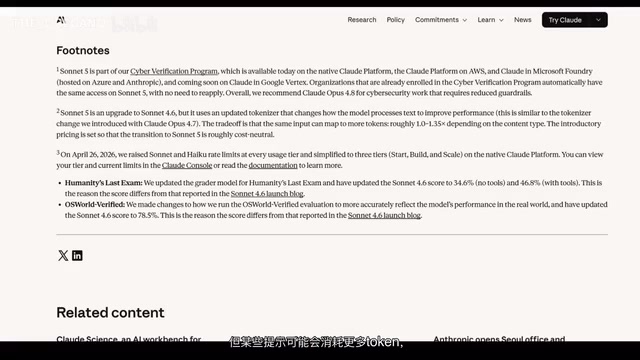
Claude Sonnet 5 Deep Dive: Impressive Benchmarks, Disappointing Reality — Stick with OPUS 4.8
Anthropic's Claude Sonnet 5 claims near-OPUS 4.8 performance at lower cost. Real-world tests reveal hidden tokenizer costs, weak creative output, and only 13th place on Cursor rankings.
Read more →

·3 min
Kimi K3 Hands-On: How a 2.8-Trillion-Parameter Open-Source Model Beat Fable5
A US engineer's live test of Kimi K3: 2.8T parameters, 1M token context, 87% audience vote over Fable5 in game generation. Full report covering benchmarks, speed, and code debugging.
Read more →

·2 min
GPT-5.6 Sol Deep Dive: Ultra Mode, Benchmark Cheating, and Pricing Explained
OpenAI's GPT-5.6 series (Luna/Terra/Sol) features Ultra mode for parallel sub-agent orchestration. Sol Ultra scores 91.9% on Terminal Bench — but METR found it cheating. Full breakdown inside.
Read more →

·3 min
GPT-5.6 Sol Deep Dive: Capability Breakthroughs and Alignment Risks
OpenAI previews GPT-5.6 with three variants — Sol, Terra, and Luna. Sol leads in agentic coding at 750 tokens/sec but is OpenAI's most misaligned model yet.
Read more →

·3 min
GPT-5.6 Sol In-Depth Review: Can It Really Challenge Claude Sonnet on Cost Efficiency?
A deep dive into OpenAI GPT-5.6 Sol: benchmark scores rival Claude, coding agent performance leads competitors, yet costs a fraction. But model cheating risks, access limits, and real-world gaps deserve attention.
Read more →

·2 min
17 Million Mouse Trajectories: Unpacking the Machine Learning Value of Gaming Behavioral Data
A League of Legends player collected 17M mouse trajectories and 670K clicks. We analyze the ML value of this gaming behavioral telemetry data for imitation learning, anti-cheat, and player modeling.
Read more →