#grounding RAG
113 related articles

·2 min
Onboard-CLI: Visualize and Understand Unfamiliar Codebases with LLM + AST
Onboard-CLI is an open-source CLI tool combining LLMs and AST analysis to help developers quickly visualize and understand unfamiliar codebases. A deep dive into its tech approach, use cases, and limitations.
Read more →

·2 min
Visa Harness: An Open-Source Security Testbed for Auditable AI Vulnerability Scanning
Visa's open-source Agentic security testbed Harness orchestrates threat modeling, vulnerability research, adversarial reproduction, and structured reporting into an auditable pipeline — not just a scan button.
Read more →

·7 min
Gemini Meets Google Business Profile: How AI Becomes a Dedicated Business Partner for Small Businesses
Google lets businesses connect their Google Business Profile to Gemini, so the AI can read operating info, reviews, and business data to offer targeted marketing advice—lowering AI barriers for SMBs.
Read more →

·4 min
Getting Started with AI Agent Development: Core Mindset and Learning Path for Beginners
Intimidated by AI Agent development? This article breaks down the two biggest beginner pain points and reveals why the real skill isn't memorizing APIs, but mastering requirement decomposition, workflow design, and problem-solving.
Read more →

·5 min
Building an AI Second Brain: The Complete NotebookLM + Obsidian Workflow
Use NotebookLM for cross-document AI research and reasoning, Obsidian for long-term knowledge storage and linking. Combine both to build a second brain that gets smarter with use.
Read more →

·4 min
24 Hours, No AI, Zero to Rust: Building a Game from Scratch — A Full Account
A YouTuber spent 24 hours learning Rust from zero with no AI tools, mastering ownership, borrowing, and a game engine to build a complete Brick Breaker game. Full account of every challenge.
Read more →

·7 min
Amble Electric Buggy: A New Leisure Mobility Option Built for the 'Second Car'
Portuguese startup Amble launches an electric buggy positioned as a 'second car,' entering the leisure mobility market with boxy design and minimalist philosophy—no autonomous driving, no range race.
Read more →
·6 min
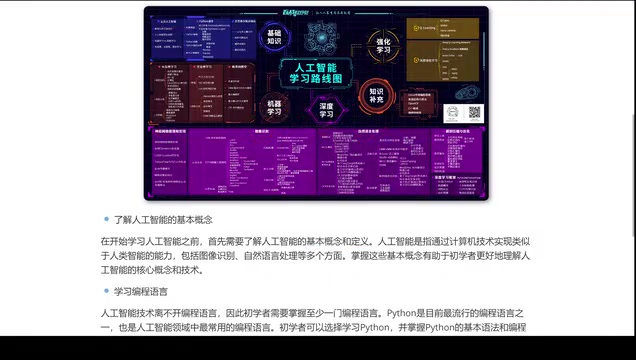
AI for Beginners: A Five-Step Practical Path That Skips the Math and Python Syntax Traps
Struggling with math and Python when learning AI from scratch? This article lays out a five-step entry path: grasp the concepts, learn Python lightly, master ML and deep learning principles, get hands-on with PyTorch, then deepen understanding through real projects.
Read more →

·7 min
Gemini CLI: The AI Development Powerhouse in Your Terminal, Ending Tool Fragmentation
Gemini CLI is Google's open-source AI terminal tool that deeply integrates Gemini model capabilities into the command line—supporting code generation, file operations, Shell execution, and MCP protocol extensions, with 1,000 free daily requests.
Read more →

·4 min
Gemini Latest Updates: Voice-to-Image Generation and AI Empowerment for Small Businesses
Google Gemini's latest Drops update: real-time voice-to-image generation lowers creative barriers, plus new small business AI tools. A deep dive into multimodal AI strategy.
Read more →

·3 min
DeepSeek Open-Sources DiSpark: Up to 85% Faster AI Inference Without Changing Hardware
DeepSeek and Peking University release DiSpark, an open-source framework that speeds up LLM inference by 60–85% using speculative decoding and hierarchical verification — no hardware changes or retraining required.
Read more →

·6 min
AI Job Displacement Fears Cool Down: Why Tech Giants Are Collectively Pivoting to the 'Augmentation' Narrative
Silicon Valley tech giants are quietly abandoning the doomsday 'AI destroys jobs' narrative in favor of AI augmentation and human-AI collaboration. A deep analysis of the reality gap, regulatory pressure, and business logic behind this reversal.
Read more →

·6 min
Inside the AI Workday of Thomson Reuters' CEO: How Leaders Drive Enterprise Transformation by Example
Thomson Reuters CEO Steve Hasker shares his personal AI routine: analyzing documents, managing his calendar, and gaining insights every Monday. A look at how leaders drive real enterprise AI transformation through practice and continuous learning.
Read more →

·2 min
Why Do Tech Entrepreneurs Periodically Disappear — and Then Come Back?
Why do tech founders go quiet for months? This deep dive explores the real reasons behind periodic disappearances: dev cycles, stealth mode strategy, and the attention economy.
Read more →

·2 min
Revisiting 'Stochastic Parrots': Emily Bender on LLM Understanding and the Battle Over Meaning
Emily Bender clarifies the original meaning of 'Stochastic Parrots': LLMs generate text via statistical modeling but lack true understanding of meaning. An overview of the form-vs-meaning debate and its implications for AI honesty.
Read more →

·4 min
Enterprise AI Agent Development Guide: Multi-Task Recognition and Dynamic Tool Calling in Practice
A deep dive into AI Agent architecture and enterprise deployment. From LangChain and ReAct design to dynamic tool calling and multi-task recognition — build autonomous enterprise AI assistants.
Read more →

·5 min
Building RAG from Scratch: Creating a Domain Expert System with Local Small Models
Step-by-step guide to building a complete RAG pipeline with Ollama + LangChain + FAISS + Qwen 1.5B. Run document retrieval and intelligent Q&A locally without a GPU.
Read more →
Google Invests $1.5 Billion to Expand …
·2 min
Google Invests $1.5 Billion to Expand Alabama Data Center, Deepening Its AI Infrastructure Play
Google announces $1.5B phased expansion of its Jackson County, Alabama data center campus. Explore the site selection logic, AI compute race, and community impact.
Read more →

·4 min
Alibaba Open-Sources Page-Agent: A Web AI Agent for Controlling Interfaces with Natural Language
Alibaba open-sources Page-Agent, a TypeScript-based in-page JavaScript GUI agent that lets users control web interfaces with natural language. No scripting needed. Already 23K+ GitHub Stars.
Read more →

·3 min
Building a RAG Q&A Workflow with Dify: A 4-Step Guide to Enterprise Knowledge Base Chatbots
Learn RAG fundamentals and build an enterprise knowledge base chatbot with Dify in 4 steps: data prep, model config, knowledge base import, and workflow orchestration.
Read more →