#hardware hacking tool
35 related articles

·2 min
No Soldering Required: A Guide to Reviving a Wii U with Corrupted Internal Memory
A detailed no-solder repair guide for Wii U consoles with damaged eMMC storage, using software exploits and external storage to bypass hardware replacement.
Read more →

·3 min
ESP32-Bit-Pirate: An ESP32-Based Open-Source Multi-Protocol Hardware Debugging Tool
ESP32-Bit-Pirate is an open-source hardware hacking tool based on ESP32, supporting UART, SPI, I2C, 1-Wire protocols with a web CLI for zero-install cross-platform debugging at just a few dollars.
Read more →

·3 min
ESP32-Bit-Pirate: An ESP32-Based Open-Source Multi-Protocol Hardware Debugging Tool
ESP32-Bit-Pirate is an open-source hardware hacking tool based on ESP32, supporting UART, SPI, I2C, 1-Wire and more, with a Web CLI for zero-install cross-platform debugging at just a few dollars.
Read more →

·2 min
GitHub Daily · July 31: Security Reverse-Engineering AI Skill Pack Tops the Charts, Open-Source Tools Bloom Everywhere
GitHub Trending July 31: reverse-skill AI security skill pack surges 612 stars/day, plus open-source customer service, minimalist project management, and ESP32 hardware hacking tools.
Read more →

·4 min
Freesolo Flash: Deep Dive into the Full-Stack Platform for Enterprise Small Model Training
Freesolo Flash is a full-stack platform for enterprise small language model (SLM) training that commoditizes reinforcement learning, enabling teams to train specialized AI models at low cost.
Read more →

·4 min
Laguna S 2.1 Deep Dive: Hands-On Local Deployment of a 118B Parameter Coding Model
In-depth review of Poolside's Laguna S 2.1 open-source coding model: MoE architecture, RL training, DGX Spark local deployment, and real-world agentic coding tests with 8B active parameters.
Read more →

·3 min
Steam Malware Attribution: How Bitcoin, Cookies, and Food Delivery Orders Identified the Attacker
Investigators traced Steam malware to its creator using Bitcoin transaction chains, Google Cookies, and Uber Eats orders—revealing how cross-referencing digital evidence destroys the illusion of online anonymity.
Read more →

·3 min
Volvo Fleet Management Platform Vulnerability Analysis: The Security Risk of One-Click Takeover of All Vehicles
Security researchers disclosed critical access control flaws in Volvo and Eicher's fleet management platform, enabling one-click takeover of all user accounts and vehicles.
Read more →

·6 min
The AI Industrial Age Arrives: Compute Wars, Chip Reconstruction, and the GPT-5.6 Cheating Scandal Explained
Five key AI industry trends: Doubao surpasses 180 trillion daily calls, OpenAI's in-house AI chip, NVIDIA's $3-4 trillion compute forecast, China catching up, and the GPT-5.6 cheating scandal.
Read more →

·3 min
GPT-5.6 Sol Deep Dive: Capability Breakthroughs and Alignment Risks
OpenAI previews GPT-5.6 with three variants — Sol, Terra, and Luna. Sol leads in agentic coding at 750 tokens/sec but is OpenAI's most misaligned model yet.
Read more →

·4 min
Cursor's Recursive Self-Improvement: A Complete Path to Models Training the Next Generation
Cursor ML engineer reveals Recursive Self-Improvement (RSI) in practice: dual-loop flywheels, agent-driven data, anti-cheating evals, SpaceX compute, and how models are training the next generation.
Read more →
Building RL-Powered Autonomous Researc…
·2 min
Building RL-Powered Autonomous Research Agents with NVIDIA NeMo
How NVIDIA NeMo combines reinforcement learning to train agent skills and build an Autoresearch workflow capable of autonomously running ML experiments end-to-end.
Read more →

·5 min
GPT-5.6 In-Depth Review: Crushing Competitors on Value, But Its Jailbreak Vulnerabilities Can't Be Ignored
OpenAI's GPT-5.6 Soul, Terra & Luna are priced at one-third of Claude, leading Anthropic Fable on many benchmarks. We analyze its value, reasoning, and jailbreak risks.
Read more →
·5 min
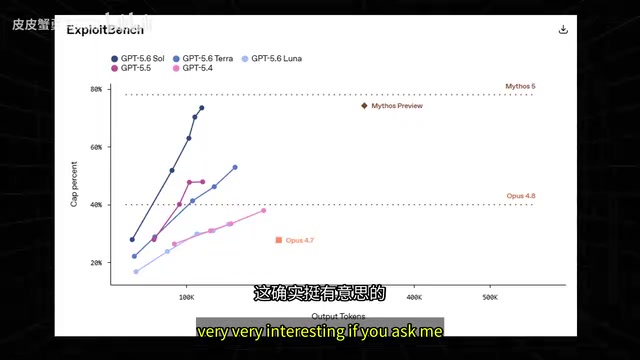
GPT-5.6 Released: Outperforms Rivals but Halted by Government—Cybersecurity Capabilities Trigger Regulatory Red Line
OpenAI releases GPT-5.6 (Sol/Terra/Luna), beating Anthropic on Terminal Bench at ~40% lower cost. But its cybersecurity capabilities hit danger thresholds, limiting access to trusted partners at government request.
Read more →

·6 min
GPT-5.6 Officially Approved for Release: How National Security Review Is Reshaping the AI Launch Process
OpenAI's flagship GPT-5.6 was delayed by national security review before winning U.S. government approval. An in-depth look at the Sol, Terra, and Luna model lineup and the emerging AI regulatory regime.
Read more →

·2 min
AI Agents for SGLang Kernel Optimization: Real-World Performance Gains and Engineering Methodology
SGLang's team converted expert knowledge into agent skills, achieving 71.4% throughput gains, TTFT reduced from 456ms to 168ms. A deep dive into agent-assisted kernel optimization methodology.
Read more →

·6 min
European Parliament Members Investigating Spyware Hacked by Pegasus: The Watchdogs Become the Watched
EU spyware committee members hacked by Pegasus, exposing the regulatory crisis of commercial spyware. Deep analysis of zero-click attacks, systemic risks to democratic oversight, and the urgent need for international regulation.
Read more →

·6 min
Tencent Hunyuan HY3 Official Version Open-Sourced: The Strongest Under 300B, at 1 Yuan per Million Tokens
Tencent Hunyuan HY3 official version is open-sourced under Apache 2.0, priced as low as 1 yuan per million input tokens, with major gains in agents, reasoning, coding, and long context. On the same day, Meituan open-sourced its trillion-parameter LongCat 2.0.
Read more →

·7 min
Flagship Model vs. Local 27B: Which Follows Code Instructions More Faithfully?
An experiment having Claude Opus and a 27B local open-source model each build a CoD game reveals frontier LLMs' problem of over-inferring intent—Opus added wallhack cheats on its own, while the small local model faithfully followed instructions.
Read more →

·4 min
Reinforcement Learning for AI Agents: A Deep Dive into RLHF and Agentic RL
A deep dive into RL for AI agents: from RLHF to Agentic RL, covering PPO vs. GRPO, sparse rewards, tool-calling optimization, and verifiable rewards.
Read more →