#local-first design
158 related articles
Code Review Graph: Using Intelligent C…
·3 min
Code Review Graph: Using Intelligent Code Graphs to Deliver Precise Context for AI
Code Review Graph is a local-first open-source code intelligence graph supporting MCP and CLI. It reduces AI context noise in large repos with persistent graph structures.
Read more →

·3 min
Chrome Built-in AI in Action: Six APIs for Building a Smart Blog Editor
Deep dive into Chrome Built-in AI's six core APIs — Summarizer, Prompt API, Translator and more — applied to a real blog editor. Local, private, no server needed.
Read more →
GitHub Daily · July 17: AI Coding Infr…
·3 min
GitHub Daily · July 17: AI Coding Infrastructure Explodes — From Context Graphs to Vector Indexes
AI coding infrastructure explodes on GitHub: context management, code graphs, and vector indexes become the new battleground as the community shifts from apps to underlying capabilities.
Read more →

·3 min
Waku Agent Deep Dive: The Four Core Pillars of a Local-First AI Assistant
A deep dive into Waku Agent's four pillars: Loop Engineering, three-tier Memory system, Eval assessment, and the Harness scaffold. Full walkthrough of a local-first AI assistant from task execution to memory consolidation.
Read more →
NeuralPGN: A Local-First Chess Opening…
·3 min
NeuralPGN: A Local-First Chess Opening Trainer Powered by the FSRS Spaced Repetition Algorithm
NeuralPGN is an open-source chess opening trainer using the FSRS spaced repetition algorithm, built with Tauri for a local-first, privacy-friendly experience.
Read more →

·3 min
Claude Cowork Deep Dive: Three Key Features That Turn AI Into Your Personal Agent
Learn the 3 features that set Claude Cowork apart from regular Claude Chat: local folder access, local file creation, and Claude.md persistent instructions. Turn AI into your personal agent.
Read more →

·2 min
A College Student Built a Cross-Model Persistent Memory System with Ollama: Decoupled Architecture + AES-256 Encryption
A college student built a ~40K-line Mac app around Ollama featuring a decoupled persistent memory system: standalone embeddings, local vector index, self-healing, AES-256 vault, and local voice mode.
Read more →
Adaptive Recall: A Deep Dive into Pers…
·2 min
Adaptive Recall: A Deep Dive into Persistent Memory for AI Assistants via MCP
Adaptive Recall uses MCP (Model Context Protocol) to give AI assistants like Claude persistent memory across sessions, featuring vector storage, semantic retrieval, and adaptive forgetting.
Read more →
Relm: An Open-Source Tool for Integrat…
·3 min
Relm: An Open-Source Tool for Integrating Local LLMs as Native R Objects
Relm wraps local LLMs as native R objects, enabling local inference, data privacy, and interpretability analysis. A deep dive for R-based data scientists.
Read more →

·3 min
GitHub Daily · July 13: Rust Rewrite of Postgres Ignites the Community, Claude Ecosystem and Local-First Wave Surge Together
GitHub Daily July 13: pgrust rewrites Postgres in Rust and passes 100% regression tests, surging 789 stars in a day. Claude cookbooks and local-first Home Assistant also trend.
Read more →

·4 min
Codex Plans, DeepSeek Executes: A Practical Guide to Multi-Model Collaboration for Saving Tokens
AI programming burning through Tokens too fast? This guide covers the open-source Hand of Labor project's multi-model approach: Codex plans, DeepSeek executes—cutting AI coding costs while boosting output quality.
Read more →

·4 min
Home Assistant: The Local-First Open Source Smart Home Platform That Puts Privacy and Freedom First
Home Assistant is the most mature open source smart home hub, prioritizing local control and privacy, supporting thousands of devices across ecosystems with 88,000+ GitHub stars.
Read more →

·4 min
E2AM: An Open-Source Tool to Quantify AI Training Energy Consumption and Carbon Emissions in Two Lines of Code
E2AM is a Green AI open-source tool that monitors AI model training energy use, carbon emissions, and accuracy-per-joule metrics in just two lines of code. Supports PyTorch and Hugging Face, runs locally with no server needed.
Read more →

·5 min
The Complete Guide to Building an AI-Powered Second Brain with Obsidian + Hermes Agent
An in-depth guide to building an AI-driven second brain with Obsidian + Hermes Agent. Covers living files, VPS deployment, core memory mechanisms, and skill visualization.
Read more →

·4 min
Coze in Practice: A Complete Guide to Building Multi-Agent Collaboration Teams
A systematic guide to Coze's positioning and capabilities, covering Agent-building platform categories, Skill modules, workflow orchestration, and multi-Agent team building.
Read more →

·3 min
Open-Source Writing App Hammer Seeks Translation Volunteers — No Coding Skills Required
Hammer is an MIT-licensed, local-first open-source story writing tool available cross-platform. Facing a localization manpower shortage, it seeks translation volunteers via Crowdin — no coding needed. Chinese localization remains a blank slate.
Read more →

·2 min
Local AI Agent Reads arXiv So You Don't Have To: Only the Papers That Actually Matter
Research Radar is an open-source local AI agent that fetches arXiv papers daily, scores and filters them in batches, deep-reads summaries, and pushes truly relevant content via Telegram. Supports local models, keeps data on your machine, free and self-hostable.
Read more →

·6 min
Home Self-Hosting Server Setup Guide: Building a Private Cloud Ecosystem from Scratch
One 32GB server, 8 hours to build a complete home self-hosting ecosystem. This article details the selection logic behind core services like Jellyfin, Forgejo, Immich, and Ollama, plus infrastructure setup essentials for Nginx Proxy Manager and Podman Compose.
Read more →

·3 min
Velorn: Open-Source NLE Editor Where AI Agents Handle Editing and Mixing
Velorn is an open-source NLE with ComfyUI generation and a local MCP server of 100+ tools, letting Claude and Cursor agents edit timelines and mix audio — no cloud credits required.
Read more →
·5 min
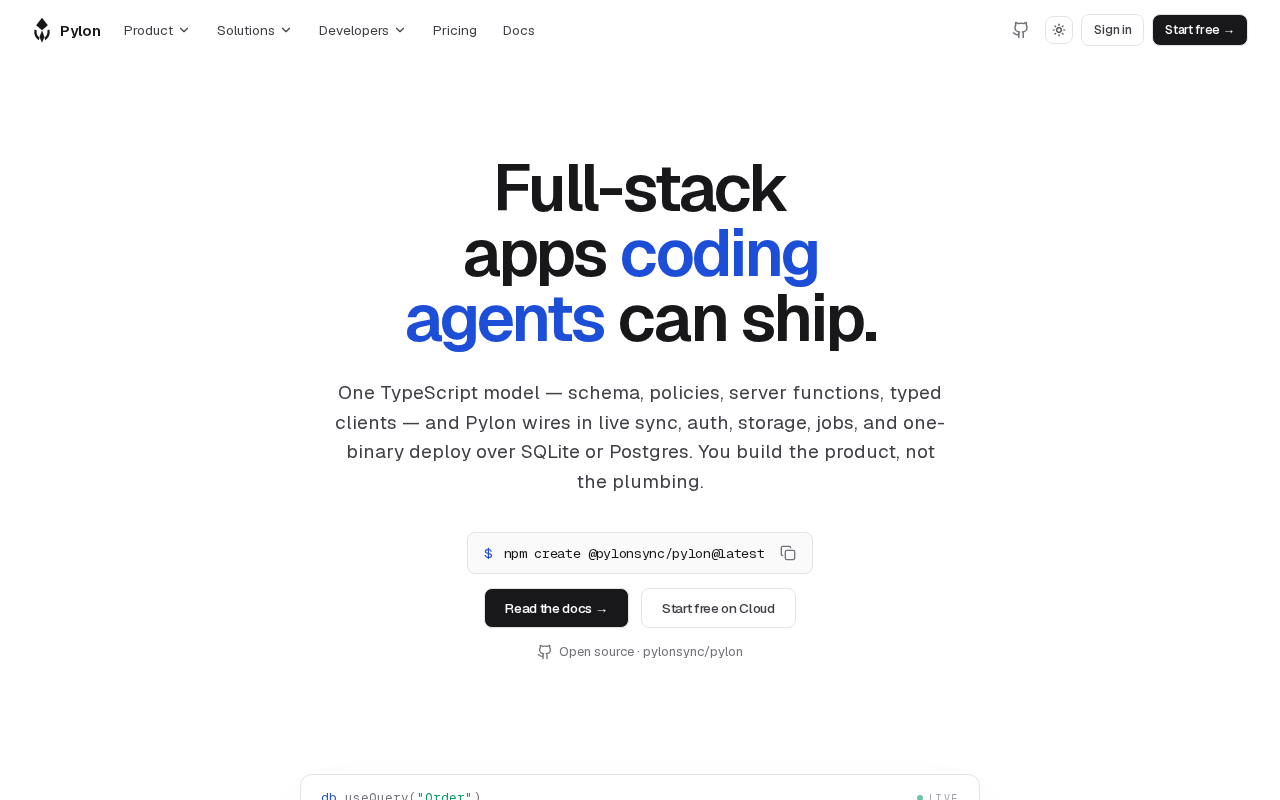
Pylon Sync: An In-Depth Look at the Full-Stack Realtime Framework Built for AI Agents
Pylon Sync is an "Agent-First" full-stack realtime framework that treats AI Agents as first-class design citizens, reducing coding errors via strong conventions.
Read more →