#machine learning laptop
59 related articles
Building an eGPU for Local LLM on a $1…
·2 min
Building an eGPU for Local LLM on a $1,000 Budget: A Practical Buying and Setup Guide
Building an eGPU for local LLMs on a $1,000 budget? This guide covers GPU selection, dock costs, RTX 3090 vs 3060 value, and top tools like Ollama and llama.cpp.
Read more →
Building an Offline RAG App from Scrat…
·3 min
Building an Offline RAG App from Scratch: A Complete Guide to Local PDF Q&A
Learn how to build a fully offline RAG app using Ollama, ChromaDB, and Flask for local PDF Q&A. Covers chunking, vectorization, retrieval, and hallucination prevention.
Read more →

·2 min
P2P Student GPU Sharing Network: A Full Breakdown of Technical Feasibility and Real-World Challenges
A deep dive into the technical feasibility and real-world challenges of P2P student GPU sharing networks, covering distributed computing, latency, security, and incentive design.
Read more →
Relm: An Open-Source Tool for Integrat…
·3 min
Relm: An Open-Source Tool for Integrating Local LLMs as Native R Objects
Relm wraps local LLMs as native R objects, enabling local inference, data privacy, and interpretability analysis. A deep dive for R-based data scientists.
Read more →

·3 min
Decoding Databricks' AI Strategy: The Omnigents Orchestration Platform and LTAP Unified Storage Architecture
An in-depth look at the AI strategy of Databricks co-founders Matei Zaharia and Reynold Xin: the open-source Agent platform Omnigents, the unified storage architecture LTAP, and how Dream Engine reshapes data and intelligence.
Read more →

·2 min
Why Does Speech-to-Text Keep Failing? A Practical Guide to Optimizing Messy Audio Transcription
Meeting recordings, mixed languages, and background noise causing speech-to-text to drop words or produce gibberish? This article dives deep into ASR hallucination causes and offers practical solutions.
Read more →

·2 min
Local AI Agent Reads arXiv So You Don't Have To: Only the Papers That Actually Matter
Research Radar is an open-source local AI agent that fetches arXiv papers daily, scores and filters them in batches, deep-reads summaries, and pushes truly relevant content via Telegram. Supports local models, keeps data on your machine, free and self-hostable.
Read more →

·2 min
WisprGemma: Fully Local In-Browser Voice Input — Your Audio Never Leaves Your Device
WisprGemma is an open-source, browser-local voice input tool built on WebGPU and Transformers.js. One Gemma model handles speech recognition and text polish — your voice never leaves your device.
Read more →

·5 min
Why Did Ollama Rise So Fast? Decoding the Success of a Local LLM Tool
How did Ollama grow from a niche open-source project into developers' default choice for running local LLMs? This article breaks down its rise across product design, technical strategy, and ecosystem building.
Read more →

·4 min
The OpenAI Codex Product Philosophy: How AI Engineers Are Shifting from Writing Code to Managing Agents
OpenAI Codex isn't about replacing engineers—it's about empowering them. A deep dive into the AI Engineer conference talk: from code completion to long-horizon agents, Value Maxing, and managing agent teams.
Read more →

·7 min
Complete Guide to Training Small Models on Kaggle's Free Compute: GPU Quotas and Practical Tips
In-depth guide to Kaggle's free-tier compute: P100/T4 GPU with 30 hours/week quota, 12-hour sessions, suitable models like CNN and BERT fine-tuning, plus tips like mixed precision and checkpointing to start deep learning at zero cost.
Read more →

·7 min
The Prompt is the Platform: How AI Agents Deeply Participate in System Design and Specification
Resonate's founder proposes "The Prompt is the Platform": as AI agents generate production-grade implementations from abstract specs, engineers' value shifts to specification. A deep dive into deterministic simulation and forbidden-fruit debugging.
Read more →
·6 min
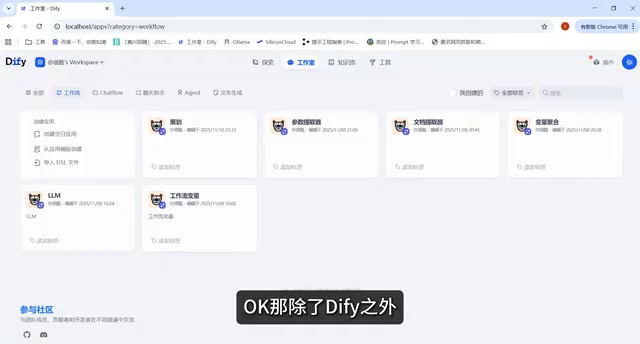
Complete Guide to Deploying Dify Locally: Docker + Ollama + RAG Setup Tutorial
A detailed guide to deploying the Dify agent platform locally: from Docker setup and integrating Ollama + DeepSeek local LLMs to workflow orchestration and RAG knowledge base construction.
Read more →

·7 min
The Trap of AI Visibility Dashboards: Why Most Metrics Are Meaningless
Can a brand's "visibility" in AI answers really be quantified? This article deeply dissects the methodological flaws of AI visibility dashboards—from LLM output randomness and black-box mechanisms to vanity metric traps.
Read more →
·7 min
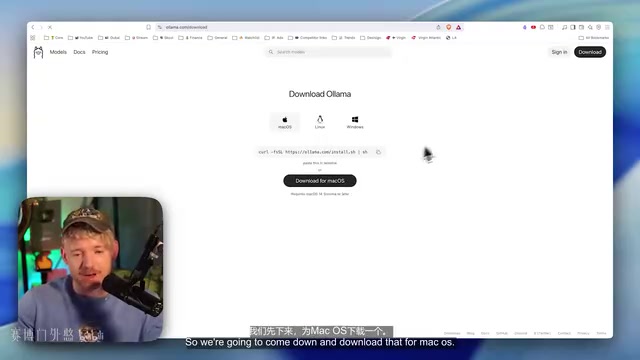
Ollama + Hermes Local AI Deployment: Building a 100% Private Personal AI Operating System
Build a fully private local AI system with Ollama + Hermes: zero cost, no rate limits, data stays local. Learn deployment steps, model selection tips, and private/cloud hybrid workflows.
Read more →

·7 min
Electron + LangGraph in Practice: Building an AI Agent Visual Orchestration App from Scratch
A hands-on guide to building an enterprise-grade AI Agent workflow orchestration app with Electron Forge and LangGraph, covering local LLM deployment (Qwen3-0.6B), node-based visual canvas design, and full Function Calling integration.
Read more →

·6 min
Can AI Antivirus Cure the Chronic Pop-Up Problem? An In-Depth Hands-On Review of Wukong Security
Struggling with Windows pop-ups and rogue software? This in-depth review of Wukong Security reveals how AI antivirus breaks past traditional virus-database limits, blocking ads and bundleware in real time, plus a comparison of five repair shops.
Read more →
·7 min
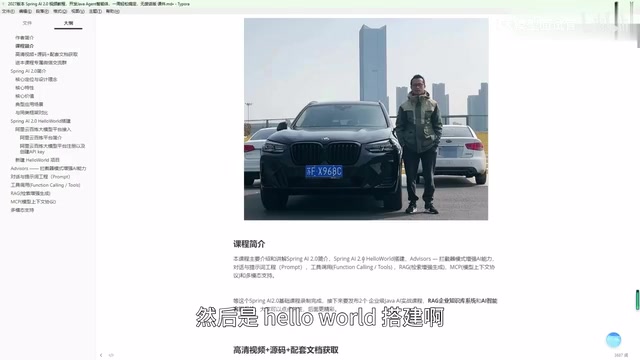
Spring AI 2.0 in Practice: A Beginner's Guide for Java Developers Building AI Agents
A complete Spring AI 2.0 guide for Java developers covering unified API abstraction, RAG, tool calling, MCP protocol, and enterprise projects to build AI Agents.
Read more →
Launch a Cloud Dev Environment in One …
·4 min
Launch a Cloud Dev Environment in One Prompt: A Deep Dive into the Codex DigitalOcean Plugin
OpenAI Codex's DigitalOcean plugin lets developers launch persistent cloud dev environments with a single natural language prompt. A deep dive into capabilities, use cases, and risks.
Read more →

·6 min
A 284B Model Running on a MacBook: The Real Breakthrough and Barriers of Local DeepSeek Inference
Redis creator runs 284B-parameter DeepSeek model on a MacBook Pro at 26 tokens/sec using a pure C engine, asymmetric quantization, and MoE architecture.
Read more →