#model cost optimization
2936 related articles

·4 min
OpenAI Chief Research Officer Mark Chen: Within Three Years, AI Will Independently Conduct End-to-End Scientific Research
OpenAI CRO Mark Chen shares frontier AI research insights: RL boundaries, why Scaling Laws aren't dead, the o1 reasoning model's origin story, and the bold three-year goal of AI conducting end-to-end scientific research independently.
Read more →

·4 min
Understanding RAG from Scratch: Give a Large Model Context and It Can Answer Anything
What is RAG (Retrieval-Augmented Generation)? This article explains RAG core concepts with simple analogies, analyzes three LLM pain points, and details RAG's working mechanism and future trends.
Read more →

·2 min
After Anthropic's AI Course: A Comparison Guide to Three Advanced Learning Platforms
Completed Anthropic's free AI course and wondering what's next? This guide compares Udacity, DeepLearning.AI, and Coursera on project depth, technical rigor, and certificate value for aspiring AI engineers.
Read more →

·4 min
Advancing Your Self-Taught Machine Learning Journey: Three Paths Forward After Completing Foundational Projects
After completing MNIST implementation and paper reproduction, how should self-taught ML learners advance? This article outlines three paths: computer vision, NLP, and math foundations.
Read more →

·3 min
34 Model Iterations in Review: Most Problems Were Actually in the Evaluation Pipeline
After 34 model iterations, an AIOps engineer found most gains came from evaluation bugs. This article details three critical evaluation pitfalls and solutions for MLOps practitioners.
Read more →

·3 min
LLM Learning Roadmap: A Three-Phase Practical Guide
A systematic LLM learning roadmap: from Python basics to LangChain & LlamaIndex frameworks, RAG, Agent, and fine-tuning core skills, plus hands-on projects to master LLM app development in 3 months.
Read more →

·2 min
Beef and Dairy Account for 41% of Global Farmland Biodiversity Damage
Research finds beef and dairy production accounts for 41% of global farmland biodiversity damage. Explore how livestock land use drives habitat loss and viable solutions including dietary shifts and alternative proteins.
Read more →

·3 min
Java + AI in Practice: Building an Enterprise-Grade Airline Intelligent Customer Service System
Learn how Java engineers can enter AI application development using Spring AI to build an enterprise-grade airline intelligent customer service system with RAG, Function Calling, and more.
Read more →
·3 min
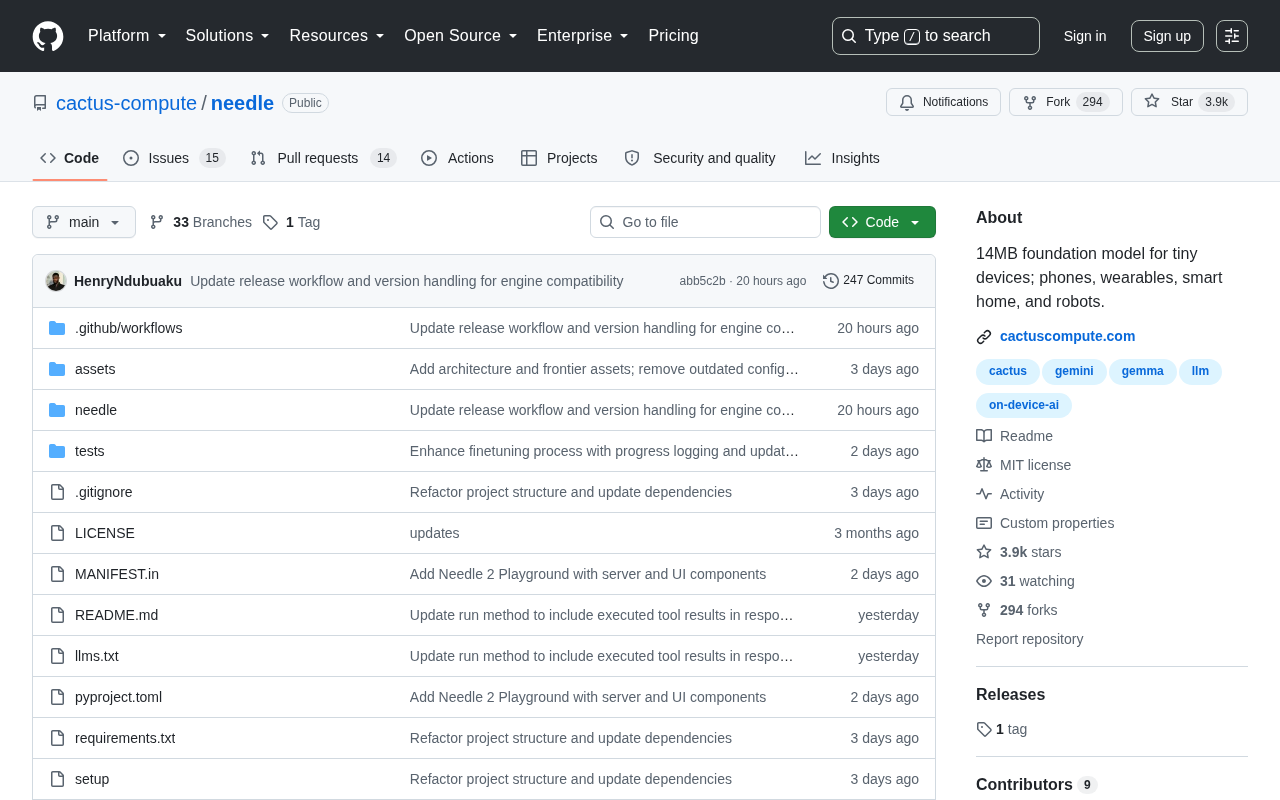
Needle: How a 14MB Foundation Model Is Unlocking Edge AI Deployment
Needle is a 14MB open-source foundation model from cactus-compute, designed for phones, wearables, smart home devices, and robots. Explore its edge AI potential.
Read more →

·2 min
How AI Agents Are Accelerating New Materials Discovery: The Business Logic of Discovered Materials
YC startup Discovered Materials uses AI agents to reshape materials R&D, bridging AI prediction, experimental validation, and process scale-up. Analyzing opportunities and challenges.
Read more →

·2 min
Line9: A Custom Layout Engine That Solves Mermaid's Chaotic Diagram Rendering
Line9 is a Mermaid rendering engine with a custom layout algorithm that solves node overlapping and line crossing issues in complex diagrams while maintaining full Mermaid syntax compatibility.
Read more →

·2 min
NVIDIA Open-Sources Switchyard: An AI Task Scheduling Engine Built with Rust
NVIDIA-NeMo team open-sources Switchyard, a high-performance AI task scheduling engine built in Rust. Explore its technical positioning, why Rust was chosen, and its strategic role in the NeMo ecosystem.
Read more →

·2 min
LTX-2 Open Source: A Complete Analysis of the Unified Audio-Video Generation Model
Deep dive into Lightricks' open-source LTX-2 unified audio-video generation model, covering its Python inference toolkit, LoRA fine-tuning trainer, and synchronized audio-visual generation capabilities.
Read more →

·5 min
Harness: The Operating System That Takes LLM Agents from Demo to Production
Deep dive into Harness technology: how context engineering, memory management, and multi-agent architecture transform LLM agents from stochastic demos into stable production systems.
Read more →

·2 min
Understanding GGUF Quantization: The Real Difference Between Q4_K_M and Q4_K_S
Detailed explanation of the core differences between GGUF model Q4_K_M and Q4_K_S: why same-Q4 files differ in size, k-quant protection strategies, quantization selection guide, and VRAM planning tips.
Read more →

·3 min
ml-pipes: Building Software Engineering Best Practices Into ML Inference Pipelines
ml-pipes is an open-source framework that builds pre-run validation, pipeline inspection, tracing, and benchmarking into ML inference pipelines, bridging the MLOps engineering gap.
Read more →

·2 min
Aquifer Open Source: A Traffic Smoothing Solution for Peak Shaving Bursty GPU Inference Workloads
Aquifer is an open-source traffic smoothing runtime that uses durable queue buffering and backend backpressure to solve burst traffic challenges in GPU inference services, enabling peak shaving and cost reduction.
Read more →

·4 min
6 Must-Do Tasks Before Deploying Enterprise AI Agents: A Complete Guide to Observability + Evaluation
A detailed guide to 6 critical engineering challenges for enterprise AI Agents before production, covering Langfuse-based tracing, observability, evaluation stages, prompt governance, and high-concurrency architecture.
Read more →

·5 min
Building Data Agents with BigQuery and ADK: AgentOps in One Line of Code
Deep dive into Google Cloud's complete stack for building data Agents with BigQuery and ADK, covering MCP Toolbox parameterized SQL, managed MCP servers, and Agent Analytics one-line observability.
Read more →

·2 min
ChatGPT Desktop Arrives on Linux: Developers Get a Native AI Coding Experience
OpenAI launches ChatGPT Linux desktop preview supporting ChatGPT, ChatGPT Work, and Codex. Linux developers gain native AI-assisted coding, code completion, and project integration capabilities.
Read more →