#modular agent development
395 related articles

·4 min
100,000 Lines of Code in 7 Days: A Solo Developer's Hands-On Guide to AI-Assisted iOS Development
A solo developer iterated an iOS app to 100,000 lines of code in 7 days and shipped it. This article breaks down the core methodology: delegate the frontend to AI, control the backend by hand.
Read more →

·4 min
Four Major LangChain Updates: OpenWiki, Voice Agents, and Sub-Agent Orchestration Explained
LangChain releases four major updates: OpenWiki for auto-generating codebase docs, voice agent tutorials, Harbor evaluation integration, and deepagents programmable sub-agents.
Read more →

·5 min
Getting Started with LangChain: LLM Invocation, Agent Practice, and Environment Setup Guide
Starting from the three limitations of LLMs, this guide systematically explains LangChain's core positioning, environment setup, API key prep, model init, and the message system. Learn init_chat_model and AIMessage/HumanMessage/SystemMessage.
Read more →

·4 min
Dify Getting Started: A Complete Guide to Building AI Workflows Without Code
A complete guide to Dify's core features and 1.8.0 deployment. Covers 5 app types, Docker setup, Workflow vs Chatflow differences, and RAG knowledge bases for beginners.
Read more →

·2 min
Side Chats: No More Interruptions When AI Conversations Branch Off
Side Chats lets you explore branching ideas in persistent AI agent threads without interrupting your main conversation, then bring insights back via @-mention.
Read more →

·4 min
4 Skills to Completely Transform Claude Code: Say Goodbye to Token Waste and Cut Daily Coding to 2 Hours
Does Claude Code always give irrelevant answers? This article breaks down 4 core Skill plugins: Project Context Engine, PRD Requirements Translator, Code Review tool, and Daily Report Generator—showing you how to transform Claude Code from a money-burner into a true AI coding assistant.
Read more →

·7 min
Base44 in Practice: How Claude Code Powered Rapid Scaling from 1 to 80 People
How Base44's product team scaled from a single founding engineer to an 80-person team with Claude Code. Covers AI-assisted onboarding, code review, user evaluation, and QA automation.
Read more →

·2 min
Agent Skills: Bringing Production-Grade Engineering Capabilities to AI Coding Agents
Google engineer Addy Osmani's open-source project agent-skills (76k+ GitHub stars) injects production-grade engineering skills into AI coding agents, covering performance, security, and code quality.
Read more →

·3 min
How to Choose a Practical LLM/RAG/AI Agent Course: Four Key Criteria
Learn how to pick the best LLM, RAG, and AI Agent courses. Discover 4 key criteria for hands-on AI learning and top resources for developers.
Read more →

·3 min
3 Skill Configurations That Turn Claude Code into a Testing Powerhouse — Say Goodbye to Repetitive Work
Still using Claude Code as a chatbot? Learn 3 Skill configurations for QA engineers: Bug report generation, code risk review, and test data construction.
Read more →
·6 min
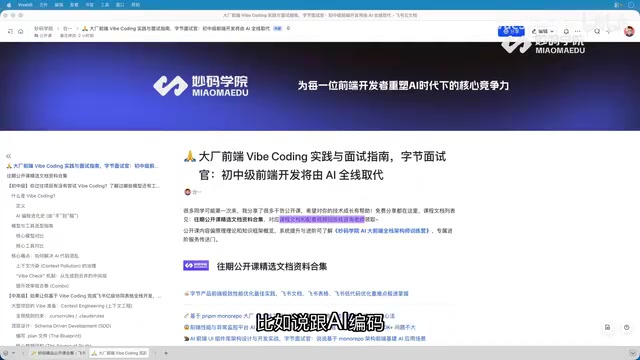
Vibe Coding in Practice at Big Tech: How Frontend Engineers Can Avoid Being Replaced in the AI Era
A big-tech interviewer reveals: junior/mid frontend dev is being replaced by AI. This article breaks down 3 core Vibe Coding interview questions to help you master key skills for the AI-assisted coding era.
Read more →

·2 min
LangChain Prompt Templates in Practice: Building Your Own Customizable AI JARVIS
Learn LangChain Prompt templates and prompt engineering to build a customizable AI assistant like JARVIS. Covers LLM vs Chat Model differences with practical examples.
Read more →

·5 min
From Prompts to Harness Engineering: The Evolution of AI Agent Development Paradigms
Why has AI engineering methodology evolved from prompts to context engineering and now Harness engineering? This article examines three paradigms, key bottlenecks, and the Agent = Model + Harness formula.
Read more →

·2 min
Mistral Releases Robostral Navigate: A Deep Dive into the Robot Navigation Foundation Model
Mistral launches Robostral Navigate, a state-of-the-art robot navigation model. We break down the technical context, open-source value, and what it means for embodied AI.
Read more →

·6 min
A Three-Month AI Agent Learning Roadmap: From Zero to Hands-On Agent Development
A systematic breakdown of the complete AI Agent learning roadmap, covering prompt engineering, the ReAct paradigm, memory mechanisms, and multi-agent collaboration, with hands-on project advice.
Read more →

·6 min
MIRA: An Analysis of a Multiplayer Interactive World Model Built on Rocket League
MIRA is an interactive world model project for the multiplayer competitive game Rocket League, exploring how neural networks simulate multi-agent interaction and complex physics. An in-depth look at its significance, challenges, and prospects.
Read more →
·7 min
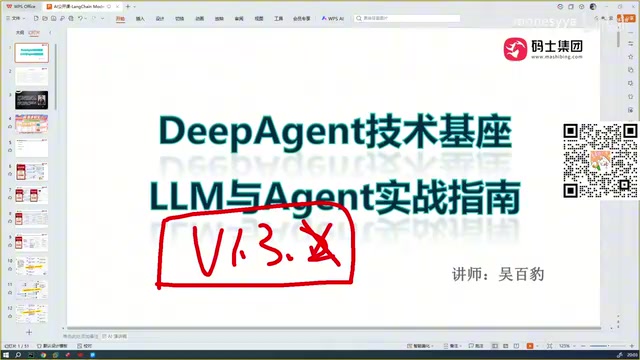
Getting Started with LangChain 1.3: Core Concepts of LLMs and Agents
An in-depth breakdown of LangChain 1.3's core concepts, covering the three major limitations of LLMs, Agent architecture, memory management, and a complete learning path. Master LangChain and LangGraph to quickly build AI development skills.
Read more →

·7 min
From Vibe Coding to Engineered AI Programming: A Practical Guide to Enterprise Development
AI coding tools are changing development, but Vibe Coding hides risks in code quality and maintenance. This article explores Engineered AI Programming, compares Codex and Claude Code, and reveals real enterprise development paths.
Read more →

·4 min
AI Weekly: GPT-5.6 Launches in Three Tiers, Open-Source Inference Frameworks and Robot Safety Break Through Across the Board
This week in AI: OpenAI launches GPT-5.6 in three tiers (Sol/Terra/Luna) hitting 91.9% on coding benchmarks; DeepSeek and PKU open-source DSpark for 85% faster inference; Prime Intellect trains trillion-param models on just 28 H200s; Anthropic Claude enters Slack.
Read more →

·5 min
How the Brain Sees and Thinks Simultaneously: A Complete Guide to Predictive Coding Circuits in Visual Cortex
Why can humans "see" the world even under blur and occlusion? This article analyzes bidirectional feedforward-feedback circuits in visual cortex, revealing how predictive coding fuses perception with cognition and its implications for AI.
Read more →