#modular agent development
392 related articles

·3 min
Spring AI 2.0 Deep Dive: A Java Developer's Guide to LLM Application Development
A deep dive into Spring AI 2.0: provider-agnostic APIs, RAG with vector databases, and how Java developers can build LLM apps using the Spring ecosystem.
Read more →

·2 min
WorkBuddy Advanced: Develop Your Own AI Skills in 3 Steps — No Coding Required
Most people use only 10% of WorkBuddy's potential. Learn how to build custom AI Skills in 3 steps using plain language — no coding required.
Read more →

·2 min
LangChain in Practice: Building the ChatDoc Document Chat Application with RAG
An in-depth explanation of RAG (Retrieval-Augmented Generation) principles, with a hands-on guide to loading PDF, Word, and other document formats in LangChain to build a complete ChatDoc Q&A app.
Read more →

·3 min
LangChain 1.3 in Practice: A Complete Technical Guide from LLMs to DeepAgent
An in-depth analysis of the core knowledge system of LangChain 1.3, covering the Harness architecture philosophy, DeepAgent positioning, LangGraph fundamentals, Agent memory, and human-in-the-loop.
Read more →

·6 min
GPT-5.6 vs Grok 4.5 on the Same Day: A Packed Week of Flagship AI Model Launches
OpenAI's GPT-5.6 launches with Sawa, Terra, and Luna sub-models the same day as Musk's Grok 4.5, while Anthropic, Meta, and NVIDIA make their moves. A packed week of flagship AI launches.
Read more →

·3 min
Skill Pack-Driven AI Agents: An Efficient Alternative to Complex Workflows
Ditch complex workflow nodes. Use Agent Skill packs to dynamically load AI capabilities, build stable intelligent automation, and understand RAG, LLM limits, and Scale Agent plugin setup.
Read more →

·4 min
Getting Started with LangChain: LLM Limitations, Agent Principles, and Environment Setup in Practice
An in-depth look at LangChain's core value: the three limitations of LLMs, unified model interfaces, modular architecture, configuring the DeepSeek API, and understanding the SystemMessage/HumanMessage/AIMessage/ToolMessage system to build a foundation for Agent development.
Read more →

·5 min
How Can Working IT Professionals Learn AI Efficiently? A Practical Learning Path from Zero to Real-World Projects
Limited time but want to learn AI systematically? This guide maps out a practical learning path for working IT pros—from AI application engineering and prompt engineering to RAG and Agents.
Read more →

·4 min
The Ultimate RAG Interview Guide: 204 Questions, 12 Architectures, and 6 Failure Modes Explained
The open-source project "Interview System" offers 204 RAG interview questions, 12 architecture approaches, and deep analysis of 6 failure modes. Prepare systematically for RAG engineer roles.
Read more →

·6 min
Airtel Gives Away Free Perplexity Pro: Will You Be Charged Automatically When It Expires?
Airtel partnered with Perplexity to offer users a free one-year Pro subscription, but the renewal charging mechanism worries many. This article breaks down the billing logic of operator-bundled subscriptions and offers practical self-protection tips.
Read more →

·4 min
Coze in Practice: A Complete Guide to Building Multi-Agent Collaboration Teams
A systematic guide to Coze's positioning and capabilities, covering Agent-building platform categories, Skill modules, workflow orchestration, and multi-Agent team building.
Read more →

·2 min
Microsoft Open-Sources .NET Skills: Making AI Coding Agents Master C# Development
Microsoft open-sources dotnet/skills, packaging .NET/C# best practices as structured skills for AI coding agents. Bridges domain knowledge gaps in general LLMs, improving code quality for GitHub Copilot and other tools.
Read more →
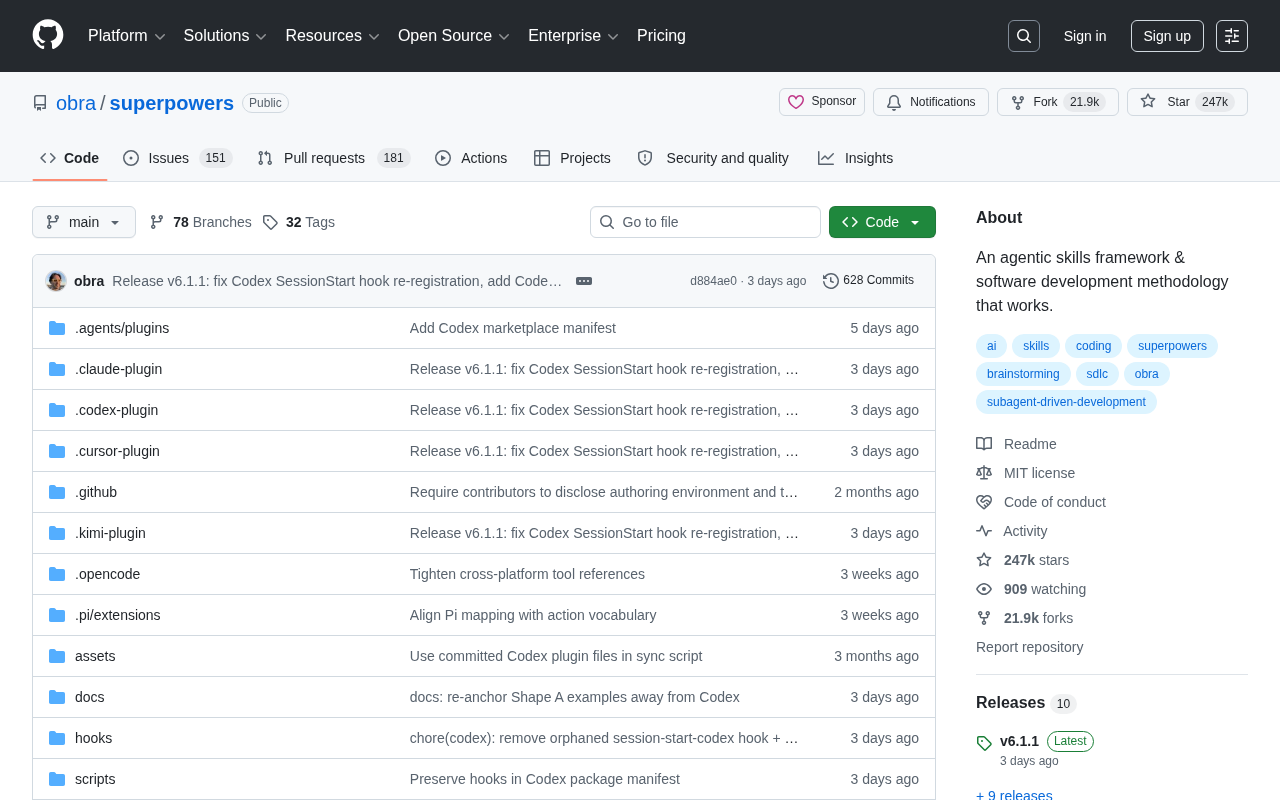
·4 min
Superpowers: Enabling AI Agents to Truly Master Software Development Methodology
Superpowers is a trending GitHub project that builds an agentic skills framework with Shell scripts, injecting software engineering methodology into AI coding workflows. A deep dive into its architecture and value.
Read more →

·4 min
ChatGLM Large Model Development Tutorial: From Zero to Enterprise Deployment
Systematically learn ChatGLM large model development, covering Transformer principles, RAG, private deployment, fine-tuning, and Agent development, with a roadmap and hands-on cases.
Read more →

·2 min
Deep Dive into Claude Skills Open Source Project: A Practical Guide to Building an AI Skill Library for Engineers
Matt Pocock open-sources the mattpocock/skills project, publicly sharing his personal .claude directory config. An in-depth look at the Claude Skills mechanism, skill library methodology, and the shift from prompt engineering to skill engineering.
Read more →

·3 min
Google Open-Sources Stitch Skills: A New Practice in AI Agent Skill Standardization
Google Labs open-sourced stitch-skills, a standardized skill encapsulation solution for AI Agents, compatible with Gemini CLI, Claude Code, Cursor and more.
Read more →

·3 min
Hermes Agent for Kubernetes Cluster Management: AIOps Tool Selection and Cost Analysis
An in-depth review of managing Kubernetes clusters with Hermes Agent, covering K8S AIOps tool evolution, the truth about Token costs, and a three-level AI operations framework.
Read more →

·4 min
100,000 Lines of Code in 7 Days: A Solo Developer's Hands-On Guide to AI-Assisted iOS Development
A solo developer iterated an iOS app to 100,000 lines of code in 7 days and shipped it. This article breaks down the core methodology: delegate the frontend to AI, control the backend by hand.
Read more →

·4 min
Four Major LangChain Updates: OpenWiki, Voice Agents, and Sub-Agent Orchestration Explained
LangChain releases four major updates: OpenWiki for auto-generating codebase docs, voice agent tutorials, Harbor evaluation integration, and deepagents programmable sub-agents.
Read more →

·5 min
Getting Started with LangChain: LLM Invocation, Agent Practice, and Environment Setup Guide
Starting from the three limitations of LLMs, this guide systematically explains LangChain's core positioning, environment setup, API key prep, model init, and the message system. Learn init_chat_model and AIMessage/HumanMessage/SystemMessage.
Read more →