#multi-round prompt strategy
65 related articles

·5 min
Practical AI Cost Optimization: A Deep Dive into Intelligent Routing and Context Compaction
AI bills keep soaring? This article breaks down two core cost-reduction strategies: intelligent routing via an LLM Gateway, and context compaction to cut Token usage—no major refactoring needed.
Read more →

·3 min
Benchmarking LLMs on Smartphones: A Deep Dive into the MELTing Point Benchmark
The MELTing Point paper is the first to evaluate mobile LLM performance in real user scenarios, covering iPhone, Samsung, Pixel and more, testing TinyLlama, Mistral-7B and others—revealing GPU inference gains, 47°C heat warnings, and prefill-decode disaggregation.
Read more →

·6 min
A Deep Dive into AI Agent Harnesses: The Core Engineering Behind Agent Frameworks
What is an AI Agent's harness? This article systematically dissects the core components of agent frameworks: context management, tool use, control loops, and caching strategies—revealing why the same model performs so differently across harnesses.
Read more →

·6 min
The Eight-Step Method for Agent Development: A Practical Path from Pitfalls to Production
Many enterprises fail at AI Agents due to choosing the wrong tools and lacking methodology. This article outlines an eight-step Agent development method—from cognitive foundations, scenario selection, hand-writing ReAct, and structured output to Tool Use, RAG, evaluation sets, and production fallback.
Read more →

·4 min
AIML Capstone Project Selection: Is a Multi-Agent Debate System Worth Building?
Torn over your capstone topic? This article analyzes the academic value, feasibility, and innovation potential of a Multi-agent Debate system to help AIML students decide.
Read more →

·3 min
GPT-5.6 Three-Tier Model Lineup Leaked, OpenAI May Delay IPO to Next Year
OpenAI previews GPT-5.6 models Sol, Terra, Luna; Codex launches on mobile; SenseTime develops U1 Pro rivaling GPT Image; Gemini enters Android Auto; OpenAI IPO may slip to next year.
Read more →

·5 min
GPT-5.6 Launches: Three Product Lines + Government Approval — The Rules of the AI Industry Are Being Rewritten
OpenAI releases GPT-5.6 with three models — Sol, Terra, Luna — bringing major gains in coding and cybersecurity. More critically: the U.S. government now reviews AI model releases, making frontier AI regulation the new industry norm.
Read more →

·6 min
Verification Loops Quadruple DeepSeek's Intelligence at One-Seventh the Cost of Claude Opus
By introducing an engineered verification loop reasoning framework, DeepSeek's effective pass rate on complex tasks can improve ~4x, matching Claude Opus at one-seventh the cost. A deep dive into verification loops, test-time compute scaling, and their practical implications.
Read more →

·7 min
Electron + LangGraph in Practice: Building an AI Agent Visual Orchestration App from Scratch
A hands-on guide to building an enterprise-grade AI Agent workflow orchestration app with Electron Forge and LangGraph, covering local LLM deployment (Qwen3-0.6B), node-based visual canvas design, and full Function Calling integration.
Read more →

·7 min
DryFox v0.3.3: AI Agent Team Collaboration + Composable UI Panels Explained
In-depth look at DryFox v0.3.3's three core features: multi-role agent team collaboration, one-click reusable team templates, and block-style composable UI panels. With Stop Hook, file mailbox comms, and hot-reload plugins.
Read more →

·6 min
Gas Town: A Multi-Agent Workspace Manager Built in Go
Gas Town is an open-source multi-agent workspace manager built in Go with 16,000+ GitHub Stars. This article analyzes its architecture, Go language advantages, and typical multi-agent collaboration scenarios.
Read more →

·4 min
Claude Code New Features Deep Dive: Remote Control, Multi-Agent Parallelism, and Auto Memory
Deep dive into Claude Code's major new updates: Remote Control for session takeover, Auto Mode to reduce interruptions, multi-agent code review, Auto Memory, and Routines for cloud automation workflows.
Read more →

·7 min
Getting Started with LangGraph Multi-Agent Development: Architecture Analysis and Three Practical Case Studies
Learn LangGraph multi-agent development covering Supervisor and Collaboration architectures, with three hands-on projects: code assistant, prompt assistant, and WebRTC digital human.
Read more →

·6 min
Getting Started with LangChain: A Deep Dive into Model and Agent Core Concepts
Deep dive into LangChain's core Model and Agent concepts, covering unified model interfaces, agent tool calling, middleware mechanisms, and key principles for building LLM applications.
Read more →

·7 min
Complete Guide to OpenCode: Installation, Configuration, and Custom Commands in Practice
A systematic guide to OpenCode, the open-source terminal AI coding tool: installation methods (including WSL), model configuration, rules files, Agent types, custom commands, and MCP tool extensions.
Read more →

·7 min
Agent Loop Explained: The Core Runtime Mechanism and Think-Act Cycle of AI Agents
Deep dive into Agent Loop mechanics: the think-act cycle, how agents differ from LLMs, termination conditions, and design principles for building autonomous AI Agent systems.
Read more →

·6 min
Python Freelancing Side Hustle in Practice: Platform Channels, Pitfall-Avoidance Guide & Complete Monetization Breakdown
A complete guide to Python tech freelancing: platform comparisons, milestone payment strategies, legal boundaries, delivery management, and building stable client relationships for sustainable side income.
Read more →

·7 min
GPT Account Sharing Traps: The Hidden Risks Behind Low-Cost Shared Subscriptions
Is GPT Pro carpooling or account top-up really reliable? This article analyzes the risks of low-cost sharing including account security, privacy leaks, financial loss, and compliance issues.
Read more →
·8 min
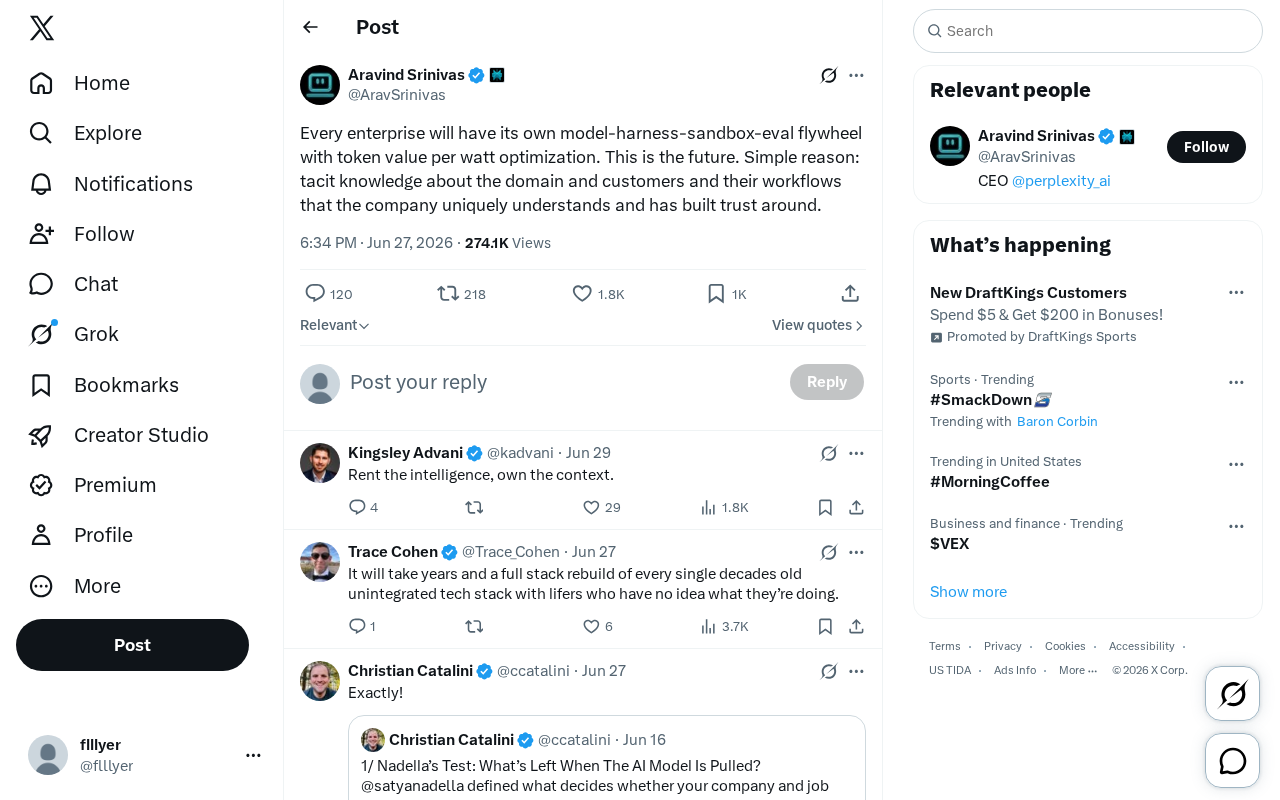
The Enterprise AI Flywheel: Building a Model-Eval Loop as a Competitive Moat
The core of enterprise AI isn't calling general models—it's building a self-reinforcing "model-harness-sandbox-eval" flywheel. This article analyzes the four components, tacit knowledge moats, and the "token value per watt" efficiency metric.
Read more →

·3 min
Andrew Ng's Prompting Course: Four Core Gaps Between AI Beginners and Power Users
Andrew Ng's AI Prompting for Everyone course reveals four key gaps between AI beginners and power users: deep thinking tasks, context, neutral prompting, and iterative workflows.
Read more →