#multi-tenant architecture
89 related articles

·3 min
AgentScope 2.0 Deep Dive: Six Core Upgrades for Production-Grade Multi-Agent Development
AgentScope 2.0 by Alibaba's Tongyi Lab delivers six major upgrades: typed event streaming, dangerous instruction interception, human-in-the-loop, concurrent execution, workspace system, and agent-as-a-service for production-grade multi-agent development.
Read more →

·3 min
PostgreSQL Lock Contention: The Root Cause and Solutions for High-Concurrency Scalability Bottlenecks
An in-depth analysis of PostgreSQL's lock scalability bottlenecks under high concurrency: LWLock contention, the cost of the multi-process model, negative scaling, and practical strategies like connection pooling, transaction optimization, and horizontal scaling.
Read more →

·4 min
AI Persistent Memory Three-Layer Architecture Explained: In-Depth Comparison of Mem0, Zep, and ContextNest
Deep dive into the three-layer architecture of AI persistent memory systems—storage, management, and retrieval—with an in-depth comparison of Mem0, Zep, and ContextNest to help developers choose the right memory solution for AI Agents.
Read more →

·6 min
Balancing Cost and Performance in Azure SQL Database: Three Core Strategies Explained
This article breaks down Azure SQL Database's progressive cost-optimization strategy from the free tier to Hyperscale, Serverless auto-scaling, and Elastic Pools, helping teams balance performance and budget.
Read more →

·4 min
Notion Meets Cursor: A New Workflow for Dispatching Coding Tasks Directly from Docs
Cursor launches deep Notion integration via the Cursor SDK — @mention Cursor in any Notion doc to trigger a cloud Agent that automatically opens a PR. We break down the workflow, product logic, and real-world limitations.
Read more →

·5 min
MemoryOps AI: Building a Governable, Auditable Memory Layer for AI Assistants
MemoryOps AI is an open-source governed memory runtime that gives AI assistants policy-before-storage validation, context admission, and deletion-proof lineage—solving compliance, multi-tenancy, and deletion verification challenges in LLM memory systems.
Read more →

·7 min
Google's $250K Bounty: Linux VM Escape Vulnerability Sets a Historic Record
Google paid a security researcher $250K for a Linux kernel VM escape vulnerability, setting a VRP record. An in-depth analysis of VM escape principles, kCTF incentives, and cloud security impact.
Read more →

·5 min
TensorRT Multi-Device Inference: Engineering Practices for Breaking Through Single-GPU Memory Bottlenecks
NVIDIA TensorRT now supports multi-device inference via pipeline and tensor parallelism, distributing large models across multiple GPUs to break through single-card memory limits.
Read more →

·7 min
ManagedAgents.sh: A Deep Dive into the Model-Agnostic Open-Source Managed Agent Platform
ManagedAgents.sh is a model-agnostic managed agent platform from OpenComputer, supporting Claude, Pi, and Codex runtimes with Slack and GitHub integration.
Read more →
·6 min
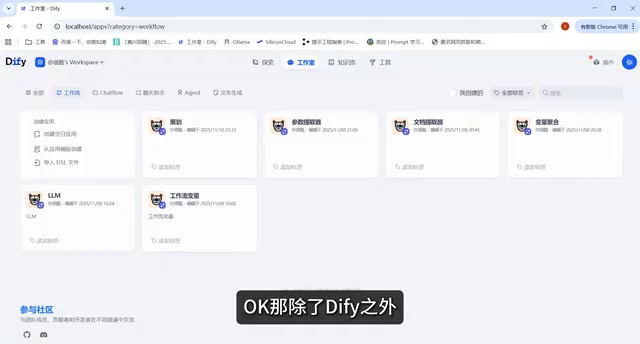
Complete Guide to Deploying Dify Locally: Docker + Ollama + RAG Setup Tutorial
A detailed guide to deploying the Dify agent platform locally: from Docker setup and integrating Ollama + DeepSeek local LLMs to workflow orchestration and RAG knowledge base construction.
Read more →

·7 min
Getting Started with LangChain: The Core Framework Connecting LLMs and AI Applications
A deep dive into LangChain's positioning and value—why do LLMs need a middle layer? How does LangChain serve as the 'glue' unifying multi-model interfaces and supporting Agent development? Learn its core modules and learning path.
Read more →

·6 min
Deep Dive into GPT-5.6 Ultra's Sub-Agent Architecture and Ten Key AI Industry Trends
In-depth analysis of GPT-5.6 Ultra's sub-agent collaborative reasoning, the global rise of Chinese AI models, world-model evaluation gaps, and AI's real-world deployment challenges and bubble warnings.
Read more →

·3 min
WASM for Data Processing: Can Browsers Really Handle Big Data?
Can WASM really handle big data? This deep dive covers DuckDB-WASM's in-browser SQL capabilities, edge data processing architectures, and where WebAssembly fits in modern data engineering.
Read more →

·7 min
A Complete Guide to LangGraph's Core Concepts: The Framework of Choice for Enterprise Agent Development
An in-depth analysis of LangGraph's core concepts: short-term and long-term storage mechanisms, its differences from LangChain, the MIT open-source license, and private deployment solutions for enterprise Agent development.
Read more →

·6 min
AI Workspace Session and Cache Leaks: A Complete Analysis of Multi-Tenant Isolation Security Risks
AI workspaces face cross-tenant session and cache leak risks that can expose sensitive enterprise data. This article analyzes multi-tenant isolation pitfalls, common architectural flaws, and actionable defenses.
Read more →

·4 min
Complete Guide to Connecting External Models in Codex: Two Methods to Unlock Full Capabilities
Two methods for connecting external models to Codex: manually configure keys via relay services, or use the CC Tool to auto-bridge GPT, DeepSeek, and more. Covers auth/config files, CC Tool usage, and multi-model switching.
Read more →

·3 min
Harness Engineering in Practice: A Guide to Enterprise-Grade Multi-Agent System Architecture
A deep dive into Harness Engineering architecture: building an AI procurement assistant on ERP systems, covering multi-agent orchestration, MCP protocol, ASGI deployment, and sandbox isolation.
Read more →

·7 min
AI Agent Code Execution Sandbox Selection Guide: In-Depth Comparison of E2B and Four Other Solutions
In-depth comparison of five AI Agent code execution sandbox solutions—E2B, Daytona, Modal, Cloudflare Sandbox, and Vercel Sandbox—across isolation, cold start latency, state management, and pricing.
Read more →

·4 min
AI Agent Memory System Architecture Breakdown: A Practical Selection Guide from 16 Open-Source Projects
Deep analysis of memory system architectures across 16 open-source AI Agent projects including Hermes, Goose, NanoClaw, and Deerflow, covering FTS5 vs vector search, multi-tenant isolation, and LLM auto-extraction.
Read more →

·4 min
Deep Dive into Alibaba's AgentScope 2.0: Six Core Upgrades and Agent Design Patterns Explained
Deep analysis of Alibaba's AgentScope 2.0 multi-agent framework: six core upgrades including event systems, security interception, HITL, and workspace systems, plus ReAct vs Plan-and-Execute agent design patterns.
Read more →