#pipeline parallelism
176 related articles
CUDA 13.3 Adds Carryless Multiplicatio…
·2 min
CUDA 13.3 Adds Carryless Multiplication: A Key Step Forward for GPU Cryptography Acceleration
CUDA 13.3 introduces native carryless multiplication support, closing a 15-year GPU gap in AES-GCM, CRC, and cryptographic acceleration. Here's what it means.
Read more →
Building RL-Powered Autonomous Researc…
·2 min
Building RL-Powered Autonomous Research Agents with NVIDIA NeMo
How NVIDIA NeMo combines reinforcement learning to train agent skills and build an Autoresearch workflow capable of autonomously running ML experiments end-to-end.
Read more →

·3 min
LongCat 2.0: Meituan Trains a 1.6 Trillion Parameter LLM on Domestic Chips
Meituan open-sources LongCat 2.0, a 1.6T-parameter MoE model trained on 50,000+ custom chips without NVIDIA GPUs or Google TPUs, rivaling OpenAI and Google.
Read more →

·2 min
ExLlamaV3 v1.0.0 Official Release: Faster Inference, Lossless KV Quantization, and Streamlined Dependencies
ExLlamaV3 v1.0.0 releases with lossless KV cache quantization via kernel fusion, removal of flash-attention-2/xformers, major GEMM/GEMV gains, and broader tensor parallelism support.
Read more →

·3 min
Deep Dive into ChatGPT Ultra's Parallel Sub-Agent Architecture: Parameters, Configuration, and Best Practices
A deep dive into ChatGPT Ultra mode's parallel sub-agent architecture, covering concurrency limits, delegation depth, token optimization, and configuration best practices for GPT-5.6.
Read more →

·6 min
A Deep Dive into OpenAI Codex: How AI Engineers Are Reimagining Software Development with Agents
OpenAI Codex is redefining how AI engineers work: from code completion to autonomous Agents, from single-threaded to parallel Value Maxing. A deep dive into the Codex App architecture, open ecosystem, and Manager of Agents practice.
Read more →

·3 min
Can GPT-5.6 Prove a 50-Year Graph Theory Conjecture? The Boundaries and Verification of AI Mathematical Reasoning
GPT-5.6 Soul Ultra claims to prove the 50-year-old Cycle Double Cover Conjecture in under an hour using 64 parallel agents. We examine the technical path, missing peer review, and formal verification gaps.
Read more →
·2 min
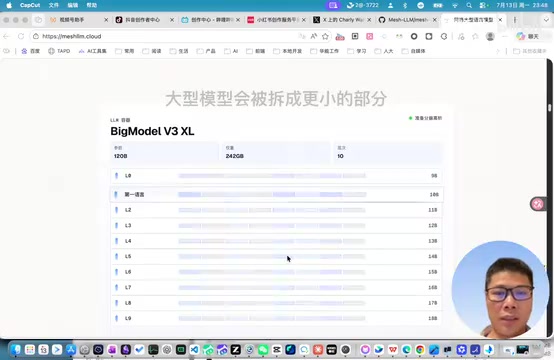
Mesh LLM: Pool Multiple Old Computers Into a Virtual Super GPU for Running Large Models
Mesh LLM is an open-source distributed inference framework that splits model layers across multiple devices, creating a virtual super GPU to run 100GB+ LLMs on consumer hardware.
Read more →
CUDA Kernel Fusion: A Practical Guide …
·2 min
CUDA Kernel Fusion: A Practical Guide to Reducing Memory Bandwidth and Launch Overhead
Learn how CUDA Kernel Fusion merges multiple GPU kernels to reduce global memory traffic and launch overhead, with real-world examples from AI inference and deep learning.
Read more →
How NVIDIA BioNeMo Breaks Through Co-F…
·2 min
How NVIDIA BioNeMo Breaks Through Co-Folding End-to-End Performance Bottlenecks
How NVIDIA BioNeMo Agent Toolkit uses agent-based orchestration to solve MSA preprocessing, pipeline scheduling, and end-to-end bottlenecks in OpenFold3 co-folding workloads for drug discovery.
Read more →
Best Laptops for AI/ML Students: A Dee…
·2 min
Best Laptops for AI/ML Students: A Deep Dive Comparing Three Popular Models
Lenovo LOQ, HP Omen, or MacBook Air M5? A deep dive comparing GPU performance, RAM, and CUDA compatibility to help AI/ML students find the right laptop.
Read more →
JAX Host Offloading: A Practical Guide…
·2 min
JAX Host Offloading: A Practical Guide to Breaking Through LLM Training Memory Bottlenecks
Memory capacity is the core bottleneck in LLM training. This guide explores JAX-based host offloading — covering optimizer state offloading, activation strategies, PCIe bandwidth trade-offs, and how it complements activation recomputation.
Read more →

·2 min
Distributed AI Systems: A Practical Engineering Guide to Training, Inference, and Production Deployment
A deep dive into distributed AI systems engineering: data/model/tensor parallelism for training, KV cache, quantization, elastic scaling for inference, and cloud deployment with Kubernetes, Ray, and DeepSpeed.
Read more →

·3 min
Distributed AI Systems in Practice: A Complete Guide to Training, Inference, and Production Deployment
A deep dive into Distributed AI Systems: a new book distilling 10 years of AI engineering experience covering distributed training, inference optimization, and production model serving.
Read more →

·6 min
GPT-5.6 vs Grok 4.5 on the Same Day: A Packed Week of Flagship AI Model Launches
OpenAI's GPT-5.6 launches with Sawa, Terra, and Luna sub-models the same day as Musk's Grok 4.5, while Anthropic, Meta, and NVIDIA make their moves. A packed week of flagship AI launches.
Read more →

·4 min
From Enter to First Token: Decrypting the Full LLM Inference Pipeline (Autoregression, KV Cache & Decoding Strategies)
From pressing Enter to the first character appearing, what happens inside an LLM? This article breaks down autoregressive generation, KV cache acceleration, and decoding strategies like temperature, Top-k, and Top-p.
Read more →

·5 min
The Five Unsolved Challenges of Production MLOps: A Deep Dive into GPU Scheduling, Fault-Tolerant Training, and Model Observability
A deep dive into the five genuinely tough challenges of production MLOps: fault-tolerant training on Spot instances, cross-team GPU scheduling, data reproducibility, model observability, and inference cost optimization.
Read more →
Mesh LLM: A Practical Exploration of B…
·3 min
Mesh LLM: A Practical Exploration of Building a P2P Distributed AI Inference Network with iroh
Mesh LLM leverages the Rust P2P framework iroh to integrate compute from scattered nodes, exploring a viable path for decentralized LLM inference. This article analyzes its architecture, challenges, and prospects.
Read more →

·3 min
SlickToken: A Deep Dive into GPU Fleet and Agentic Workflow Planning
SlickToken is a GPU fleet and agentic workflow planning tool for AI teams, supporting offline simulation, load testing, and capacity planning—no internet required to protect enterprise data.
Read more →

·3 min
Multiple AI Agents Sharing a Codebase: Parallel Collaboration Conflicts and Practical Solutions
When multiple AI coding agents work on the same codebase simultaneously, how do you avoid interface conflicts and coordination chaos? A deep dive into Git worktree isolation, contract-first design, and intent declaration.
Read more →