#replicated state machine
44 related articles

·2 min
AI Cracks Erdős Mathematical Problems: How Artificial Intelligence Is Solving Decades-Old Conjectures
Exploring how AI is successively solving Erdős math problems, analyzing the key factors of LLM reasoning breakthroughs and formal verification, plus the profound impact and debates AI brings to mathematical research.
Read more →

·3 min
Capacity Desktop: A Detailed Review of the Free, Locally-Run Lovable Alternative
Capacity Desktop is a free local AI app generator for Mac that turns natural language into real apps. Code stays on your machine with GitHub sync. No signup, no lock-in, pay only actual AI costs.
Read more →

·3 min
Training ASR Models with Simulated Call Center Audio: Can the Gap Between Simulated and Real Data Be Bridged?
Deep dive into training ASR models with simulated call center audio: analyzing codec simulation, code-switching, and diarization bottlenecks that reveal the gap between simulated and real phone data.
Read more →

·2 min
KlientFlow Review: A Follow-Up Reminder CRM Designed Specifically for Freelancers
KlientFlow is a lightweight CRM built for freelancers, focused on follow-up reminders rather than data logging. This review analyzes its positioning, features, use cases, and limitations.
Read more →

·3 min
Object Identity in Software: Core Principles of Interface, ECS, and Component Design
Exploring the core principle of separating object identity from representation in software design, covering interfaces, ECS, DDD, and distributed systems.
Read more →

·3 min
Deep Dive into Raft Leader Election: Building a Distributed Consensus Algorithm from Scratch
A detailed explanation of Raft's leader election mechanism covering terms, randomized timeouts, and majority voting — helping developers truly understand distributed consensus.
Read more →

·2 min
qm: A Deep Dive into the Multiplayer AI Agent Harness for Team Collaboration
Deep dive into qm, a multiplayer AI Agent collaboration framework that uses state sync, real-time observability, and human takeover mechanisms to transform Agents from solo tools into team infrastructure.
Read more →

·3 min
Buzz Open-Source Group Chat Platform: A New Choice for Human-AI Agent Collaboration
Buzz is an open-source decentralized group chat platform for human-AI agent collaboration—model-agnostic, self-sovereign, and designed to replace the fragmented Slack/GitHub experience.
Read more →

·2 min
OpenAI Commits $17 Million to Support the U.S. Department of Energy's Genesis Mission to Accelerate Scientific Discovery
OpenAI commits $17M to the DOE's Genesis Mission, expanding frontier AI access and deepening collaboration to accelerate fundamental scientific research in the U.S.
Read more →

·3 min
Apache Cassandra Explained: A Linearly Scalable and Highly Available Distributed Database
Deep dive into Apache Cassandra's core design: linear scalability, decentralized architecture, tunable consistency, and ideal use cases for engineering teams.
Read more →

·3 min
Vibe Coding at Big Tech: Frontend Practices and an AI Programming Interview Guide
An in-depth look at Vibe Coding (AI-assisted programming) at major tech companies. With three real AI coding interview questions from firms like ByteDance, we analyze how frontend developers can master AI programming and rebuild core competitiveness.
Read more →

·6 min
The Three-Layer GTM Agent Architecture: Enabling AI to Truly Recognize Buyer Intent and Identity
An in-depth analysis of the three-layer GTM Agent architecture—the Signal, Buyer Intelligence, and Action layers—revealing how context graphs identify anonymous visitors and capture purchase intent.
Read more →

·6 min
The AI Industrial Age Arrives: Compute Wars, Chip Reconstruction, and the GPT-5.6 Cheating Scandal Explained
Five key AI industry trends: Doubao surpasses 180 trillion daily calls, OpenAI's in-house AI chip, NVIDIA's $3-4 trillion compute forecast, China catching up, and the GPT-5.6 cheating scandal.
Read more →
Kronos Financial Foundation Model: Usi…
·7 min
Kronos Financial Foundation Model: Using AI to Read the Market Language of Candlesticks
Kronos is the first open-source foundation model treating candlestick data as the "language of financial markets," using an autoregressive Transformer and earning 32K GitHub Stars. A deep dive into its principles, applications, and limits.
Read more →
AI Coding Agents Have Amnesia — An Ope…
·2 min
AI Coding Agents Have Amnesia — An Open-Source SSH-Synced Memory System Wants to Fix That
Tired of AI coding agents forgetting everything? Explore an open-source SSH-synced memory system that lets Cursor, Claude Code, and other agents retain project context across sessions and devices — no cloud required.
Read more →

·2 min
AI Investment at the Expense of Employee Salaries: Who Pays the Price for Corporate Transformation?
When CEOs announce "no raises — we're investing in AI," employees become the hidden underwriters of the corporate AI arms race. A deep dive into the cost-shifting logic, morale risks, and smarter paths forward.
Read more →

·3 min
Multiple AI Agents Sharing a Codebase: Parallel Collaboration Conflicts and Practical Solutions
When multiple AI coding agents work on the same codebase simultaneously, how do you avoid interface conflicts and coordination chaos? A deep dive into Git worktree isolation, contract-first design, and intent declaration.
Read more →
Is Minimalist Decor Quietly Draining Y…
·4 min
Is Minimalist Decor Quietly Draining Your Brain? Here's What Neuroscience Says
Does minimalist decor really relax us? Neuroscience reveals that smooth, textureless minimalist spaces may cause hidden cognitive fatigue. Exploring fractals, the brain's visual preferences, and finding balance between minimalism and nature.
Read more →
Rereading Good 1965: The Intellectual …
·3 min
Rereading Good 1965: The Intellectual Origins of Ultraintelligent Machines and the Intelligence Explosion
I.J. Good's 1965 paper 'Speculations Concerning the First Ultraintelligent Machine' first introduced the 'intelligence explosion' and recursive self-improvement, profoundly shaping today's AGI safety debate.
Read more →
·5 min
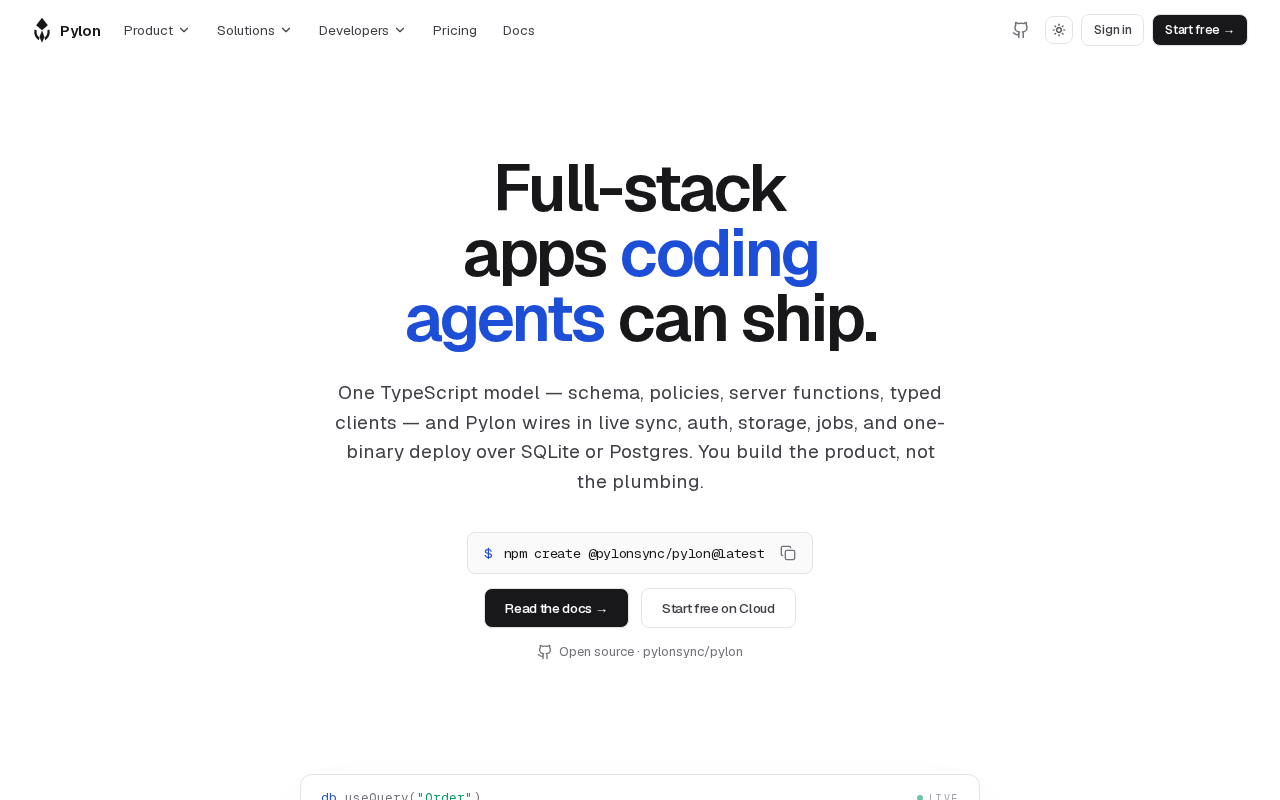
Pylon Sync: An In-Depth Look at the Full-Stack Realtime Framework Built for AI Agents
Pylon Sync is an "Agent-First" full-stack realtime framework that treats AI Agents as first-class design citizens, reducing coding errors via strong conventions.
Read more →