#shared responsibility model
273 related articles
·7 min
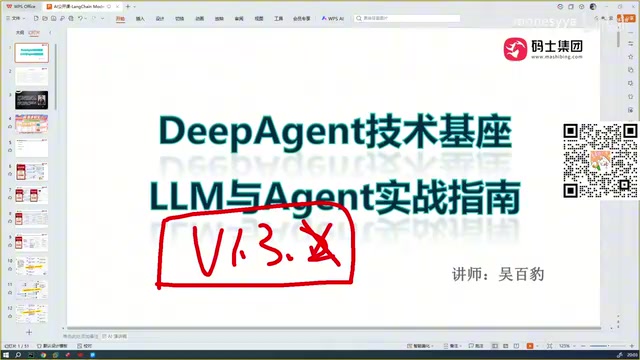
Getting Started with LangChain 1.3: Core Concepts of LLMs and Agents
An in-depth breakdown of LangChain 1.3's core concepts, covering the three major limitations of LLMs, Agent architecture, memory management, and a complete learning path. Master LangChain and LangGraph to quickly build AI development skills.
Read more →

·4 min
Agent Skills Deep Dive: A Complete Guide to Modular Agent Development Architecture
A deep dive into Anthropic's Agent Skills architecture — clarifying its difference from MCP, and how modular Skill packages enable scalable, maintainable enterprise agent development.
Read more →

·6 min
Playwright E2E Builder: Engineering AI-Driven Web Automation Testing
Playwright E2E Builder is an AI Skill installed in Cursor that transforms UI automation from throwaway scripts into sustainable engineering assets through a four-step workflow, with built-in locator health checks.
Read more →

·7 min
Dify 1.8.0 in Practice: A Complete Guide to Building Enterprise-Grade AI Workflows with Zero Code
An in-depth walkthrough of deploying Dify 1.8.0 and building applications: three-step Docker deployment, five app types compared, and Workflow vs Chatflow use cases—build enterprise AI apps with zero code.
Read more →
·6 min
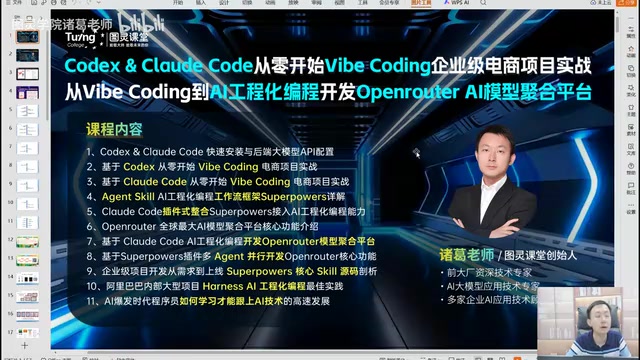
Understanding the Limits of Vibe Coding: A Practical Guide to AI Engineering-Grade Programming
An in-depth look at the difference between Vibe Coding and AI engineering-grade programming. Can AI replace programmers? From Claude Code and Codex to Cursor, revealing the real limits, enterprise pain points, and engineering solutions of AI coding tools.
Read more →

·6 min
The Cambridge Guide *Copy That Floppy*: How to Rescue Precious Data from Floppy Disks
Floppy disks face a dual crisis of physical aging and reading device obsolescence. This article breaks down the core methods of Cambridge's Copy That Floppy guide: physical assessment, flux-level reading, and disk imaging.
Read more →

·7 min
Fable AI Coding in Practice: Optimizing Reasoning Levels and Multi-Model Collaboration to Save Money
Hands-on guide: Use Anthropic's Fable model to optimize AI coding workflows — control reasoning levels, leverage Claude-Codex multi-model collaboration, and cut costs from thousands to $150.
Read more →

·5 min
The Halo Open-Source Project: Building Tamper-Evident Runtime Evidence for AI Agents
Halo is an open-source tool providing tamper-evident runtime evidence for AI agents, recording every action via hash chains and cryptography to solve auditing, compliance, and accountability challenges.
Read more →

·7 min
Tripadvisor AI Summaries 'Whitewashing' Problematic Hotels? Essential Safety Concerns for Travelers
Tripadvisor's AI review summaries are generating positive assessments for hotels with safety hazards while downplaying critical warnings. Deep analysis of causes and practical user protection tips.
Read more →

·7 min
LangSmith Engine: An Intelligent Operations Tool That Automatically Diagnoses and Fixes Agent Failures
LangChain's LangSmith Engine is an intelligent agent tool for tracking Agent failures, prioritizing issues, and auto-drafting fixes. Deep dive into its core capabilities, sandbox isolation, sub-Agent architecture, and continuous evaluation challenges.
Read more →

·7 min
HuggingFace Open-Sources ml-intern: An AI Engineer That Reads Papers and Trains Models Autonomously
Hugging Face's open-source ml-intern autonomously reads papers, writes training scripts, and finetunes LLMs, deeply integrating the HF ecosystem and smolagents. Explore its features and impact on ML careers.
Read more →

·7 min
Single-Responsibility Component Design: Learning Abstraction and Reuse from message-scroller
Through the practical case of the message-scroller component, this article delves into applying the Single Responsibility Principle in front-end component design—how to abstract scrolling logic independently and balance cost with long-term returns.
Read more →
·7 min
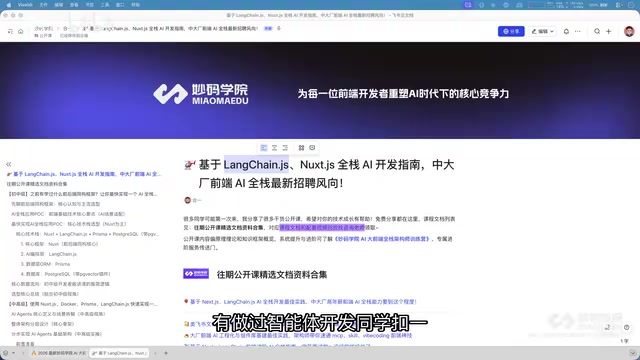
LangChain.js + Nuxt.js: An AI Full-Stack Advancement Path for Frontend Engineers
Frontend hiring now treats AI capabilities as a core assessment, covering RAG knowledge bases, AI Agent development, and LangChain.js engineering. Learn how LangChain.js + Nuxt.js helps frontend developers build memory- and retrieval-capable AI full-stack apps.
Read more →

·6 min
Getting Started with Vibe Coding: Building Software with Natural Language from Scratch
Vibe Coding lets you build software with no coding background—just talk to AI in natural language. Learn its core ideas, learning path, and practical tools.
Read more →

·3 min
WASM for Data Processing: Can Browsers Really Handle Big Data?
Can WASM really handle big data? This deep dive covers DuckDB-WASM's in-browser SQL capabilities, edge data processing architectures, and where WebAssembly fits in modern data engineering.
Read more →

·2 min
Google SynthID Watermarking Explained: How AI Content Provenance Works
Google DeepMind's SynthID has watermarked over 100 billion images across image, video, audio, and text. Combined with C2PA standards, here's how AI content provenance works.
Read more →

·6 min
America's 250th Anniversary: Behind the Fireworks, Founding Ideals Still Face Serious Challenges
As the U.S. marks its 250th anniversary with France lighting the Eiffel Tower and Japan setting off fireworks, its founding ideals of liberty and democracy face ongoing threats.
Read more →

·6 min
GPT-5.6 Hits 91.9% on Coding Benchmark: A Guide to Choosing Among Three Tiers and Avoiding Ultra Mode Pitfalls
GPT-5.6 launches Soul/Terra/Luna, with flagship Soul scoring 91.9% on Terminal Bench 2.1. This article breaks down the Ultra vs Max reasoning modes, three-tier pricing, and four hidden pitfalls to guide your technical selection.
Read more →

·4 min
A Conversation with Dr. Rubin: How Professionals Fight Viral Medical Misinformation
Misinformation spreads for free; correcting it is costly. We speak with Dr. Zachary Rubin about why professionals must step up, and how AI is reshaping the battle for truth in science communication.
Read more →

·7 min
Agentic AI Development in Practice: Evaluation and Error Analysis Are the Real Competitive Edge
Cut through the Agentic AI hype to see the real value of agentic applications. Based on Andrew Ng's course, learn why Evals and error analysis—not framework choice—separate top developers.
Read more →