#test pyramid
49 related articles

·4 min
The Secret of AI Power Users: Understanding the Underlying Logic Matters More Than Prompt Tricks
The gap between AI power users and everyone else isn't about prompt tricks — it's about understanding LLMs, multimodal models, workflows, and agents. Build your complete AI mental model here.
Read more →

·7 min
21-Day Python Automation Testing Crash Course: A Complete Breakdown of the Three-Stage Learning Path
Learn automation testing from scratch! This article breaks down a three-stage path: Selenium/Appium tools, Requests+PyTest API testing, performance testing and CI/CD, with real projects—build a complete skill set in 21 days.
Read more →
·6 min
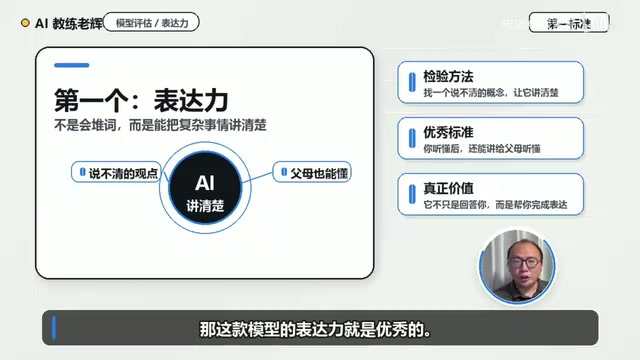
Forget Benchmark Scores! Four Practical Standards to Judge an LLM's Real Capability
High benchmark scores don't mean an LLM is actually useful. This article shares four field-tested standards—expressiveness, insight, cognitive depth, and problem-solving—to help you find the AI that truly fits you.
Read more →

·6 min
Playwright E2E Builder: Engineering AI-Driven Web Automation Testing
Playwright E2E Builder is an AI Skill installed in Cursor that transforms UI automation from throwaway scripts into sustainable engineering assets through a four-step workflow, with built-in locator health checks.
Read more →

·4 min
YOLO Learning Roadmap: From Version Evolution to Source Code Deep Dive
A systematic YOLO learning roadmap: from understanding V1/V3/V4 version evolution, to building knowledge via video, to mastering implementation by debugging source code.
Read more →

·5 min
In Praise of Observational Evidence: When Randomized Controlled Trials Can't Answer Everything
Are RCTs really the only standard for scientific evidence? This article explores the scientific value of observational evidence, the rise of causal inference methods, and how data scientists can draw reliable conclusions from observational data when A/B testing isn't feasible.
Read more →

·4 min
pytest Testing Patterns in Practice: Building a Systematic Automated Testing Framework
A deep dive into pytest patterns: layered fixture management, parameterized coverage, mock isolation, coverage gates, and CI integration — upgrade your team from scattered scripts to a maintainable automated testing framework.
Read more →

·7 min
A New Core Skill for Programmers: How to Effectively Lead Your AI Agent Dev Squad
Coding alone isn't enough anymore. Learn the 5 key steps to commanding AI Agents—define outcomes, split tasks, provide context, iterate small, and keep humans in the loop.
Read more →

·6 min
The New Normal of AI Programming: How Autonomous Agent Development Is Reshaping Software Engineering
AI Agent autonomous programming is evolving from niche experiments to the industry default. This article analyzes the three stages of AI-assisted programming, its impact on developer skills, process restructuring, and key challenges.
Read more →

·2 min
Codex Skill for Auto-Organizing Plug-and-Play Modules: A Practical Guide to Boosting Research Efficiency
Learn how to use OpenAI Codex Skills to auto-organize deep learning plug-and-play modules, including paper figure location, code extraction, verification, and Feishu doc integration.
Read more →

·4 min
Vibe Coding Methodology for Non-Programmers: Building an AI Development Loop with Automated Testing + Knowledge Accumulation
How can non-programmers develop efficiently with AI? This guide details end-to-end automated testing and knowledge accumulation to build a self-verifying Vibe Coding development loop.
Read more →

·4 min
Five Essential Cursor Skills Every QA Engineer Needs: A Complete Breakdown
A detailed guide to five essential Cursor Skills for QA engineers: PRD analysis, test case generation, JMeter scripting, load test reports, and web automation.
Read more →

·3 min
Career Transition Guide for AI Product Managers: Pick the Right Track Across Three Industry Layers
A deep dive into the AI product manager industry's three-layer pyramid — from infrastructure to models to applications — helping traditional PMs find the best career transition track.
Read more →

·2 min
Cursor Code Review Agent Upgrade: 3x Faster, 22% Cheaper
Cursor's code review Agent (Bugbot) gets a major upgrade: 3x faster, 22% cheaper, 10% better bug detection. Explore the improvements, the /review command, and the AI code review landscape.
Read more →

·3 min
Claude Code + Codex: The Best Practice of One-Writes-One-Reviews AI Programming
A detailed guide on using Claude Code for writing and Codex for reviewing in AI programming. Includes a five-step closed-loop workflow and cross-validation techniques.
Read more →

·4 min
The Five-Tier Pyramid of IT Careers in the AI Era: Your Position Determines Your Career Ceiling
AI is reshaping IT careers into a five-tier pyramid from tool usage to self-developed models. Learn where you fit and how to maximize your career potential.
Read more →

·2 min
The Biggest Misconception About Vibe Coding Is the 'Coding': It's Modern Alchemy
Vibe Coding isn't programming — it's modern alchemy for creating digital products with natural language. Learn why non-technical people get started in 48 hours.
Read more →

·3 min
Complete Guide to Claude Code Skill Creator: The Meta-Skill That Lets AI Build Its Own Tools
A deep dive into Claude Code's built-in Skill Creator feature — learn how to use natural language to have AI automatically create custom skills, enabling fully automated tool-building workflows.
Read more →

·3 min
Creating 3D City Map Time Animations with Claude: Visualizing a Millennium of Architectural Evolution
Explore the technical feasibility of generating 3D city map time animations with Claude AI, covering Mapbox GL JS building rendering, historical data sourcing, and time slider animation challenges.
Read more →
 Tutorials
·3 min
In-Depth Review of a 628-Episode Python Full-Stack Tutorial: Can a Free Course Launch Your Career?
In-depth review of a 628-episode free Python full-stack tutorial on Bilibili, analyzing its strengths, limitations, and providing learning strategy advice for Python beginners.
Read more →