#test-time scaling
48 related articles

·4 min
Two Paths to Better AI Reasoning: Test-Time Scaling and Formal Verification
This article synthesizes two MSR India Summit talks, exploring two key paths to better AI reasoning: test-time scaling with variable granularity search, and a formal verification framework for trustworthy agent execution.
Read more →

·2 min
The AI Model Race Heats Up: Reasoning Becomes the New Battleground — A Deep Dive into Flagship Model Showdowns
Deep analysis of the AI model race: from parameter competition to reasoning competition, examining tiered reasoning mechanisms, benchmark limitations, and how to rationally interpret model rankings.
Read more →

·3 min
Opus vs Gemini vs GPT: Top AI Model Comparison & Evaluation Methodology
In-depth analysis of Claude Opus, Gemini Pro, and ChatGPT: the real competitive landscape among top AI models, limitations of community benchmarks, and scientific methods for model selection.
Read more →
·4 min
Gemini 3.5 Checkpoint Leaked: Intermediate Version Reportedly Outperforms Opus 5 in Testing
Reddit leaks suggest a Google Gemini 3.5 intermediate checkpoint outperformed Claude Opus 5 max thinking in testing. We analyze what checkpoints mean, benchmark credibility, and the LLM competition landscape.
Read more →
5,000+ Kagglers Reveal What Actually W…
·2 min
5,000+ Kagglers Reveal What Actually Works for Improving AI Reasoning
5,000+ Kaggle participants in NVIDIA's Nemotron challenge validate test-time compute, self-consistency, and chain-of-thought as key techniques for boosting AI reasoning without bigger models.
Read more →

·3 min
Continual Learning and AGI: Conceptual Confusion, Core Bottlenecks, and the Real Challenges
Dario Amodei and Demis Hassabis both call continual learning key to AGI, yet the term remains undefined. This article clarifies five interpretations and analyzes three core bottlenecks.
Read more →

·3 min
Chain of Thought (CoT) Explained: Teaching AI to Reason Step by Step
A deep dive into Chain of Thought (CoT) prompting: from prompt construction to reasoning chain generation, revealing the three mechanisms behind AI's improved reasoning. Covers math, medical, and financial use cases.
Read more →

·2 min
GPT-5.6 Sol XHigh Real-World Test: The Coding Capability That Changed a Claude User's Mind
A long-time Claude user was genuinely impressed by GPT-5.6 Sol XHigh. We break down the model's coding performance, shifting AI assistant competition, and how to rationally choose the right coding AI.
Read more →

·3 min
Building a Local AI Coding Agent on Mac: A Complete Guide with Ollama, OpenCode, and MCP
A complete guide to building a local AI coding agent on a 32GB Mac: Ollama for local inference, OpenCode as the agent framework, and MCP memory servers for cross-session context. Code stays on-device, no subscription fees.
Read more →

·4 min
GPT-5.6 Launches: Flagship Model Sol Personally Trains Smaller Models, Recursive AI Self-Improvement Becomes Reality
OpenAI releases the GPT-5.6 series (Sol/Terra/Luna), with flagship Sol directly handling smaller model Luna's post-training—marking recursive AI self-improvement in practice. A deep dive into performance, cost, ChatGPT Work, and computer use design leaps.
Read more →

·6 min
1X NEO Robotic Hand and GPT-5.6: A Full Breakdown of Dual Breakthroughs in Robot Hardware and Software
1X releases a new robotic hand for the NEO humanoid robot—25 DOF, force transparency, and tactile skin enabling data self-labeling. OpenAI launches the three-tier GPT-5.6, boosting coding and cost-efficiency. Hardware and AI brains evolve together, accelerating humanoid robot commercialization.
Read more →
·5 min
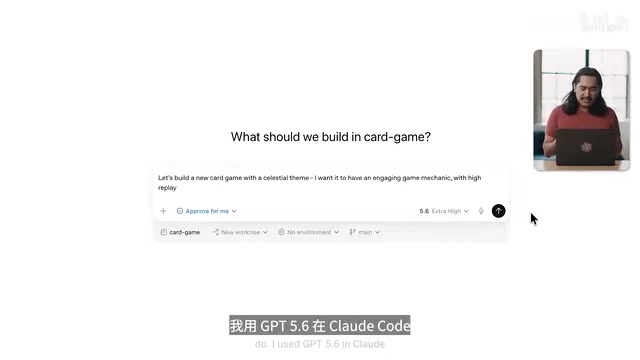
GPT-5.6 Released: Hands-On Analysis of Programmatic Tool Calling and Autonomous Agents
GPT-5.6 is officially released with core upgrades including programmatic tool calling, autonomous subagent delegation, and higher token information density. A hands-on card game build reveals its Agentic power.
Read more →

·6 min
Zuckerberg Admits AI Progress Falls Short of Expectations: The Industry Truth Behind the Layoffs
Meta laid off 8,000 to bet on AI, yet Zuckerberg admits AI agents fell short of expectations. A look at the collective 'AI reflection' among OpenAI, Microsoft, and Google, plus research on AI's selective impact on jobs.
Read more →

·7 min
Getting Started with AI Agents: A Deep Dive into the Perception-Decision-Action Loop
A clear, in-depth guide to how AI Agents work: the paradigm shift from traditional programs, the perception-decision-action loop, and the four pillars—LLMs, tool calling, memory, and RAG.
Read more →
·6 min
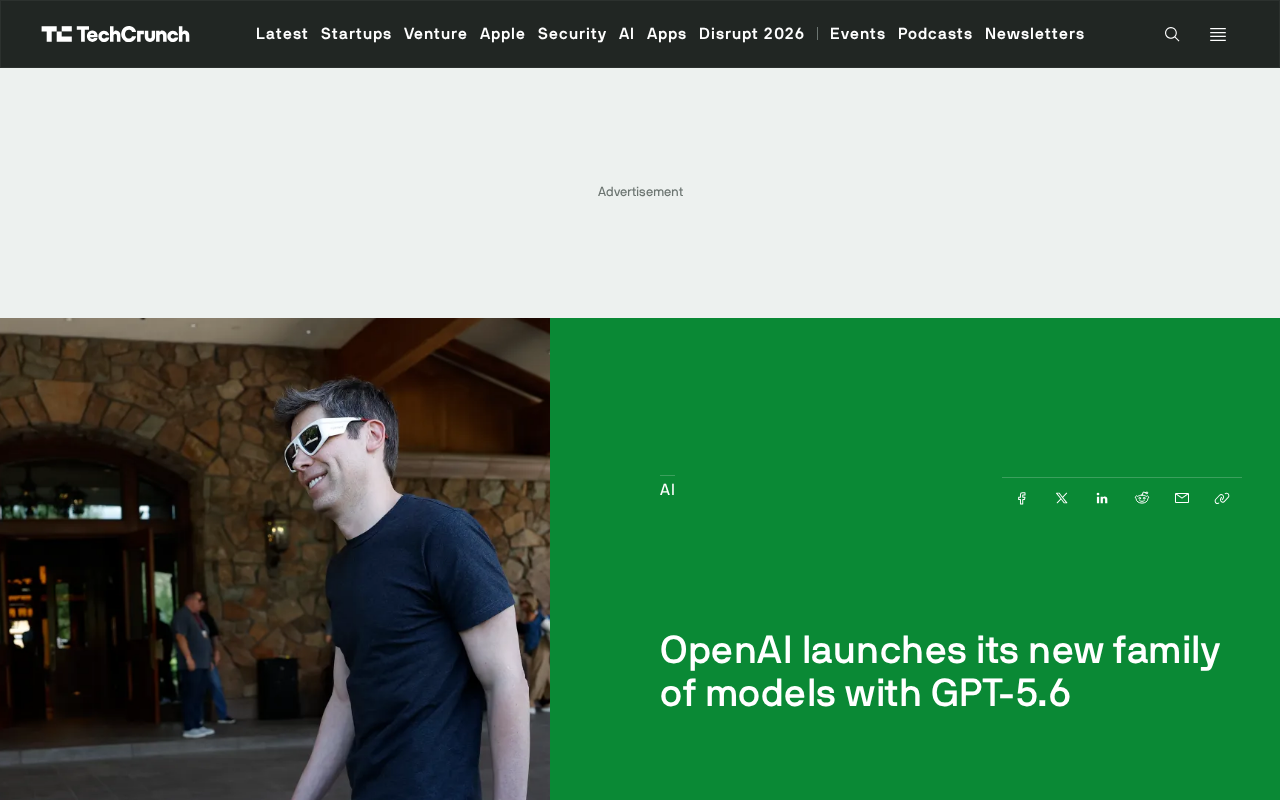
OpenAI Releases GPT-5.6: Cybersecurity Capabilities Take Center Stage
OpenAI launches the GPT-5.6 model family with cybersecurity as its biggest highlight. A deep analysis of GPT-5.6's differentiation, double-edged-sword effect, and enterprise strategy.
Read more →

·6 min
Is GPT Really Approaching the Technological Singularity? Deep Reflections Sparked by a Viral Reddit Post
A tongue-in-cheek Reddit post joking about 'GPT 9.6' reveals the AI community's collective anxiety over singularity hype. A deep look at what the technological singularity really means and how to view LLM progress rationally.
Read more →

·7 min
GLM-5.2 Released: Open-Source Coding Capability Approaches Closed-Source Flagships for the First Time
GLM-5.2 tops open-weight models in coding with a 74.4 Frontiers-WE score, beating GPT-5.5. Its MIT license enables local deployment, and the gap with closed-source flagships is closing fast.
Read more →

·4 min
The AI Story Bubble: Cutting Through the Hype to Find Real Value
When "AI-powered" becomes a magic phrase for valuation premiums, are companies paying for technology or for a story? A deep analysis of AI hype cycles, the gap between narrative and reality, and how to identify genuine AI value.
Read more →

·6 min
Verification Loops Quadruple DeepSeek's Intelligence at One-Seventh the Cost of Claude Opus
By introducing an engineered verification loop reasoning framework, DeepSeek's effective pass rate on complex tasks can improve ~4x, matching Claude Opus at one-seventh the cost. A deep dive into verification loops, test-time compute scaling, and their practical implications.
Read more →

·6 min
GPT-5.6 Released: Three-Tier Soul/Terra/Luna Lineup, Orchestration Baked Into the Model
OpenAI releases the GPT-5.6 series with Soul, Terra, and Luna models. Ranked first on Terminal Bench coding evaluation, Ultra mode natively bakes agent orchestration into the model, while revealing Agentic Trace data as the core competitiveness of next-gen AI training.
Read more →