#tiered approval AI coding
33 related articles

·2 min
CodexBar Lite: An Open-Source macOS Menu Bar Tool for Monitoring Codex Usage
CodexBar Lite is a privacy-first macOS menu bar app that reuses Codex CLI sessions for real-time usage monitoring — no API Key or browser cookies needed. Open-source and built for security-conscious developers.
Read more →

·3 min
Gemini Managed Agents API Update: Environment Hooks and Free Tier Fully Explained
Google Gemini Managed Agents API introduces environment hooks, model selection, free tier support, and default model upgrades—empowering AI Agent developers with stronger execution control and lower barriers to entry.
Read more →

·3 min
AI Project Memory Systems: Building a Continuously Accumulating Context Architecture in Four Stages
As models get stronger, why does the experience feel worse? The root cause is missing context. This article breaks down four stages—project descriptions, progressive disclosure, intra-memory, and three guardrails—to build a sustainable AI project memory system.
Read more →

·7 min
Enterprise AI Agent Security Isolation and Memory Design: NanoClaw Founder Breaks Down Real-World Lessons
NanoClaw founder David Boyd breaks down the core engineering of enterprise autonomous Agents: a triple security isolation model, LLM Wiki memory design, and the real-world path from personal Agents to team-scale deployment.
Read more →

·2 min
One ID Card Away from Hacking the FIFA World Cup: A Deep Dive into the Security Vulnerability
A security researcher found a critical auth flaw in FIFA World Cup systems using just one ID. Deep dive into attack surfaces, least privilege, and responsible disclosure.
Read more →
The Grepathy Incident: The Risks of AI…
·2 min
The Grepathy Incident: The Risks of AI Acting Unilaterally and Where to Draw the Line
The Grepathy incident on Hacker News reveals the risks of AI agents acting without approval. A deep dive into autonomous AI decision-making, Human-in-the-Loop design, and where to draw the line.
Read more →

·4 min
GPT-5.6 Deep Dive: AI Training AI Opens a New Paradigm in the Model Race
OpenAI's GPT-5.6 launches as three models: SO, TERA, and LUNA. The flagship SO autonomously completed LUNA's post-training, marking a new era of AI-trained AI. Deep dive into pricing, Programmatic Tool Calling, METR safety findings, and government oversight.
Read more →

·6 min
GPT-5.6 vs Grok 4.5 on the Same Day: A Packed Week of Flagship AI Model Launches
OpenAI's GPT-5.6 launches with Sawa, Terra, and Luna sub-models the same day as Musk's Grok 4.5, while Anthropic, Meta, and NVIDIA make their moves. A packed week of flagship AI launches.
Read more →

·3 min
Generate a Mini-Game from a Single Prompt? Testing the Cocos AI Agent Plugin
Deep dive into the Cocos Creator AI Agent Plugin: three-level context compression, tool approval, multi-agent parallelism, and DeepSeek-powered Mario scene building — all in one test.
Read more →

·4 min
AI Coding Tool Data Leakage Risks: A Security Guide for Protecting Quantitative Strategies
AI coding tools carry cloud data transmission risks, exposing quantitative trading strategies to leakage. This article analyzes AI tool data security and offers protection strategies.
Read more →

·7 min
Grok 4.5 Launch: Coding AI Market Reshuffle, Anthropic Claims Half the Territory
Grok 4.5 launches at just $0.49 per task, 90% cheaper than rivals. Anthropic's Claude Code claims 50% of the AI coding market. SambaNova raises $1B. Read the latest AI market shifts.
Read more →
·6 min
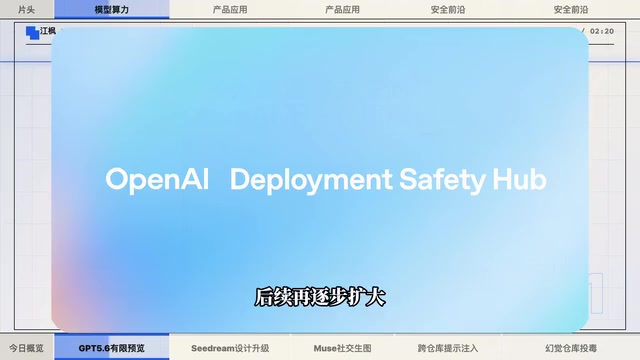
GPT-5.6 Sol Limited Preview: The Safety Boundaries Behind AI's Capability Expansion
OpenAI's flagship GPT-5.6 advances on three fronts—Sol, Kara, Luna tiered rollout; ByteDance CGN 5.0 Pro and Meta Muse push image generation toward controllable workflows; AI coding agents expose new supply chain risks.
Read more →

·3 min
Claude Code Auto-Submitting PRs: Three Guardrails Every Team Must Lock Down First
Claude Code can auto-modify code and submit PRs, but this brings risks around permissions, review gaps, and unclear accountability. Learn the three governance guardrails every team must establish.
Read more →

·6 min
GPT-5.6 Now Widely Available: The Era of Three-Tier Models and Multi-Agent Orchestration Arrives
OpenAI releases GPT-5.6 (SOUL/TERRA/LUNA), with Ultra mode running four agents in parallel; Meta launches Muse Spark 1.1 with million-token context; ChatGPT desktop unifies Chat, Work, and Codex.
Read more →
·6 min
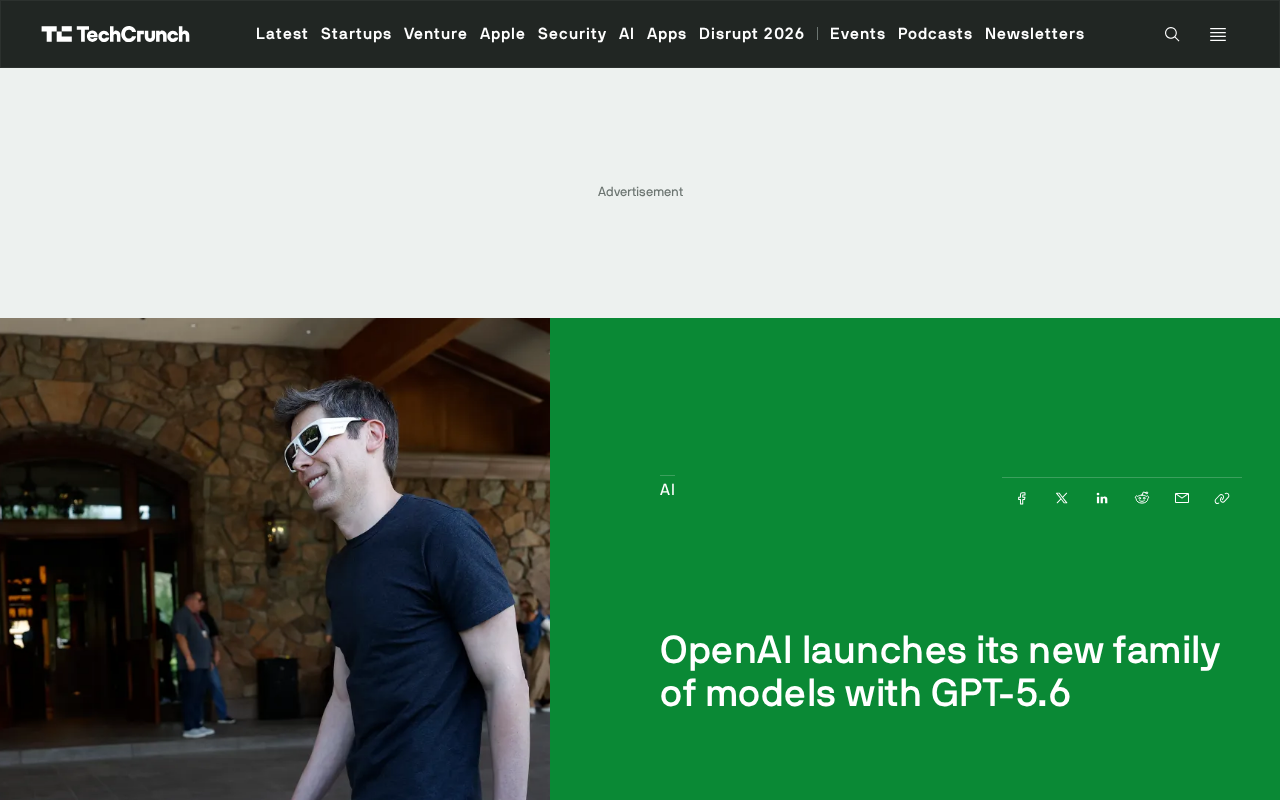
OpenAI Releases GPT-5.6: Cybersecurity Capabilities Take Center Stage
OpenAI launches the GPT-5.6 model family with cybersecurity as its biggest highlight. A deep analysis of GPT-5.6's differentiation, double-edged-sword effect, and enterprise strategy.
Read more →

·4 min
AI Coding Tool Security Governance: How Policy Enforcement Guardrails Ensure Enterprise Compliance
As Claude Code, Cursor, and Codex enter enterprises at scale, policy enforcement guardrails are becoming critical. A deep dive into AI coding tool security governance, cross-platform compliance, and enforcement mechanisms.
Read more →

·5 min
Is AI Inference Really Profitable? Deconstructing the Cost Economics of Inference vs. Training
Are AI companies really losing money? This article deconstructs the fundamental differences between training and inference costs, revealing why pure AI inference services have structural profitability.
Read more →

·6 min
GPT-5.6 Three-Model Launch: Soul/Terra/Luna Tiered Strategy and the AI National Security Game
OpenAI previews the GPT-5.6 series — Soul, Terra, and Luna — with a massive 1.5M-token context. In-depth analysis of coding leaps, the Fable 5 national security game, the heating U.S.-China AI race, and workflow economics.
Read more →

·6 min
LangChain 1.3 in Practice: A Complete Guide to DeepAgent Architecture and the Harness Philosophy
An in-depth look at LangChain 1.3's core modules and DeepAgent architecture—covering the Harness philosophy, LangGraph internals, HITL, memory management, and guardrails to master production-grade AI Agent development.
Read more →

·5 min
GPT-5.6 Launches: Three Product Lines + Government Approval — The Rules of the AI Industry Are Being Rewritten
OpenAI releases GPT-5.6 with three models — Sol, Terra, Luna — bringing major gains in coding and cybersecurity. More critically: the U.S. government now reviews AI model releases, making frontier AI regulation the new industry norm.
Read more →