#tool misuse AI
173 related articles

·4 min
OpenAI Build Week Kicks Off: Turning Your Ideas Into Reality with Codex
OpenAI launches Build Week, a global developer event centered on Codex AI coding tool, featuring live sessions and community events to help developers ship ideas fast.
Read more →

·4 min
EFF Writes to FTC: X Platform Allegedly Violates Privacy Consent Order, Raising Serious User Data Protection Concerns
EFF formally writes to the FTC alleging X (formerly Twitter) violated its privacy consent order. Mass layoffs, AI data misuse, and weakened FTC enforcement raise serious user privacy concerns.
Read more →

·2 min
GLM-5.2 and the Media Panic: Open-Source AI Safety Controversy and Governance Dilemmas
Media coverage of open-source model GLM-5.2 sparked fear over its cybersecurity capabilities and low barriers to use. We unpack the real logic behind open-source AI threat narratives and the governance dilemmas ahead.
Read more →

·7 min
The Agent Engineer Transition Roadmap: A Deep Dive into Three Core Skill Systems
Want to become an Agent engineer? This article systematically covers three core skill tracks—LLM fundamentals, LangChain architecture development, and enterprise deployment—to help you avoid detours.
Read more →

·3 min
Meta Launches Muse Image Model: AI Photo Collab Feature Sparks Portrait Rights Debate
Meta's first AI image model Muse Image from Superintelligence Labs lets users add real Instagram profiles to AI photos, raising major portrait rights concerns.
Read more →

·5 min
GPT-5.6 Launches: Three Product Lines + Government Approval — The Rules of the AI Industry Are Being Rewritten
OpenAI releases GPT-5.6 with three models — Sol, Terra, Luna — bringing major gains in coding and cybersecurity. More critically: the U.S. government now reviews AI model releases, making frontier AI regulation the new industry norm.
Read more →

·5 min
GPT-5.6 Sol Limited Preview: A Deep Dive into the Sol/Tera/Luna Tiers and Access Mechanism
OpenAI officially releases the GPT-5.6 Sol limited preview, with three tiers — Sol, Tera, Luna — each differing in price and capability. A deep dive into tier selection, five-layer safety gates, and API pricing.
Read more →

·4 min
Hunyuan Hy3 Goes Open Source + GPT-5.6 Leaked + Japan's Robot Strategy: AI Breaks Through on Multiple Fronts
Tencent Hunyuan 3 open-sourced with 295B MoE; GPT-5.6 Sol Ultra may bring multi-subagent collaboration to Codex; Alibaba FunASR upgraded; Japan plans 10M AI robots by 2040.
Read more →

·6 min
GPT-5.6 Explained: Three Variants and OpenAI's First Government Review of an AI Model
OpenAI released GPT-5.6 with three variants—Soul, Terra, Luna—and for the first time notified and submitted the model to U.S. government review before full release. A deep dive into the variants, Max/Ultra upgrades, and cybersecurity defenses.
Read more →
·3 min
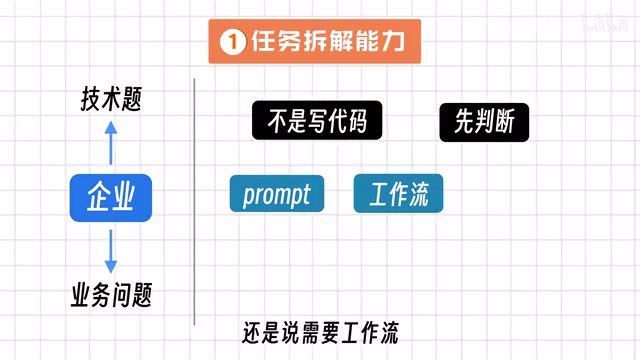
4 Core Competencies Every High-Value LLM Application Engineer Must Have
Why can't companies find qualified AI engineers? Discover the 4 core competencies every high-value LLM application engineer needs: task decomposition, tool calling, observability, and production readiness.
Read more →

·5 min
Anthropic Updates Cybersecurity Safeguards: How AI Safety Governance Balances Security and Usability
Anthropic updates AI cybersecurity safeguards after U.S. government dialogue. New measures slightly raise false positive rates, with flagged requests downgraded to Opus 4.8 responses. Deep analysis of the security-usability balance in AI governance.
Read more →

·6 min
TechCrunch Startup Battlefield Australia: Applications Close July 6
TechCrunch Startup Battlefield Australia applications close July 6. Seize this premier startup competition for global investor exposure, capital connections, and brand endorsement.
Read more →
·6 min
TechCrunch Startup Battlefield Australia: Applications Close July 6
TechCrunch Startup Battlefield Australia applications close July 6. Seize this top-tier competition opportunity for global investor exposure, capital connections, and brand endorsement.
Read more →

·4 min
How to Connect DeepSeek to Codex: A Complete Guide (No ChatGPT Account Needed)
No ChatGPT Plus account? Use the Codex++ management tool to connect DeepSeek to Codex in 5 steps. Top up ¥10 and experience AI agent control of your computer with detailed setup guide.
Read more →

·6 min
Codex Configuration in Practice: A Complete Guide to Accessing GPT-5.5 at Low Cost from China
A detailed guide for Chinese developers on configuring the Codex CLI AI coding tool with GPT-5.5 via API proxies, covering setup steps, efficiency gains, and security risks.
Read more →

·7 min
Inside the AI Fraud Industry Chain: Deepfakes and Identity Deception Revealed Through the Lily Jay Incident
The Lily Jay incident exposes the AI fraud industry chain: how deepfakes, image synthesis, and content automation create fake identities. Practical methods for identifying false content in the AI era.
Read more →

·6 min
Post-Quantum Cryptography in Python: A Deep Dive into the ML-KEM Key Encapsulation Mechanism
NIST has officially standardized the ML-KEM (CRYSTALS-Kyber) post-quantum algorithm. This article covers ML-KEM principles, Python ecosystem implementation, hybrid deployment strategies, and critical challenges like constant-time execution and memory safety.
Read more →

·3 min
AI Smart Home Security Threats: The Dual Risks of Technology and Society
AI-powered smart home devices are reshaping household security. This article analyzes sociotechnical threat models—from prompt injection and data breaches to domestic abuse—and explores responsible AI home design principles.
Read more →

·6 min
Step-by-Step Guide: Power Codex with DeepSeek for Users Without ChatGPT Access
No ChatGPT account? No problem! Learn how to power Codex with DeepSeek API using the Codex++ management tool. Five easy steps, starting at just $1.40.
Read more →

·3 min
RuView: Camera-Free Spatial Awareness and Vital Sign Monitoring Using Ordinary WiFi Signals
RuView is a Rust-based open-source project that uses commercial WiFi CSI signals for real-time spatial awareness, presence detection, and vital sign monitoring — no cameras needed. 76,500+ GitHub stars.
Read more →