#zero-config backend
53 related articles

·3 min
Practical Guide to Self-Hosted Security Architecture with Tailscale + Caddy + Authelia
Deep dive into the Tailscale + Caddy + Authelia self-hosted security architecture: traffic flow analysis, design strengths, and common pitfalls for building secure multi-server setups.
Read more →

·4 min
Guide to Securely Exposing Self-Hosted Services: From Tailscale to Defense in Depth
Complete guide to securely exposing self-hosted services: Tailscale zero-exposure, reverse proxy setup, Cloudflare Tunnel, Authelia auth gateway, server hardening, and 3-2-1 backup strategy.
Read more →

·6 min
Separate Domains vs. Subdomains for Self-Hosted Services? A Deep Dive into Security Isolation Strategies
Deep dive into domain security architecture for self-hosted services: Should services with different exposure levels use separate domains or subdomains? Analysis of subdomain enumeration risks, defense in depth, and practical isolation strategies.
Read more →

·2 min
NexaLibre Review: A One-Click Deployment and Hosting Platform for AI-Generated Code
NexaLibre is a one-click deployment platform for AI-generated code, featuring built-in HTTPS, auto backups, and custom domains. This review covers its features, positioning, and market potential.
Read more →

·6 min
Securely Exposing Self-Hosted Services via VPS: Architecture & Practical Guide
Learn how to securely expose self-hosted services via VPS using WireGuard tunnels, Pangolin, and reverse proxies — enabling client-free access to Plex, Immich, and more while hiding your home IP.
Read more →

·2 min
SDL_GPU: Deep Dive into a Single-Header High-Performance 2D Graphics Library
Deep analysis of the SDL_GPU single-header 2D graphics library covering its design philosophy, GPU acceleration principles, use cases, and technical trade-offs.
Read more →

·3 min
Home Server Setup Guide: Self-Hosted Services Worth Deploying
From Jellyfin and Immich to Nextcloud, explore self-hosted services worth deploying on a home server, covering media, file sync, encrypted chat, and download automation.
Read more →

·4 min
Frontend Engineer Driven to Homelab by AI: From React Specialist to Full-Stack Self-Rescue
A 7-year frontend engineer, fearing AI-driven job loss, builds a homelab to learn Docker, databases, and networking. A pragmatic roadmap for developers building breadth in the AI era.
Read more →
sqlite-utils 4.1 Released: The --code …
·7 min
sqlite-utils 4.1 Released: The --code Option, Type Overrides, and AI-Assisted Development in Practice
sqlite-utils 4.1 brings practical new features: the --code option for generating rows via Python, type overrides to solve ZIP-code leading-zero loss, STRICT table mode switching, drop-index, and more. A deep dive into the design and AI-assisted dev workflow.
Read more →
sqlite-utils 4.1 Released: The --code …
·7 min
sqlite-utils 4.1 Released: The --code Option, Type Overrides, and AI-Assisted Development in Practice
sqlite-utils 4.1 brings practical new features: the --code option for generating rows with Python, field type overrides fixing leading-zero ZIP codes, STRICT table mode switching, drop-index, and more. A deep dive into each design and the AI-assisted dev workflow.
Read more →

·2 min
Goodbye Paid Subscriptions: A Complete Practical Guide to Self-Hosting
A complete guide to self-hosting: replace paid subscriptions with Nextcloud, Jellyfin, Vaultwarden and more. Covers Docker deployment, backup strategy, and secure remote access.
Read more →

·5 min
The Definitive Guide to Claude Code: Core Methodology and Best Practices for Agentic Programming
A deep dive into Claude Code, the definitive course from DeepLearning.AI and Anthropic: from agentic principles and context optimization to three hands-on cases—RAG chatbot, Figma-to-frontend, and data analysis. Master AI-assisted coding methodology.
Read more →

·5 min
How Can Working IT Professionals Learn AI Efficiently? A Practical Learning Path from Zero to Real-World Projects
Limited time but want to learn AI systematically? This guide maps out a practical learning path for working IT pros—from AI application engineering and prompt engineering to RAG and Agents.
Read more →

·5 min
Building Your Own Reading Tracker: Craig Mod's Digital Garden and the Case for Data Sovereignty
Why did Craig Mod abandon Goodreads to build his own reading tracker? A deep dive into the motivations, benefits, and trade-offs of self-hosting, data sovereignty, and the IndieWeb movement.
Read more →

·7 min
GLM-5.2 Released: Open-Source Coding Capability Approaches Closed-Source Flagships for the First Time
GLM-5.2 tops open-weight models in coding with a 74.4 Frontiers-WE score, beating GPT-5.5. Its MIT license enables local deployment, and the gap with closed-source flagships is closing fast.
Read more →
·6 min
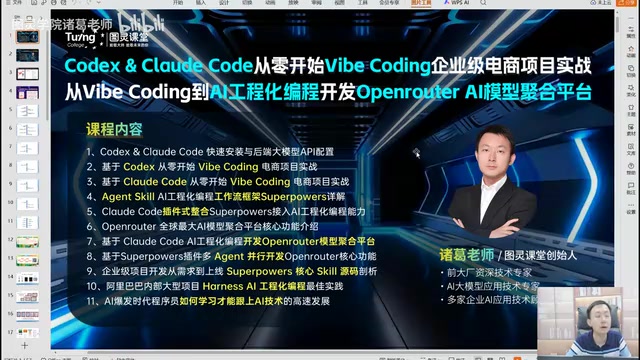
Understanding the Limits of Vibe Coding: A Practical Guide to AI Engineering-Grade Programming
An in-depth look at the difference between Vibe Coding and AI engineering-grade programming. Can AI replace programmers? From Claude Code and Codex to Cursor, revealing the real limits, enterprise pain points, and engineering solutions of AI coding tools.
Read more →

·2 min
AI-Generated Deployment Docs + Cloudflare in Practice: The Full MokerSaaS Launch Workflow
How MokerSaaS used AI tool Cosmo to auto-generate Cloudflare deployment docs, then followed the document-driven workflow to bundle, deploy, and launch.
Read more →

·3 min
CodeBuddy: Install Claude Code Automatically with a Single Command — A Zero-Barrier Tutorial
Learn how to use CodeBuddy (WorkerBuddy) to auto-install Claude Code with a single command. No NPM setup or API Key hassle — pair with DeepSeek for low-cost AI coding.
Read more →

·3 min
Vibe Coding in Practice: Building a Global Product from Scratch with an AI Workflow
A battle-tested AI development workflow covering Claude Code Plan Mode, documentation management, version control, and Cloudflare deployment for building global products.
Read more →

·3 min
DeepSeek-Reasonix: An AI Coding Agent Built for DeepSeek That Cuts Costs by 80%
DeepSeek-Reasonix is an open-source AI coding agent optimized for DeepSeek models. With 12K stars in 3 days, it offers 5 reasoning levels, 4 execution modes, MCP integration, and smart caching that cuts long-session costs by 80%.
Read more →