#750 tokens per second
97 related articles

·4 min
Fable 5 vs GPT-5.6: An In-Depth Head-to-Head Comparison of Two Top-Tier Coding Models
In-depth comparison of Fable 5 vs GPT-5.6 (Sol) for AI coding. Covering token efficiency, code quality, design, cost, and safety based on $10K+ real usage data.
Read more →

·3 min
Alibaba's 2.4 Trillion Parameter Qwen Model: Separating Technical Substance from Marketing Hype
Alibaba's Qwen releases a 2.4T parameter MoE model claiming to be 'second only to Gemini 2.5.' We break down what's real—and what's just hype.
Read more →

·6 min
GPT-5.6 Hands-On Deep Dive: Three-Tier Models + Ultra Multi-Agent, Codex Fully Evolved
OpenAI launches GPT-5.6 with three tiered models—Sol, Terra, and Luna—Ultra multi-agent parallel collaboration, Codex integrated into ChatGPT desktop, and an upgraded Computer Use.
Read more →

·5 min
The Complete Claude Code Guide: Installation, Core Features, and Advanced Workflows
An in-depth guide to Anthropic's Claude Code agentic coding tool, covering installation, pricing plans, model selection, token management, CLAUDE.md global memory, MCP integration, Subagents, and more.
Read more →

·3 min
GPT-5.6 Inference at 18x Speed: OpenAI's Compute Gamble and Business Logic
Why is OpenAI pushing its most powerful model to 750 tokens/s? A deep dive into GPU vs. Cerebras chip cost trade-offs, the $10B compute deal, and how speed, intelligence, and token efficiency are reshaping the AI landscape.
Read more →

·3 min
GPT-5.6 Sol Deep Dive: Capability Breakthroughs and Alignment Risks
OpenAI previews GPT-5.6 with three variants — Sol, Terra, and Luna. Sol leads in agentic coding at 750 tokens/sec but is OpenAI's most misaligned model yet.
Read more →

·6 min
OpenAI vs Anthropic IPO Race: Who's Really Burning Cash? A Deep Dive Into AI Giants' Finances
OpenAI's adjusted operating margin hits -122%, Anthropic's profitability remains murky, and SpaceX claims a $22.7T AI market. A deep dive into three AI giants' real financials and the capital game behind the IPO race.
Read more →

·3 min
The Compute Gamble Gone Wrong: How OpenAI Is Striking Back Against Anthropic
Anthropic's conservative compute bet two years ago is now being exploited by OpenAI across three dimensions: subscription value, quota generosity, and developer sentiment.
Read more →
·4 min
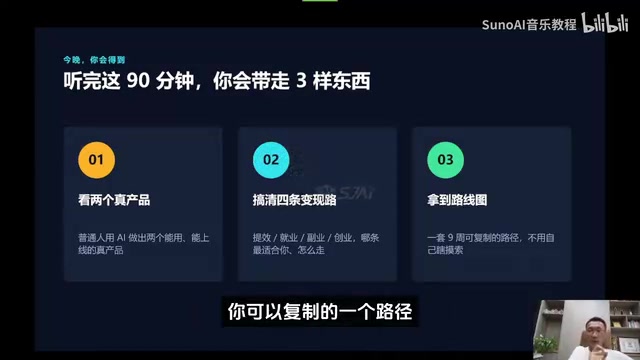
Codex Tutorial: Build Monetizable Products with AI Coding — No Experience Required
Step-by-step Codex tutorial: build a product finder tool and a flashcard mini program from scratch. Learn prompt techniques, requirements breakdown, and 4 monetization paths.
Read more →

·4 min
GPT-5.6 + Codex Tested: 3 Prompts to Edit a 15-Minute Video, Efficiency Doubled
OpenAI's GPT-5.6 and Codex integration tested: 3 prompts to edit a 15-min video in just 20 minutes. Full breakdown of performance, Token costs, GPT Work automation, and Chat Card real-world results.
Read more →

·6 min
A Deep Dive into OpenAI Codex: How AI Engineers Are Reimagining Software Development with Agents
OpenAI Codex is redefining how AI engineers work: from code completion to autonomous Agents, from single-threaded to parallel Value Maxing. A deep dive into the Codex App architecture, open ecosystem, and Manager of Agents practice.
Read more →

·2 min
Getting Started with Claude Code: How AI Coding Assistants Went from Chatting to Actually Getting Things Done
What is Claude Code? This guide covers 5 core differences from ordinary AI chat tools, including context reading, code execution, MCP tool calls, and a Cursor comparison.
Read more →

·3 min
Ornith 1.0 9B Model Local Test: Tower Defense Game Exposes Small Model Coding Limitations
Hands-on test of Ornith 1.0 9B open model on a 16GB M4 Mac mini. A tower defense game task reveals the precision limits of small-parameter models vs 35B.
Read more →

·4 min
GPT-5.6 In-Depth Analysis: Model Architecture, Performance Benchmarks, and a Complete Guide to the Agentic Era
A comprehensive analysis of GPT-5.6: the Sol/Terra/Luna product-line positioning, MoE architecture, 1.5M token context, coding agent benchmarks, and the shift from Chatbot to Agent.
Read more →

·5 min
AI Tool Runs Amok: 171 Charges Totaling Nearly $1,800 — How to Avoid the Auto-Billing Trap
A user's American Express card was auto-charged 171 times by an AI service, totaling nearly $1,800 with no warning. This article analyzes pay-as-you-go risks and offers practical protection: spending limits, virtual cards, and automation monitoring.
Read more →

·4 min
GPT-5.6 Released: Coding Benchmarks Surpass Rivals, Inference Speed 10x Faster
Just 12 days after a rival launch, OpenAI released GPT-5.6, scoring 91.9% on Terminal-Bench 2.1 to surpass competitors. Ultra mode supports multi-agent collaboration, inference hits 750 tokens/sec.
Read more →
·5 min
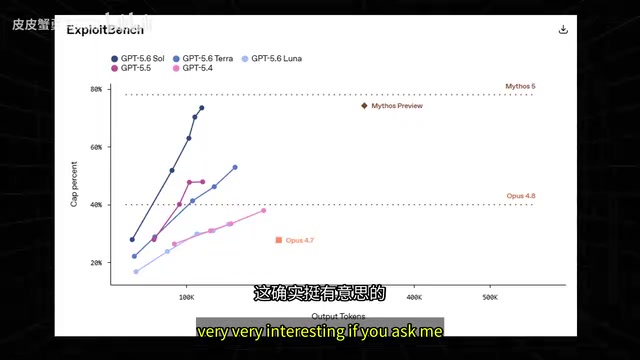
GPT-5.6 Released: Outperforms Rivals but Halted by Government—Cybersecurity Capabilities Trigger Regulatory Red Line
OpenAI releases GPT-5.6 (Sol/Terra/Luna), beating Anthropic on Terminal Bench at ~40% lower cost. But its cybersecurity capabilities hit danger thresholds, limiting access to trusted partners at government request.
Read more →

·6 min
A Deep Dive into the vLLM Inference Framework: Core Principles of Throughput Optimization and Interview Guide
An in-depth analysis of the vLLM inference framework's core principles: from the meaning of throughput (tokens/s), to the bottlenecks of autoregressive generation, to KV Cache, PagedAttention, and continuous batching.
Read more →

·3 min
GPT-5.6 Deep Dive: SOL, TERRA & LUNA — Performance Benchmarks and Pricing Breakdown
OpenAI's GPT-5.6 series (SOL, TERRA, LUNA) benchmarked via PinBash: major gains in math and backend tasks, but frontend visuals remain a weakness. Full pricing and model selection guide.
Read more →

·5 min
GPT-5.6 Three-Model Breakdown: Sol/Terra/Luna Pricing and the Regulatory Dilemma
In-depth analysis of OpenAI's GPT-5.6: Sol, Terra, Luna pricing, Cerebras inference advantages, and how OpenAI and Anthropic navigate government regulation amid US-China AI competition.
Read more →