#AI startup opportunities
169 related articles

·7 min
0 Lines of Hand-Written Code, 3 Hours to Build an AI Product That Can Take Payments
A real case: a creator launched an AI photo generation product in 3 hours with zero code, and got paid the next day. This article breaks down the full loop methodology.
Read more →

·2 min
Mapping U.S. AI Lab Talent: How Immigrants Are Driving Frontier Innovation
Top U.S. AI labs rely heavily on immigrant talent. This deep dive examines how researchers from China, India, and beyond shape AI innovation at Stanford, MIT, OpenAI, and more.
Read more →

·3 min
Vibe Coding in Practice: Building Your Core Competitive Edge with AI-Assisted Development
Vibe Coding is a new AI-era programming paradigm focused on logic over syntax. Use Claude Code, Cursor, and LangChain to ship products solo and 10x your productivity.
Read more →
Forward Deployed Engineer (FDE): The M…
·2 min
Forward Deployed Engineer (FDE): The Most In-Demand Role in the Age of AI Deployment
Forward Deployed Engineers (FDEs) are the hottest emerging role in AI. Learn what FDEs do, what skills they need, why companies like Palantir and OpenAI can't hire enough of them, and what this means for your career.
Read more →

·3 min
How to Monetize AI Automation Skills: A Practical Path from Tools to Business Results
Learned Claude, n8n, or Coze but unsure how to monetize? This article breaks down the core logic of AI automation monetization: prove business value with data, build case studies, and develop a credible personal brand.
Read more →

·2 min
20-Year-Old College Student Earns $1,200/Month with Claude: A Vibe Coding Monetization Breakdown
A 20-year-old student built iOS app TrumpSignal using Claude for $545, earning $1,200/month in passive income. Full breakdown of costs, niche strategy, and Vibe Coding lessons.
Read more →

·2 min
Thinking Machines Releases Its First Open-Weight Model: Inkling
Thinking Machines Lab releases Inkling, its first open-weight model. Founded by former OpenAI members, the startup enters the LLM market with an open-weight strategy enabling local deployment and private fine-tuning.
Read more →

·6 min
Multimodal and Embodied Intelligence: A Comprehensive Look at Progress, Pitfalls, and Opportunities
At the Microsoft Research India summit, top experts explore the real progress of multimodal AI and embodied intelligence: fusing classical robotics with large models, healthcare AI deployment challenges, perceptual bottlenecks in reasoning, and possibilities beyond scaling.
Read more →

·2 min
Selling Reinforcement Learning Environments: Real Business Opportunity or Phantom Demand?
Can selling RL environments be a viable startup? We break down TAM, technical barriers, Scale AI competition, and real niche opportunities in this emerging space.
Read more →

·2 min
The AI Startup Boom: The Era of One-Person Companies Has Arrived
AI tools are lowering startup barriers, making one-person companies a real possibility. Explore how AI reshapes entrepreneurship, compresses costs, and what challenges remain.
Read more →
Can Vibe Coding Build a Hit Product? T…
·2 min
Can Vibe Coding Build a Hit Product? The Truth Behind a Messaging App's 350K Monthly Active Users
A carrier pigeon messaging app built with vibe coding hit 350K MAU and high revenue? We break down the case, the real engineering limits of AI coding, and what it means for indie developers.
Read more →

·3 min
Sent Hundreds of Resumes with No Response? A Deep Dive into Tech Job Search Struggles and How to Break Through
Sending hundreds of resumes with no response? This article breaks down the core pain points in today's tech job market — ATS filtering, spray-and-pray fatigue, neglected referral channels — and offers actionable strategies to break through.
Read more →

·3 min
AI/ML Internship Red Flags: How to Spot and Land Internships That Actually Matter
Is paying for an internship worth it? This deep dive into AI/ML "internship commodification" exposes the real problems with pay-to-intern schemes and offers actionable alternatives — open source, cold outreach, and technical fundamentals.
Read more →

·2 min
White House Weighs Open-Source AI Executive Order: Policy Direction and Industry Impact Explained
The U.S. White House is considering an executive order on open-source AI, touching on national security, tech proliferation, and industry competition. A deep dive into its possible directions and impact.
Read more →

·2 min
Microsoft Open-Sources .NET Skills: Making AI Coding Agents Master C# Development
Microsoft open-sources dotnet/skills, packaging .NET/C# best practices as structured skills for AI coding agents. Bridges domain knowledge gaps in general LLMs, improving code quality for GitHub Copilot and other tools.
Read more →
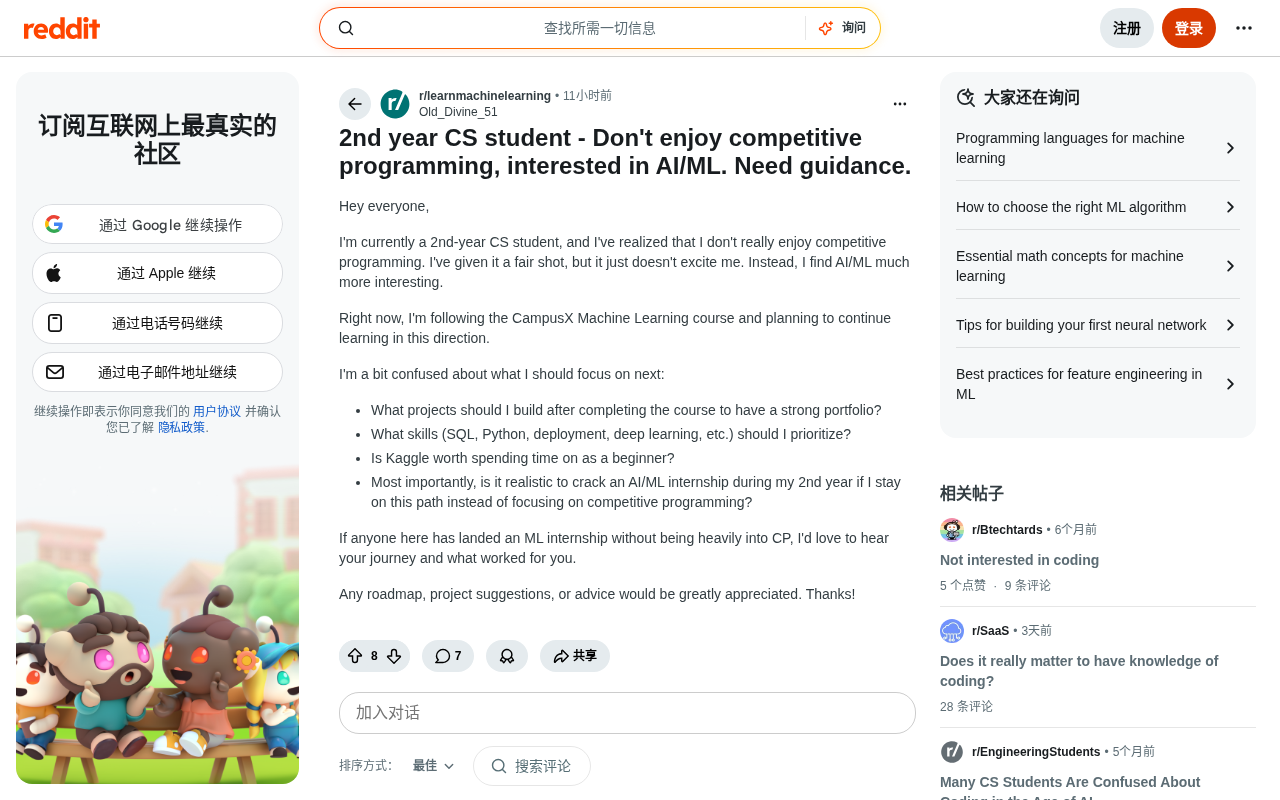
·4 min
No Competitive Programming Required: How CS Students Can Pivot to AI/ML and Land Internships
How can CS students who dislike competitive programming systematically pivot to AI/ML? This guide covers skill priorities (Python/SQL/ML/deployment), portfolio strategy, Kaggle tips, and real paths to landing AI/ML internships.
Read more →

·4 min
The Truth About Silicon Valley's No-Poach Agreements: From Jobs' Emails to Antitrust Lawsuits
A fake Cook-to-Altman email screenshot leads to the real Silicon Valley history of secret no-poach agreements. This article analyzes the antitrust lawsuits of Apple, Google, and others, revealing compliance red lines in the AI-era talent war.
Read more →

·5 min
AI Content Floods Social Media: Why Has LinkedIn Become Ground Zero?
Generative AI tools have flooded social media with AI-generated content, hitting LinkedIn hardest due to its professional nature. A deep dive into the causes, ecosystem impact, and solutions.
Read more →

·7 min
Codex Direct Connection Configuration Guide for China: Complete GPT Agent Setup Tutorial
Complete guide for configuring OpenAI Codex Agent in China, covering installation, API key setup, permission modes, reasoning intensity, and security considerations for third-party relay services.
Read more →

·5 min
Getting Started with AI Agents: Concepts, Architecture, and Core Components Explained
What is an AI Agent? Starting from Bill Gates' claim about the computing revolution, this article explores AI Agents' intuitive concepts, four core components (LLM+Planning+Memory+Tools), and what Agent development means for programmers.
Read more →