#Anthropic export controls
92 related articles

·4 min
The Rise of Chinese Open-Source AI Models: A Head-On Challenge to Closed-Source Dominance
Chinese open-source models rapidly close the capability gap with top closed-source AI. DeepSeek shocks the industry while Qwen matches global benchmarks.
Read more →

·3 min
Qwen 3.8 Open Source Incoming, DeepSeek Coding Agent, and the Latest in China's AI Ecosystem
Qwen 3.8 open source incoming, DeepSeek Resonics native coding agent debuts, Kimi pauses new subscriptions amid compute pressure, and Qiyimole shows domestic GPU interconnect solution at WAIC.
Read more →

·4 min
UK Sovereign AI: How Cosine AI Is Punching Above Its Weight Against American Compute Dominance
Cosine AI founder reveals how the UK's first sovereign LLM is being built — from government compute grants and RL credit attribution to multi-agent orchestration and synthetic data pipelines.
Read more →
Can AI Generate a GTA-Scale Game with …
·2 min
Can AI Generate a GTA-Scale Game with One Prompt? This Prediction Deserves Serious Attention
A viral tweet predicts AI will one-shot GTA-scale games within a year. We break down the bold claim's logic, the three key variables—cost, model access, and timeline—and what it means for the future of game development.
Read more →

·3 min
Five Major AI Stories: Model Failures, Data Leaks, and Capital Concentration
GPT-5.6 deletes files, Grok leaks codebases, DeepSeek's founder hits $36B net worth — five AI stories reveal deepening safety risks and capital concentration.
Read more →

·3 min
Zero-Code Cinematic Websites: A Complete Guide Using GPT Image 2 + Claude Code
No coding needed: use GPT Image 2 for assets, Claude Code for development, and Vercel for free deployment to build a cinematic scroll-driven brand website.
Read more →

·2 min
The Truth Behind Anthropic's Account Bans: Client Detection Logic and a Wave of AI Model Launches
Unpacking the technical truth behind Anthropic's account bans: hidden timezone and proxy detection logic sparks privacy debate. Plus Claude Sonnet 5, Linux support, and new releases from OpenAI, NVIDIA, and Google DeepMind.
Read more →

·4 min
China Moves to Tighten Exports of Top AI Models, Marking a Major Turning Point for Its Open-Source Strategy
Beijing is reportedly consulting with Alibaba, ByteDance, and Z.AI on tiered AI export controls that could affect open-weight models, while DeepSeek quietly builds its own inference chips.
Read more →

·4 min
GPT-5.6 Deep Dive: AI Training AI Opens a New Paradigm in the Model Race
OpenAI's GPT-5.6 launches as three models: SO, TERA, and LUNA. The flagship SO autonomously completed LUNA's post-training, marking a new era of AI-trained AI. Deep dive into pricing, Programmatic Tool Calling, METR safety findings, and government oversight.
Read more →

·2 min
GPT-5.6 Context Rolled Back to 272K · SenseNova Vision Open-Sourced · China AI Export Control Developments
GPT-5.6 context rolled back to 272K; Codex hits 6M users; SenseTime open-sources SenseNova Vision; China eyes AI export controls; Anthropic extends Claude trial again.
Read more →
6 Months Left for Open Source AI? A De…
·2 min
6 Months Left for Open Source AI? A Deep Dive into the Survival Crisis and the Path Forward
Is open source AI really running out of time? This deep dive examines the compute gap, capability lag, and licensing risks threatening open source LLMs — and the paths forward.
Read more →

·3 min
AI Compute Prices Surge Across the Board + Rise of Two Domestic Coding Tools: The Wave of Self-Reliance Arrives
The U.S. imposes its strictest-ever export controls on top AI models, while Zhipu AI and Moonshot launch self-developed coding tools the same day—amid rising GPU and cloud compute prices. A deep dive into three trends driving cost rationality and tech autonomy.
Read more →

·4 min
The Claude Code Covert Tagging Scandal: The AI Trust Crisis Behind Alibaba's Ban
Anthropic's Claude Code is accused of covert tagging via Unicode punctuation encoding, prompting Alibaba to ban its use. A deep dive into the reverse-engineering findings, distillation allegations, and the AI-era battle over compute monopoly and developers' right to know.
Read more →

·6 min
Jacobian-Lens in Practice: Manually Reshaping LLM Behavior with J-Space
After Anthropic released Jacobian-Lens, a developer reversed it from an interpretability tool into a behavior editor, manually tuning J-Space to reshape LLM outputs. An in-depth look at the tech, representation engineering, and AI safety risks.
Read more →

·4 min
BrowserWing: A Browser Action Recorder That Offers a Pragmatic Approach to AI Web Automation
BrowserWing is an open-source browser action recorder (1300+ GitHub stars) with 78 built-in scripts for GitHub, Bilibili, Zhihu, and more. Record once, run repeatedly, and let AI Agents reliably execute fixed web workflows.
Read more →
·7 min
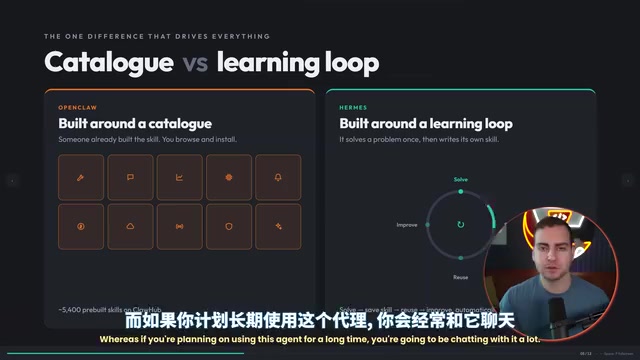
OpenClaw vs Hermes: An In-Depth Comparison and Selection Guide for AI Agent Tools
An in-depth comparison of OpenClaw and Hermes Agent, covering skill management, memory mechanisms, security, and gateway configuration to help you find the right AI agent solution.
Read more →

·6 min
Alibaba Bans Claude Code: The Battle Over AI Coding Tool Security and Data Sovereignty
Alibaba bans Claude Code over security risks, sparking tech community debate. An in-depth analysis of data leakage risks with cloud AI coding tools and the rise of local AI deployment.
Read more →
·5 min
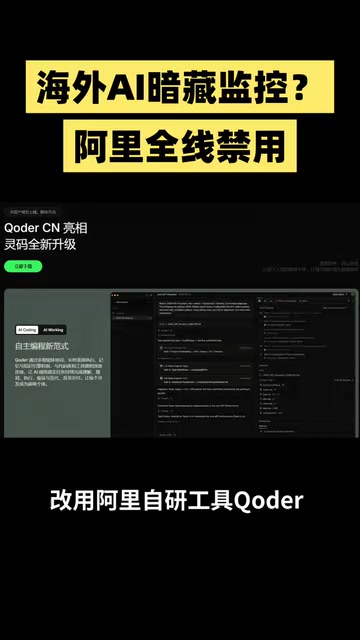
Deep Analysis of the Alibaba-Claude Ban: The Battle for Autonomous Control of AI Coding Tools
Alibaba bans all Anthropic products including Claude Code, while ByteDance and Tencent switch to in-house tools. A deep dive into the security logic and industry trends behind China's push for autonomous AI coding tools.
Read more →

·6 min
GPT-5.6 Officially Approved for Release: How National Security Review Is Reshaping the AI Launch Process
OpenAI's flagship GPT-5.6 was delayed by national security review before winning U.S. government approval. An in-depth look at the Sol, Terra, and Luna model lineup and the emerging AI regulatory regime.
Read more →

·5 min
GPT-5.6 Three-Model Breakdown: Sol/Terra/Luna Pricing and the Regulatory Dilemma
In-depth analysis of OpenAI's GPT-5.6: Sol, Terra, Luna pricing, Cerebras inference advantages, and how OpenAI and Anthropic navigate government regulation amid US-China AI competition.
Read more →