#Anthropic tokenizer
85 related articles

·4 min
Claude Code Getting Started Guide: Core Advantages and Selection Recommendations for AI Coding Assistants
Claude Code is Anthropic's local AI coding assistant featuring full project context, auto error correction, and high-accuracy code generation. Compare it with Cursor, Trae, and Codex.
Read more →

·6 min
Codex China Direct Access Tutorial: Guide to Using DeepSeek as a ChatGPT Replacement
Use Codex without a ChatGPT account! This guide explains a China direct access solution for integrating the DeepSeek API via the Codex++ management tool.
Read more →

·7 min
Complete Guide to Claude Code Desktop: Access DeepSeek Domestic Models Without an Account
Step-by-step guide to installing Claude Code Desktop, enabling developer mode for account-free use, integrating DeepSeek via CC Switch, Chinese localization, and custom Skills in ten minutes.
Read more →

·4 min
Claude Code /cd Command: The Hidden Trick for Switching Directories Without Losing Context
Learn how Claude Code's /cd command lets you switch working directories without losing conversation context — perfect for microservices, monorepos, and multi-module development.
Read more →

·6 min
Claude Code Chinese Guide: A Complete Path from Zero to an Efficient Workflow
A systematic Claude Code learning guide built for Chinese developers, covering ten core modules including Slash Commands, Memory, MCP, and Hooks, with a three-tier path to build an AI coding workflow in 11–13 hours.
Read more →

·7 min
Kontext: One-Click AI Conversation Context Migration, Breaking Down Multi-Model Switching Barriers
Kontext is a context migration tool for multi-AI users, enabling one-click transfer of full conversation history between ChatGPT, Claude, and Gemini to solve the context silo problem.
Read more →

·5 min
Claude Sonnet 5 Integrated with Devin: Enhanced Coding Performance with 30% Lower Quota Consumption
Anthropic's Claude Sonnet 5 launches on Devin Desktop and CLI, delivering frontier-level coding performance while reducing quota consumption by ~30% compared to the previous generation.
Read more →

·5 min
The Attention Bottleneck in AI Coding: Hands-On Agent Workflows from the Father of Crayfish
OpenClaw author Peter shares his thinking on AI coding: when compute is no longer the bottleneck, developer attention becomes the new ceiling. Learn three practical skills—Agent Transcript, Auto-Review, and the Crapbox sandbox.
Read more →

·7 min
Harness Engineering: Core Methodology and Practical Guide for Enterprise-Level AI Programming
Can AI really replace programmers? This article explains Harness Engineering principles and its three evolutionary stages, revealing real pain points of enterprise AI programming.
Read more →

·6 min
Codex Configuration in Practice: A Complete Guide to Accessing GPT-5.5 at Low Cost from China
A detailed guide for Chinese developers on configuring the Codex CLI AI coding tool with GPT-5.5 via API proxies, covering setup steps, efficiency gains, and security risks.
Read more →

·6 min
Step-by-Step Guide: Power Codex with DeepSeek for Users Without ChatGPT Access
No ChatGPT account? No problem! Learn how to power Codex with DeepSeek API using the Codex++ management tool. Five easy steps, starting at just $1.40.
Read more →

·3 min
Is Claude Sonnet 5 Really Cheap? A Cost Breakdown by Task
Claude Sonnet 5 markets itself on agentic capabilities and low price, but real costs are far more complex. We break down token explosion, tokenizer inflation, and Opus 4.8 comparisons to reveal the true cost-performance picture.
Read more →

·3 min
Claude Sonnet 5 Hands-On Review: The Hidden Token Trap That Makes 'Low Cost' an Illusion
Claude Sonnet 5 promises near-Opus 4.8 performance at lower cost, but hands-on tests reveal a critical trap: a new tokenizer inflates token consumption, making real costs far higher than expected.
Read more →
Has AI Coding Assistant Fable Been Ner…
·4 min
Has AI Coding Assistant Fable Been Nerfed? Developer's Routing Anomaly Report Sparks Debate
A developer questioned whether AI coding assistant Fable was nerfed, finding 4–10x more tokens routed to Opus with Fable doing ~20% of the work. A deep dive into multi-model routing, transparency, and AI trust.
Read more →

·7 min
Cost Optimization for AI Agent Fleets: Why an Expensive Commander + Cheap Workers Is More Cost-Effective
Deep analysis of multi-agent system cost optimization: why the 'expensive commander + cheap workers' combination outperforms all-frontier fleets, covering decision-intent cost logic and Sonnet 5 tokenizer traps.
Read more →
Is Claude Sonnet 5 Worth Upgrading To?…
·3 min
Is Claude Sonnet 5 Worth Upgrading To? A Developer's Guide to Performance vs. Cost
Claude Sonnet 5 approaches Opus-level performance, but a new tokenizer increases token usage by ~30%. This guide helps developers rationally evaluate the upgrade.
Read more →

·8 min
Free Top-Tier AI Models on Aggregator Platforms? A Sober Analysis and Pitfall Avoidance Guide
In-depth analysis of AI aggregator platforms claiming free access to GPT, DeepSeek, and Gemini. Reveals hidden data risks, business logic, and recommends legitimate alternatives like OpenRouter and Poe.
Read more →
·3 min
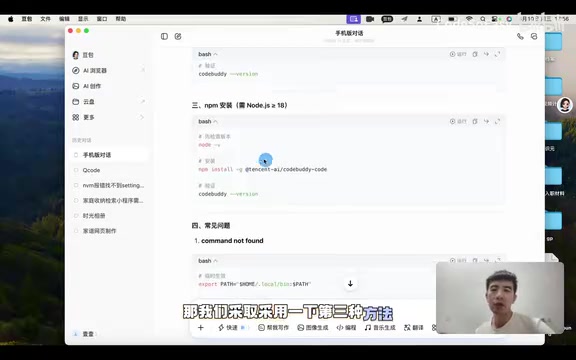
Tencent CodeBuddy Hands-On Review: Complete Guide to Installing and Using This Free AI Coding Assistant
Hands-on review of Tencent's free AI coding assistant CodeBuddy, covering installation, login setup, basic command testing, and building a corporate website with one prompt.
Read more →

·4 min
Deep Dive into Hermes Agent Architecture: Loop Mechanism, Memory System, and Gateway Design
Deep dive into Hermes Agent's core architecture: Agent Loop mechanism, three-layer memory system (Markdown/SQLite/external), Gateway multi-platform integration, context compression, and Cron jobs.
Read more →

·3 min
Claude Says It's DeepSeek? Unraveling the Truth Behind LLM Identity Confusion
Why does Claude claim to be DeepSeek? This article analyzes LLM identity confusion from three angles: training data contamination, context memory residue, and lack of self-awareness, plus practical verification methods.
Read more →