#Apple Mac AI programming
219 related articles

·3 min
Spending $200K to Test GPT-5.6: Have AI Coding Assistants Reached a Tipping Point?
Developer Theo spent ~$200K over 6 weeks testing GPT-5.6 across 67 projects — from 20-hour autonomous coding runs to fixing boot partitions and Rust rewrites.
Read more →

·5 min
GPT-5.6 Comes to Codex, Voice Models Iterate: A Flurry of AI Product Updates
OpenAI announces GPT-5.6 Sol Ultra coming to Codex and its most powerful real-time voice model yet, GPT Realtime 2.1; Tencent's Toast lands on iOS; Anthropic finds brain-like structures in Claude.
Read more →

·5 min
Getting Started with AI Agents: Concepts, Architecture, and Core Components Explained
What is an AI Agent? Starting from Bill Gates' claim about the computing revolution, this article explores AI Agents' intuitive concepts, four core components (LLM+Planning+Memory+Tools), and what Agent development means for programmers.
Read more →

·2 min
Bun: The All-in-One High-Performance JS Toolkit — Runtime, Bundler, and Package Manager
Bun combines a JS runtime, bundler, test runner, and package manager into one executable. Built on JavaScriptCore and Zig, it offers blazing-fast startup, native TypeScript support, and Node.js compatibility.
Read more →

·3 min
Disney+ Considers a Free Tier: Can It Win Back Screen Time from YouTube?
Disney is considering a free ad-supported tier for Disney+, challenging YouTube and Tubi. A deep dive into the business logic, risks, and industry implications.
Read more →

·3 min
GPT-5.6 Released: Sol, Terra, and Luna Reshape AI Programming and Office Automation
OpenAI launches GPT-5.6 with three models — Sol, Terra, and Luna — plus ChatGPT Work, a new desktop app, and Hosted Sites. Codex now autonomously trains models.
Read more →

·4 min
SparkyFitness: The Rise of an Open-Source, Self-Hosted Health Tracking App
SparkyFitness is an open-source, self-hosted alternative to MyFitnessPal and Flo. In one year: 4,500 users, 73 contributors, covering nutrition, sleep, women's health, GLP-1 tracking, and more.
Read more →

·5 min
Has Apple Lost the AI Race? The Battle Between Software Setbacks and the Hardware Moat
After Apple failed to deliver on its new Siri promise for two years running, many ask: has Apple lost the AI race? We break down two AI tracks—software models vs. on-device hardware.
Read more →

·5 min
FL Studio 2026: AI Assistant Gopher Evolves from Manual to Assistant Engineer
FL Studio 2026 upgrades its AI assistant Gopher from a Q&A help doc to a true assistant engineer that understands project context and joins the creative workflow. An analysis of what this means and how deeply integrated AI affects music producers.
Read more →

·5 min
Advanced Vibe Coding: How SuperPowers and GStack Make AI Coding Truly Converge
In the age of AI-assisted programming, how do you make tools like Codex and Claude Code output more stably? This article deeply analyzes SuperPowers and GStack, covering project-level orchestration and module-level code layering to help developers master AI coding.
Read more →

·7 min
21-Day Python Automation Testing Crash Course: A Complete Breakdown of the Three-Stage Learning Path
Learn automation testing from scratch! This article breaks down a three-stage path: Selenium/Appium tools, Requests+PyTest API testing, performance testing and CI/CD, with real projects—build a complete skill set in 21 days.
Read more →
·5 min
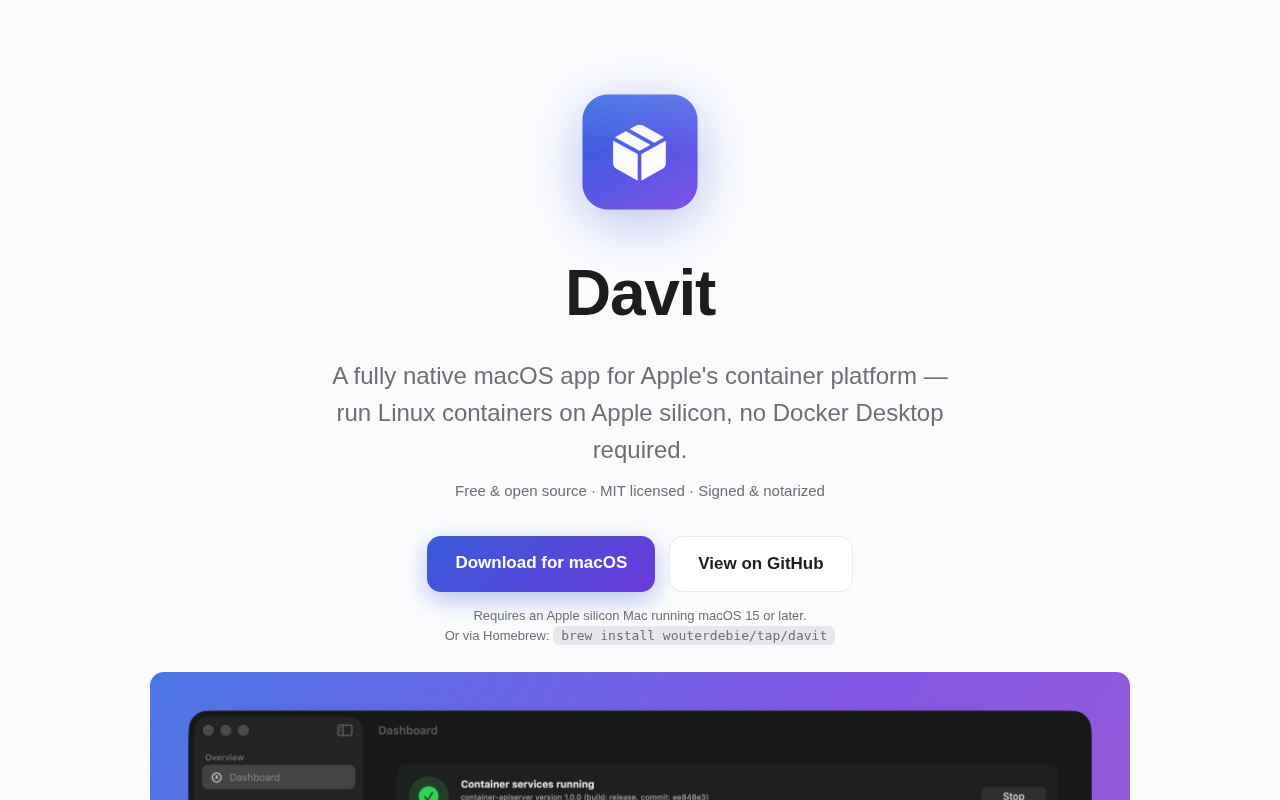
Davit: A Native GUI Management Tool Built Specifically for Apple Containers
Davit is an open-source native macOS UI tool built for Apple Containers, offering graphical container status management, image viewing, and log monitoring.
Read more →

·6 min
Getting Started with Dify: A Complete Guide to Deployment, Configuration, and Workflow Practice
A systematic guide to Dify's three deployment methods (Docker/source/online), five application types, and hands-on workflow nodes—covering LLM integration, MySQL config, and app publishing.
Read more →

·6 min
AMD Ryzen AI Halo Dev Kit: A $4,000 Local LLM Powerhouse Taking on Apple and NVIDIA
AMD officially unveils the Ryzen AI Halo local AI dev kit, priced around $4,000 with 128GB unified memory, capable of running 70B LLMs locally. An in-depth look at its specs, pricing, and market competition.
Read more →

·6 min
The Cambridge Guide *Copy That Floppy*: How to Rescue Precious Data from Floppy Disks
Floppy disks face a dual crisis of physical aging and reading device obsolescence. This article breaks down the core methods of Cambridge's Copy That Floppy guide: physical assessment, flux-level reading, and disk imaging.
Read more →

·7 min
HuggingFace Open-Sources ml-intern: An AI Engineer That Reads Papers and Trains Models Autonomously
Hugging Face's open-source ml-intern autonomously reads papers, writes training scripts, and finetunes LLMs, deeply integrating the HF ecosystem and smolagents. Explore its features and impact on ML careers.
Read more →

·7 min
The Revenge of the Philosophy Majors in the AI Era: Why Critical Thinking Has Become the New Scarce Resource
As generative AI sweeps the workplace, once-marginalized philosophy and humanities are being revalued. This article explores why critical thinking, ethical judgment, and questioning are the new scarce competencies in the AI era.
Read more →

·6 min
A Beginner's Guide to AI Agents: How Large Models Are Driving a New Computing Revolution
What is an AI Agent? This article systematically explains the core architecture of AI agents (LLM + Planning + Memory + Tools), how they differ from ChatGPT, their combination with robots, and why developers must master Agent development skills.
Read more →

·7 min
Electron + LangGraph in Practice: Building an AI Agent Visual Orchestration App from Scratch
A hands-on guide to building an enterprise-grade AI Agent workflow orchestration app with Electron Forge and LangGraph, covering local LLM deployment (Qwen3-0.6B), node-based visual canvas design, and full Function Calling integration.
Read more →
·5 min
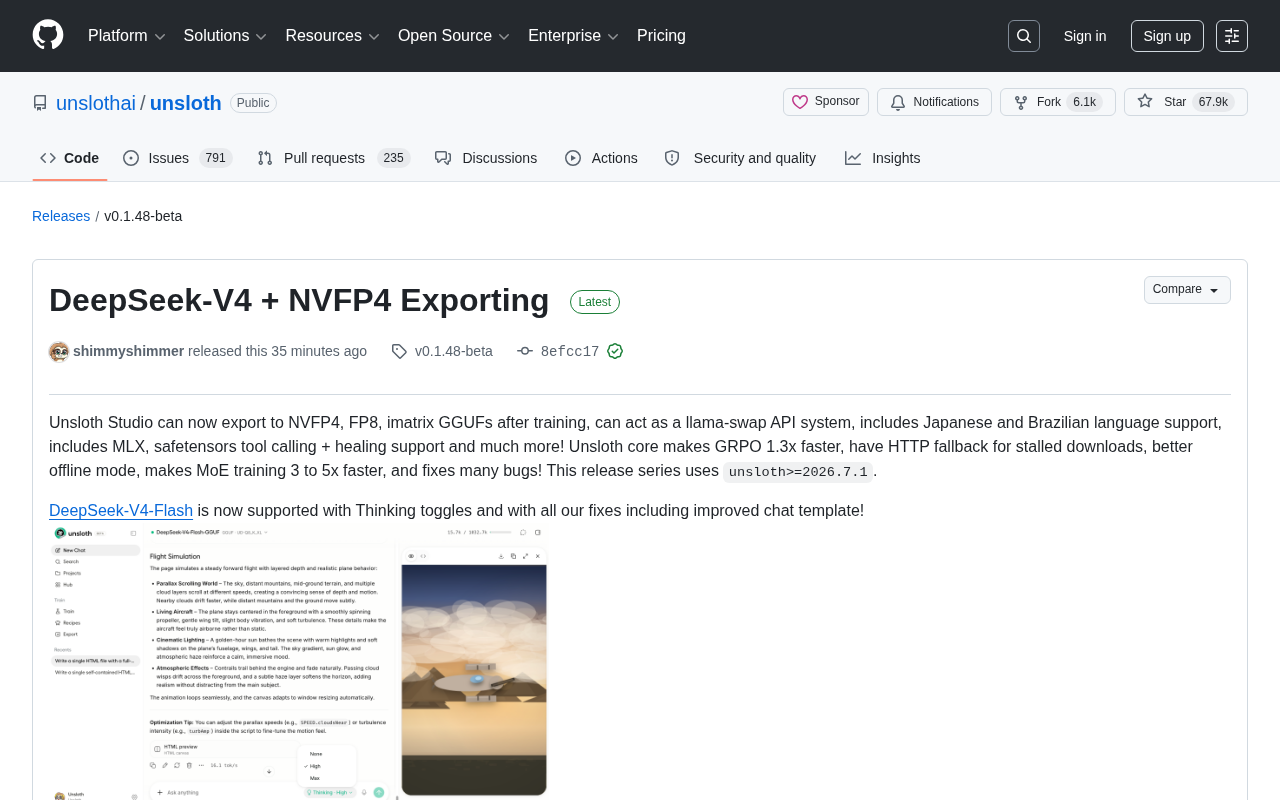
Major Unsloth Update: NVFP4 Quantization Export and DeepSeek-V4 Training Support
Unsloth v0.1.48-beta released, adding NVFP4/FP8 quantization export, OpenAI-compatible API hot-swapping, 3-5x faster MoE training, and 1.3x faster GRPO, covering the full LLM fine-tuning, quantization, and local deployment pipeline.
Read more →