#ByteDance AI tools
486 related articles

·4 min
Hands-On with GPT-5.6: A Single Prompt Builds a Real-Time Voice Anime App
Hands-on with GPT-5.6 Sol: auto-generate real-time voice anime characters from one prompt, write physics engines from scratch, and build unfamiliar toolchains autonomously. In-depth review of coding, agentic tasks, benchmarks, and its hallucination weakness.
Read more →

·3 min
Is Free GPT5.6 a Trap? The Truth Behind AI Mirror Sites Exposed
The viral "free GPT5.6" videos hide real risks: the model doesn't exist, and the "treasure sites" are third-party proxy mirrors carrying data privacy leaks and account bans.
Read more →

·3 min
UniFlex 11: A Complete Guide to the Free, Open-Source Krea 2 Workflow Suite
UniFlex 11 is a free, open-source ComfyUI workflow suite built for Krea 2. It offers Core and Full editions with prompt enhancement, inpainting, upscaling, and annotated modular design for all skill levels.
Read more →

·3 min
Biome's Missing ESLint Rule: A Community Voting Guide for padding-line-between-statements
Biome.js currently lacks the popular ESLint rule padding-line-between-statements. This article explains the rule's purpose and configuration, and explores how community voting can drive Biome's feature completeness and aid ESLint migration decisions.
Read more →

·3 min
Getting Started with Cursor: A Complete Guide to the Core Features of AI-Native Programming Tools
Cursor is an AI-native programming tool deeply rebuilt on VS Code, integrating top LLMs like Claude and DeepSeek. It supports natural-language code generation, smart error fixing, and context awareness.
Read more →

·3 min
AI Agent Builder: A Complete Hands-On Guide from Zero to Enterprise-Grade Delivery
AI Agents are becoming the core form for deploying large models. This article explores the AI Agent Builder profession, revealing the SME deployment gap and a complete path from fundamentals to delivery.
Read more →

·4 min
Coze in Practice: A Complete Guide to Building Multi-Agent Collaboration Teams
A systematic guide to Coze's positioning and capabilities, covering Agent-building platform categories, Skill modules, workflow orchestration, and multi-Agent team building.
Read more →

·3 min
Building AI Customer Service Agents with GPTs and Coze: A Complete No-Code Guide
Build AI agents with no coding background! Using an e-commerce customer service bot as an example, this guide breaks down the setup process for GPTs and Coze.
Read more →

·4 min
Getting Started with Coze: Build AI Agents from Scratch
Coze is ByteDance's low-code AI Bot platform for building AI agents without coding. Learn the differences between the domestic and international versions, core feature comparisons, and monetization potential.
Read more →

·4 min
100,000 Lines of Code in 7 Days: A Solo Developer's Hands-On Guide to AI-Assisted iOS Development
A solo developer iterated an iOS app to 100,000 lines of code in 7 days and shipped it. This article breaks down the core methodology: delegate the frontend to AI, control the backend by hand.
Read more →

·3 min
Depth Map and OpenPose Extraction Workflow: A Practical Guide to Controllable AI Video Generation
A deep dive into the principles and applications of the Depth Map and OpenPose pose extraction workflow, combined with Seedance 2's reference video feature, helping creators precisely control camera movement and character poses in AI video.
Read more →

·3 min
The Complete AI Agent Development Workflow: A Seven-Step Guide from Requirements Analysis to Deployment
Want to build an AI Agent but don't know where to start? This guide covers the complete seven-step workflow—from requirements analysis, platform selection, prompt engineering, data storage, and UI building to testing and deployment.
Read more →

·3 min
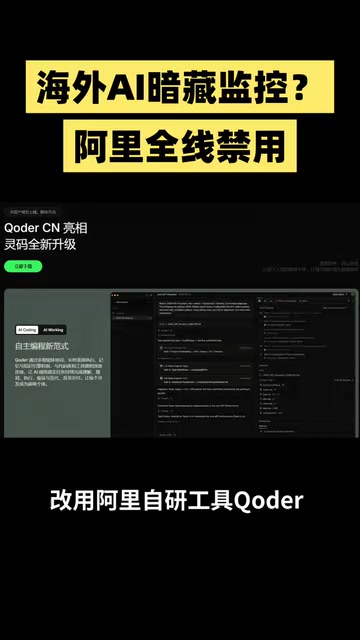
Alibaba Bans Claude Code Company-Wide: Data Security Concerns Around AI Coding Tools
Alibaba has banned employees from using Claude Code company-wide, shifting sharply from encouragement to prohibition. An in-depth look at data security risks, privacy compliance dilemmas, and the domestic AI alternative trend.
Read more →

·7 min
GPT-5.6 and Grok 4.5 Launch Simultaneously, Meta Unveils Agent-Based Image Model
OpenAI GPT-5.6 expands its preview, xAI Grok 4.5 opens access at the same time, Meta releases the Agent-based Muse Image model and Muse Video model, while Apple and DeepSeek launch in-house AI inference chip programs. A quick look at the week's five biggest AI stories.
Read more →
·5 min
Deep Analysis of the Alibaba-Claude Ban: The Battle for Autonomous Control of AI Coding Tools
Alibaba bans all Anthropic products including Claude Code, while ByteDance and Tencent switch to in-house tools. A deep dive into the security logic and industry trends behind China's push for autonomous AI coding tools.
Read more →

·6 min
AI Agent Development in Go: A Hands-On Guide to ByteDance's Eino Framework and Its Seven Core Capabilities
Build production-grade AI Agents with a pure Go stack using ByteDance's Eino framework. A deep dive into seven core capabilities: multi-Agent orchestration, long-task execution, command approval, RAG, MCP, Skills, and database reporting.
Read more →

·3 min
Seedream 5.0 Pro In-Depth Review: A Complete Analysis of Its Chinese-Language Image Generation
First-look review of ByteDance Seedream 5.0 Pro covering art, Chinese text layout, character sheets, and commercial UI — benchmarked against GPT Image 2 and Nano Banana Pro.
Read more →
·3 min
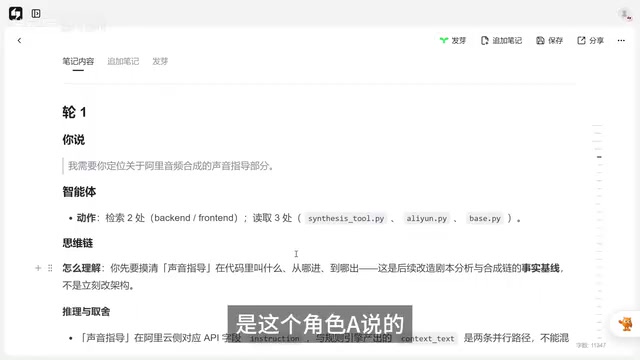
Vibecoding in Practice: Prompt Slot Design and On-Demand Multi-Agent Loading
Learn how to design Prompt templates and Slots for multi-Agent AI apps: separate deterministic vs. non-deterministic tasks, enforce single responsibility, and sync changes across engines with one edit.
Read more →
·6 min
GPT-5.6 Sol Limited Preview: The Safety Boundaries Behind AI's Capability Expansion
OpenAI's flagship GPT-5.6 advances on three fronts—Sol, Kara, Luna tiered rollout; ByteDance CGN 5.0 Pro and Meta Muse push image generation toward controllable workflows; AI coding agents expose new supply chain risks.
Read more →

·6 min
GPT Live Full-Duplex, Grok 4.5 Coding, Seedream 5.0 Images: AI Accelerates Across Three Tracks Simultaneously
OpenAI's GPT Live full-duplex voice model, Grok 4.5 coding model with Cursor, and ByteDance's Seedream 5.0 Pro image generation launched together. A deep dive into three AI releases.
Read more →