#CLIP vision encoder
106 related articles

·2 min
Abliteration Explained: Building a Custom Uncensored Text Encoder for Krea 2
How a developer ran 4,000 multi-seed abliteration trials to build a 100% HarmBench-compliant uncensored text encoder for Krea 2's Qwen3-VL-4B, with five quantization formats and ComfyUI deployment guide.
Read more →

·2 min
Variable-Length Matrix Classification: Choosing the Right Neural Network Architecture for Unordered Set Data
Why do CNNs and RNNs fail on unordered matrix data? Learn about permutation invariance, Deep Sets, and Set Transformer to pick the right architecture for set-based classification.
Read more →

·6 min
Multimodal and Embodied Intelligence: A Comprehensive Look at Progress, Pitfalls, and Opportunities
At the Microsoft Research India summit, top experts explore the real progress of multimodal AI and embodied intelligence: fusing classical robotics with large models, healthcare AI deployment challenges, perceptual bottlenecks in reasoning, and possibilities beyond scaling.
Read more →
Three Core Gaps in Multimodal LLMs: Fr…
·4 min
Three Core Gaps in Multimodal LLMs: Frontier Research from Microsoft Research India
Microsoft Research India reveals three core gaps in multimodal LLMs: visual perception blindspots, cognitive hallucination, and architectural limitations. Explores Faithful GRPO, behavior modeling, and model alignment breakthroughs.
Read more →

·3 min
GPT-5.6 Proves 50-Year Math Conjecture in One Hour — AI Independently Cracks a Scientific Problem
GPT-5.6 Sol Ultra proved the 50-year-old Cycle Double Cover Conjecture in one hour for under $500. Plus: Apple sues OpenAI, Google open-sources Gemma 4, and Zhipu AI targets AGI.
Read more →
·3 min
DeepSeek V4 Coming Soon: Flash Version May Surpass HY3, GPT-5.6 Reasoning Budget Quietly Cut
DeepSeek V4 drops this month with native vision; OpenAI quietly cut GPT-5.6 reasoning budget; Anthropic extends Fable 5 access ahead of GPT-6; Seedance 2.5 hits 180s 4K video generation.
Read more →

·2 min
GPT-5.6 Context Rolled Back to 272K · SenseNova Vision Open-Sourced · China AI Export Control Developments
GPT-5.6 context rolled back to 272K; Codex hits 6M users; SenseTime open-sources SenseNova Vision; China eyes AI export controls; Anthropic extends Claude trial again.
Read more →

·6 min
GPT-5.6 vs Grok 4.5 on the Same Day: A Packed Week of Flagship AI Model Launches
OpenAI's GPT-5.6 launches with Sawa, Terra, and Luna sub-models the same day as Musk's Grok 4.5, while Anthropic, Meta, and NVIDIA make their moves. A packed week of flagship AI launches.
Read more →

·5 min
In-Depth Analysis of the GPT-5.6 EQ Test: Progress and Limitations in Emotional Intelligence
A Reddit user ran EQ tests on ChatGPT 5.5 and 5.6, covering meeting emotion ranking, chess-behavior judgment, and facial attractiveness. Version 5.6 shows clear gains in multimodal emotional understanding, but social common sense remains a core weakness.
Read more →

·3 min
AI-Generated D&D Fantasy Character Portraits: A New Creative Tool for Tabletop Gamers
AI image generation is transforming how D&D and tabletop gamers create characters. From character consistency to atmospheric detail, new diffusion models make stunning fantasy portraits accessible.
Read more →

·5 min
In-Depth Comparison of AI Image Generation Tools: How to Choose Between Flux, Midjourney, and Gemini?
A comprehensive comparison of mainstream AI image generation tools: Flux, Midjourney, Grok, Gemini, and Stable Diffusion. Dissecting their pros and cons across quality, freedom, and usability to help you find the right AI drawing solution.
Read more →

·7 min
GPT-5.6 Full Model Lineup Hands-On Guide: A Deep Dive into API Relay Stations and Their Risks
The full GPT-5.6 model lineup is live. How can domestic developers access it at low cost via API relay stations? This article explains the principles, registration, token setup, client integration, and key risks.
Read more →

·2 min
Fine-Tuning PaliGemma 2 for Custom Object Detection: A Practical Guide from General to Specialized
Learn how to fine-tune Google's open-source PaliGemma 2 VLM for custom object detection. Covers model architecture, data formatting, fine-tuning strategies, and real-world value.
Read more →

·7 min
Gemini Live Integrates Nano Banana: A Complete Guide to Real-Time Camera, Image Generation, and Maps Integration
Google's Gemini Live now integrates the Nano Banana image generation model with Connected Apps like Google Maps, supporting real-time camera scene understanding and visualization. Free worldwide.
Read more →
·6 min
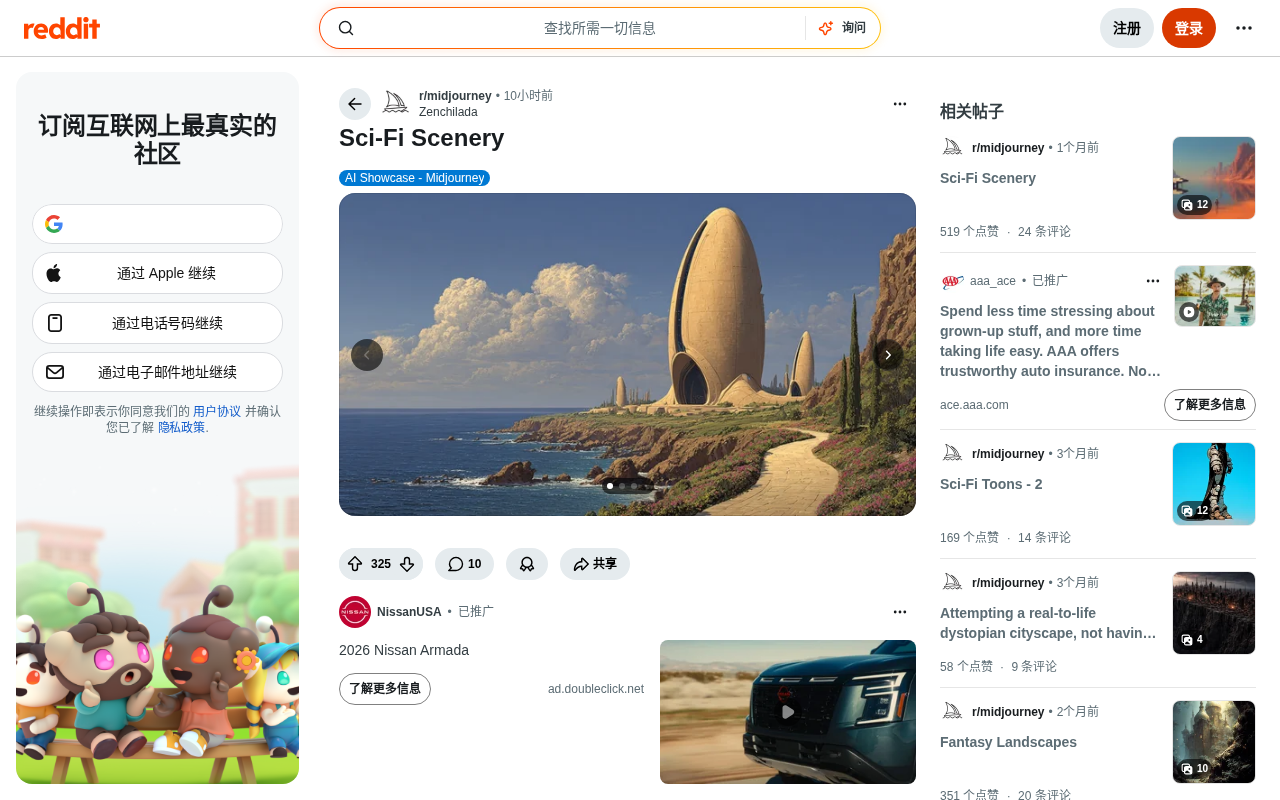
AI-Generated Sci-Fi Scenery: A Visual Revolution and the Democratization of Imagination
Explore how AI image generation makes sci-fi aesthetics concrete—from futuristic architecture to alien landscapes, AI is bringing dream-crafting within reach. Analyzing the tech evolution, cultural resonance, and democratization of concept design behind Reddit's trending works.
Read more →

·7 min
AI Coding in Practice: Generating a Minecraft Clone in 90 Minutes as LLMs Enter Project-Level Development
A major breakthrough in AI coding! Hands-on tests show new LLMs generating a Minecraft clone in 90 minutes and a TMNT game in 30 minutes, building 3D scenes, animation, and game logic in one shot.
Read more →

·5 min
Runs on Low VRAM! A Hands-On Look at the ID LoRA Face-to-Video Workflow
A face-to-video workflow built on GGUF quantized models and ID LoRA runs on just an RTX 3060 with 6GB VRAM. This article breaks down its core principles, four-step process, and how it tackles facial consistency in AI video.
Read more →

·5 min
GPT-5.6 Trio Released: A Deep Dive into Sol/Terra/Luna and the Breakthrough in Design Judgment
OpenAI officially releases the GPT-5.6 series with three models: flagship Sol, balanced Terra, and economy Luna. A deep dive into its core breakthroughs—a step change in design judgment and enhanced computer-use capabilities.
Read more →

·7 min
Getting Started with AI Agents: A Deep Dive into the Perception-Decision-Action Loop
A clear, in-depth guide to how AI Agents work: the paradigm shift from traditional programs, the perception-decision-action loop, and the four pillars—LLMs, tool calling, memory, and RAG.
Read more →

·4 min
Switching Careers to LLM Development: The Four Core Competency Layers Companies Actually Need
Want to break into LLM development but not sure where to start? This guide breaks the core skills into four progressive layers — from basic knowledge to RAG, fine-tuning, Agents, and multimodal — so you can align with real enterprise needs and land the job.
Read more →