#CPU voice synthesis
22 related articles

·3 min
ComfyUI LLM Assistant 2.0: An All-in-One Multimodal Local Deployment Solution
ComfyUI LLM Assistant 2.0 major update integrates real-time translation, image understanding, OCR, multimodal dialogue, audio/video understanding, and speech synthesis—all locally deployed with zero dependency conflicts.
Read more →

·1 min
Sopro V2 Turbo Goes Open Source: Voice Cloning at 5x Real-Time on CPU with Just 120M Parameters
Sopro V2 Turbo is an open-source 120M-parameter TTS voice cloning model running at 5x real-time on CPU with 300ms latency. Clone any voice with just 5 seconds of audio.
Read more →
·2 min
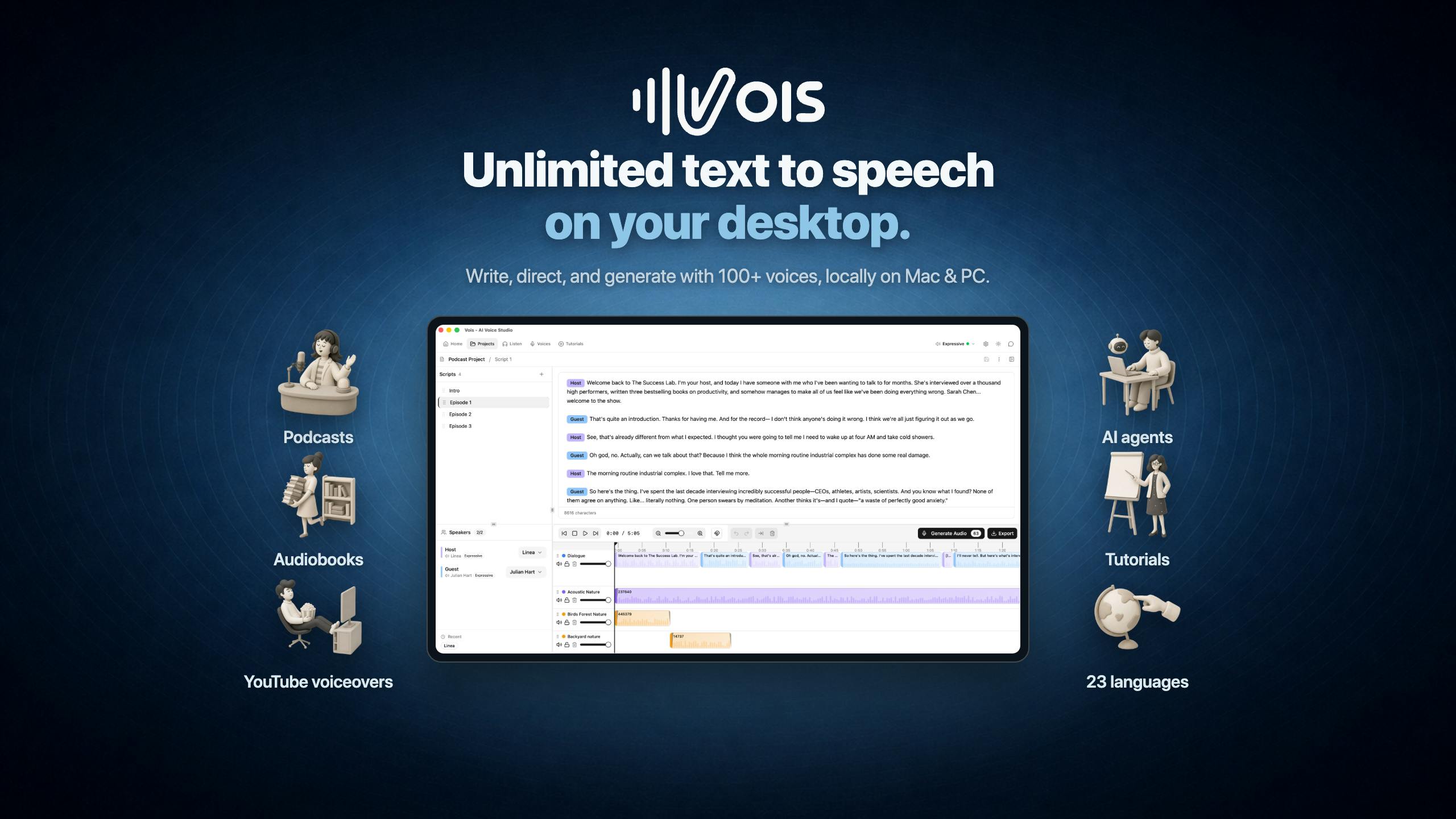
Vois 2.0 Review: Unlimited Voice Synthesis for $10/Month — Can It Replace ElevenLabs?
Vois 2.0 is a desktop AI voice synthesis tool offering unlimited generation with no per-character fees, 100+ voices, voice cloning, multi-speaker timeline, and 600+ languages for $10/month.
Read more →

·3 min
Google Pixel 11 Deep Dive: How the Tensor G6 Chip and Gemini AI Are Redefining the Smartphone Experience
Google Pixel 11 features the Tensor G6 chip, deep Gemini AI integration, LED HiLight notifications, and upgraded camera hardware. A full analysis of Google's most personalized flagship.
Read more →

·3 min
Unsloth Desktop Complete Review: An All-in-One Solution for Local AI Model Deployment, Inference, and Fine-Tuning
In-depth review of Unsloth Desktop covering local LLM deployment, inference acceleration, model fine-tuning, multimodal generation, and Agent integration with Claude Code and Codex.
Read more →

·3 min
Chatterbox-Nano: A Fully Local, Open-Source Browser TTS Extension
Chatterbox-Nano is a local-first, open-source browser TTS extension for Firefox and Chrome. Text never leaves your machine, runs on CPU, with Voice Lab for custom voices.
Read more →

·4 min
Fei-Fei Li on AI: Visual Intelligence, the Boundaries of Creativity, and Human Agency
Stanford professor Fei-Fei Li discusses AI and visual science on Huberman Lab, explaining how ImageNet ignited modern AI, AI's capability boundaries, healthcare applications, and why human agency is the central question in AI development.
Read more →

·3 min
Unsloth Desktop: The First Open-Source AI Desktop App Supporting Local Training + Inference
Unsloth Desktop is an open-source app for Mac/Windows/Linux that integrates local model training and inference with 2x speed, 70% VRAM savings, GGUF/MLX support, and Claude Code connectivity.
Read more →

·3 min
Running a Local AI Voice Assistant on a $50 Arduino Board: A Practical Guide to Edge AI
How to run a fully local AI voice agent on a $50 Arduino Uno Q board, covering speech recognition, intent understanding, and TTS implementation for edge AI applications.
Read more →

·4 min
Project Rai-chan Technical Breakdown: A Complete Guide to Building a Fully Local AI Companion
Deep dive into Project Rai-chan's tech stack: Ollama+Gemma local LLM, Unity rendering, VOICEVOX speech synthesis, and more — exploring the technical path for local AI companions.
Read more →

·2 min
HuggingFace Open-Source Voice Assistant: A Complete Guide to Local Deployment
A deep dive into HuggingFace's speech-to-speech open-source project, covering its modular VAD, STT, LLM, and TTS pipeline architecture and the advantages of local deployment for privacy, cost, and latency.
Read more →
·7 min
DIY Companion Robot: Building Your AI Desktop Buddy with Jetson Orin
A maker builds a DIY companion robot with NVIDIA Jetson Orin and 4S LiPo battery. Explore the full development journey from first power-up to AI interaction, including edge computing, power design, and companion robot trends.
Read more →

·3 min
AI Manga Drama Production: Full Workflow from Image Generation to Monetization
A complete guide to AI manga drama production: covering Jimeng, Hailuo, ComfyUI video generation, MiniMax voiceover, Topaz upscaling, and editing — for everyday creators.
Read more →

·3 min
iOS 27 In-Depth Review: Five Major New Features Tested and Analyzed
iOS 27 deep dive: AI photo Extend & Spatial Reframe, a rebuilt Siri with personal data access, 30%+ system-wide speed gains, and long-overdue quality-of-life fixes — all tested and explained.
Read more →

·4 min
AI Weekly Recap: Four Major Vendors Cut Prices Together, Copilot's Paid Conversion Rate Just 4.5%
In one week, OpenAI, xAI, Google, and Microsoft all cut AI prices, driving near-frontier inference costs sharply lower. Meanwhile, Microsoft Copilot's paid conversion across 450M seats is under 4.5%, exposing the monetization challenge of general AI assistants.
Read more →

·3 min
The State of Gemini Nano Multilingual Support: When Will Hebrew and Arabic Be Available?
Gemini Nano's on-device AI model currently has limited language support, with no official timeline for RTL languages like Hebrew and Arabic. This article explores the technical bottlenecks, commercial priorities, and future outlook.
Read more →
·6 min
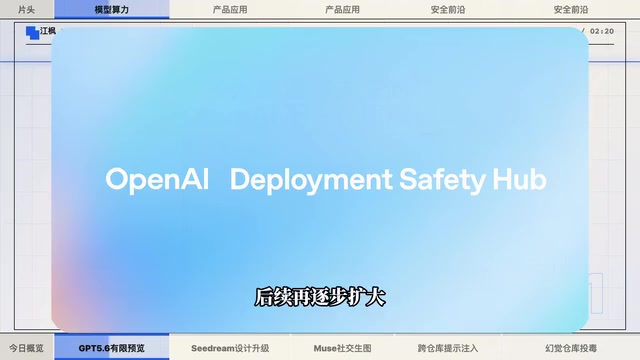
GPT-5.6 Sol Limited Preview: The Safety Boundaries Behind AI's Capability Expansion
OpenAI's flagship GPT-5.6 advances on three fronts—Sol, Kara, Luna tiered rollout; ByteDance CGN 5.0 Pro and Meta Muse push image generation toward controllable workflows; AI coding agents expose new supply chain risks.
Read more →

·5 min
Nothing Phone 4b In-Depth Review: The Ultimate Value Play at €330
Nothing Phone 4b review: 6.77-inch high-refresh AMOLED, 5200mAh battery, Snapdragon 6 Gen 4. What are the trade-offs at €330? An in-depth look at its screen, camera, performance, and software.
Read more →

·3 min
Codex Hands-On from Scratch: Building a Full-Stack World Cup App Without Writing Code
Learn how to build a full-stack World Cup app with OpenAI Codex without writing code, covering multi-session concurrency, MCP voice synthesis, Skill encapsulation, and scheduled task automation.
Read more →
 Tutorials
·2 min
MoS-TTS-Nano Deployment Guide: Ultra-Lightweight 0.1B TTS Model That Runs on CPU
Battle-tested MoS-TTS-Nano local deployment guide. 0.1B ultra-lightweight TTS model runs on quad-core CPU without GPU. Covers Conda setup, pynini installation fixes, model download, and Gradio WebUI.
Read more →