#CRDT
38 related articles

·2 min
Crew: A Multiplayer Workspace for Human-AI Collaboration, Making AI Agents True Team Members
Crew is a multiplayer workspace that integrates AI Agents into team collaboration, supporting task distribution, context sharing, and process visibility. A deep analysis of its vision and implications.
Read more →

·3 min
Deep Dive into Cloudflare's Server State Synchronization Tool: A New Approach to Distributed Consistency
An in-depth analysis of Cloudflare's server state synchronization tool, exploring its technical implementation (CRDT, Gossip protocol), product synergies, and impact on edge computing competition.
Read more →

·3 min
Capacity Desktop: A Detailed Review of the Free, Locally-Run Lovable Alternative
Capacity Desktop is a free local AI app generator for Mac that turns natural language into real apps. Code stays on your machine with GitHub sync. No signup, no lock-in, pay only actual AI costs.
Read more →

·2 min
yapyap: A Local-First Open-Source Meeting Recording and Transcription Tool
yapyap is a local-first open-source meeting recording tool supporting transcription, speaker diarization, and AI summaries—all running locally with no cloud uploads or subscriptions required.
Read more →

·3 min
Object Identity in Software: Core Principles of Interface, ECS, and Component Design
Exploring the core principle of separating object identity from representation in software design, covering interfaces, ECS, DDD, and distributed systems.
Read more →

·2 min
Open-Source Office Apps for Android: Alternatives to Google Docs
Looking for open-source alternatives to Google Docs? This article covers Collabora Office, AndrOpen Office, and other Android open-source office apps, analyzing format compatibility, mobile UX, and data privacy benefits.
Read more →

·2 min
qm: A Deep Dive into the Multiplayer AI Agent Harness for Team Collaboration
Deep dive into qm, a multiplayer AI Agent collaboration framework that uses state sync, real-time observability, and human takeover mechanisms to transform Agents from solo tools into team infrastructure.
Read more →

·2 min
ADE: An Open-Source Cross-Device Sync Platform That Unifies All Your AI Coding Subscriptions
ADE is a free open-source platform that unifies AI coding subscriptions like Claude, GPT, and Cursor into one app with cross-device session sync across web, desktop, terminal, and mobile.
Read more →

·3 min
Buzz Open-Source Group Chat Platform: A New Choice for Human-AI Agent Collaboration
Buzz is an open-source decentralized group chat platform for human-AI agent collaboration—model-agnostic, self-sovereign, and designed to replace the fragmented Slack/GitHub experience.
Read more →

·2 min
MinkNote: An In-Depth Look at the Local-First Markdown Note-Taking App for macOS
MinkNote is a native macOS local-first note app using pure Markdown files with no database, no account, and no vendor lock-in. A deep dive into its features and how it compares to Obsidian.
Read more →

·3 min
Hammer: An Offline-First Open-Source Novel Writing App with Docker Self-Hosted Sync
Hammer is an offline-first open-source novel writing app using Markdown plain text. Deploy a self-hosted sync server in minutes with Docker for cross-device sync and web publishing.
Read more →

·3 min
Hammer: An Offline-First Open-Source Novel Writing App with Docker Self-Hosted Sync
Hammer is an offline-first open-source novel writing app using Markdown plain text storage with multi-platform support. Deploy a self-hosted sync server in five minutes via Docker.
Read more →

·3 min
Readest Alternatives: Free Self-Hosted Reading Apps with Sync
Readest charges for self-hosted sync, sparking user backlash. Discover free open-source alternatives like KOReader, Calibre-Web, and Kavita for cross-platform reading progress sync.
Read more →

·2 min
Canvas Technology Explained: AI Moves from Chat Mode to Interactive Workspaces
A deep dive into how Canvas technology upgrades AI from traditional Q&A into interactive workspaces, covering visualization, workflow exploration, and actionable AI — plus its impact on developer workflows via GitHub Copilot.
Read more →

·2 min
Canvas Technology Explained: How AI Is Moving from Chat Mode to Interactive Workspaces
Explore how Canvas technology transforms AI from traditional Q&A into interactive workspaces, covering visualization, workflow exploration, and actionable collaboration for developers.
Read more →

·3 min
Vibe Coding at Big Tech: Frontend Practices and an AI Programming Interview Guide
An in-depth look at Vibe Coding (AI-assisted programming) at major tech companies. With three real AI coding interview questions from firms like ByteDance, we analyze how frontend developers can master AI programming and rebuild core competitiveness.
Read more →

·3 min
ByteDance Interviewer Deep Dive: How Vibe Coding Is Reshaping Frontend Engineers' Core Competitiveness
A ByteDance interviewer breaks down the 3-layer Vibe Coding interview framework: AI tool awareness, complex product engineering, and a 1-hour full-stack challenge. Architectural thinking wins.
Read more →
AI Coding Agents Have Amnesia — An Ope…
·2 min
AI Coding Agents Have Amnesia — An Open-Source SSH-Synced Memory System Wants to Fix That
Tired of AI coding agents forgetting everything? Explore an open-source SSH-synced memory system that lets Cursor, Claude Code, and other agents retain project context across sessions and devices — no cloud required.
Read more →
·3 min
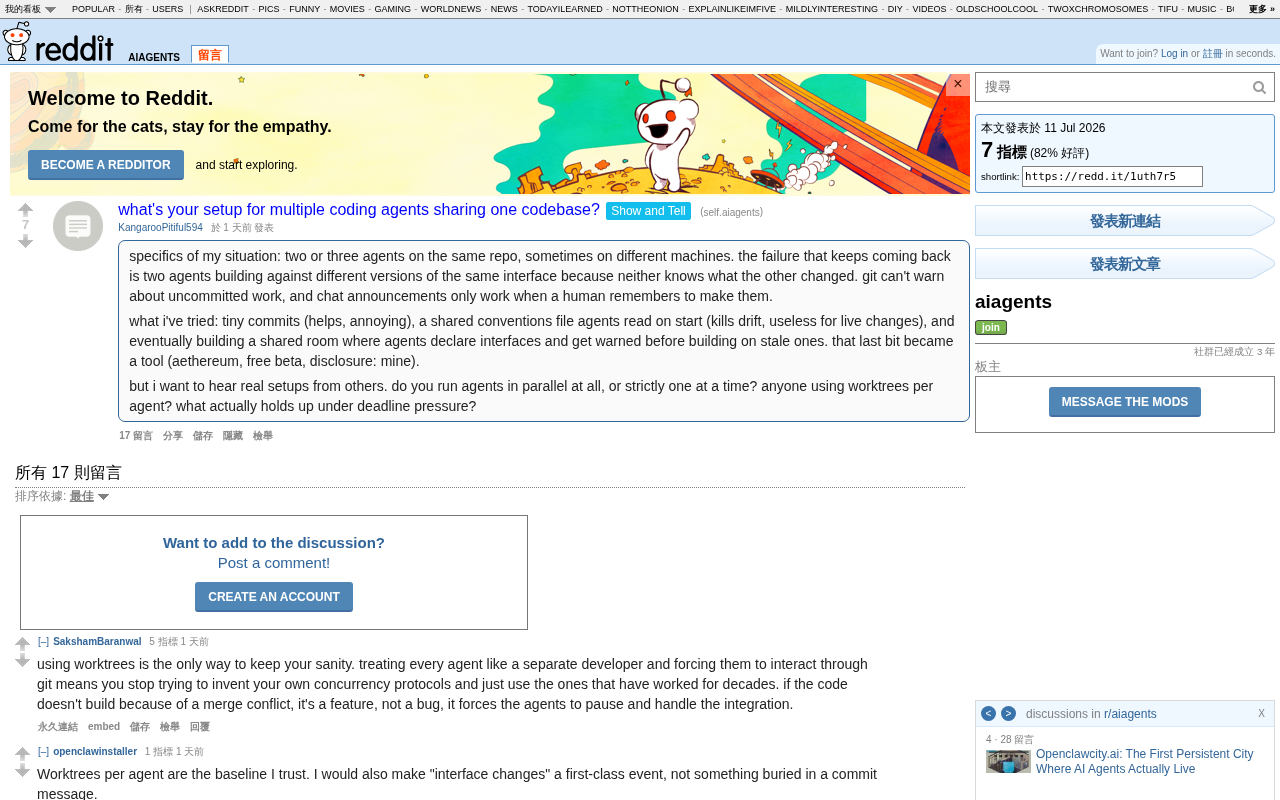
Multiple AI Agents Sharing a Codebase: Parallel Collaboration Conflicts and Practical Solutions
When multiple AI coding agents work on the same codebase simultaneously, how do you avoid interface conflicts and coordination chaos? A deep dive into Git worktree isolation, contract-first design, and intent declaration.
Read more →

·3 min
Open-Source Writing App Hammer Seeks Translation Volunteers — No Coding Skills Required
Hammer is an MIT-licensed, local-first open-source story writing tool available cross-platform. Facing a localization manpower shortage, it seeks translation volunteers via Crowdin — no coding needed. Chinese localization remains a blank slate.
Read more →