#CRUD code generation
207 related articles

·6 min
Andrew Ng × Anthropic: A Hands-On Claude Code Tutorial and Core Methodology
Andrew Ng partners with Anthropic to launch a hands-on Claude Code course, revealing its simple architecture, local security edge, and core context methodology across three cases: RAG chatbot, Jupyter analysis, and Figma-to-frontend.
Read more →

·6 min
MCP Brings Power Apps Data Seamlessly into M365 Copilot: A Complete Implementation Guide
A Power Platform MVP demonstrates how to use MCP to securely expose Power Apps business data to M365 Copilot. Covers declarative agent creation, custom tool development, and VS Code setup.
Read more →

·5 min
Building Your Own Reading Tracker: Craig Mod's Digital Garden and the Case for Data Sovereignty
Why did Craig Mod abandon Goodreads to build his own reading tracker? A deep dive into the motivations, benefits, and trade-offs of self-hosting, data sovereignty, and the IndieWeb movement.
Read more →

·4 min
Complete Guide: Connecting Claude Code to DeepSeek — Local Setup + VS Code Integration
A step-by-step guide to installing Claude Code locally on Windows and swapping its underlying model for the DeepSeek API—enabling low-cost AI coding with no VPN required. Covers Node.js setup, Claude Code config, and getting a DeepSeek API Key.
Read more →

·7 min
GitHub Copilot in Practice: The Capability Boundaries of AI Programming and the Irreplaceable Value of Humans
A developer's real case of building a dental clinic management system with GitHub Copilot and Azure SQL, revealing AI coding limits in cloud security config and how Human-in-the-Loop breaks through.
Read more →
·5 min
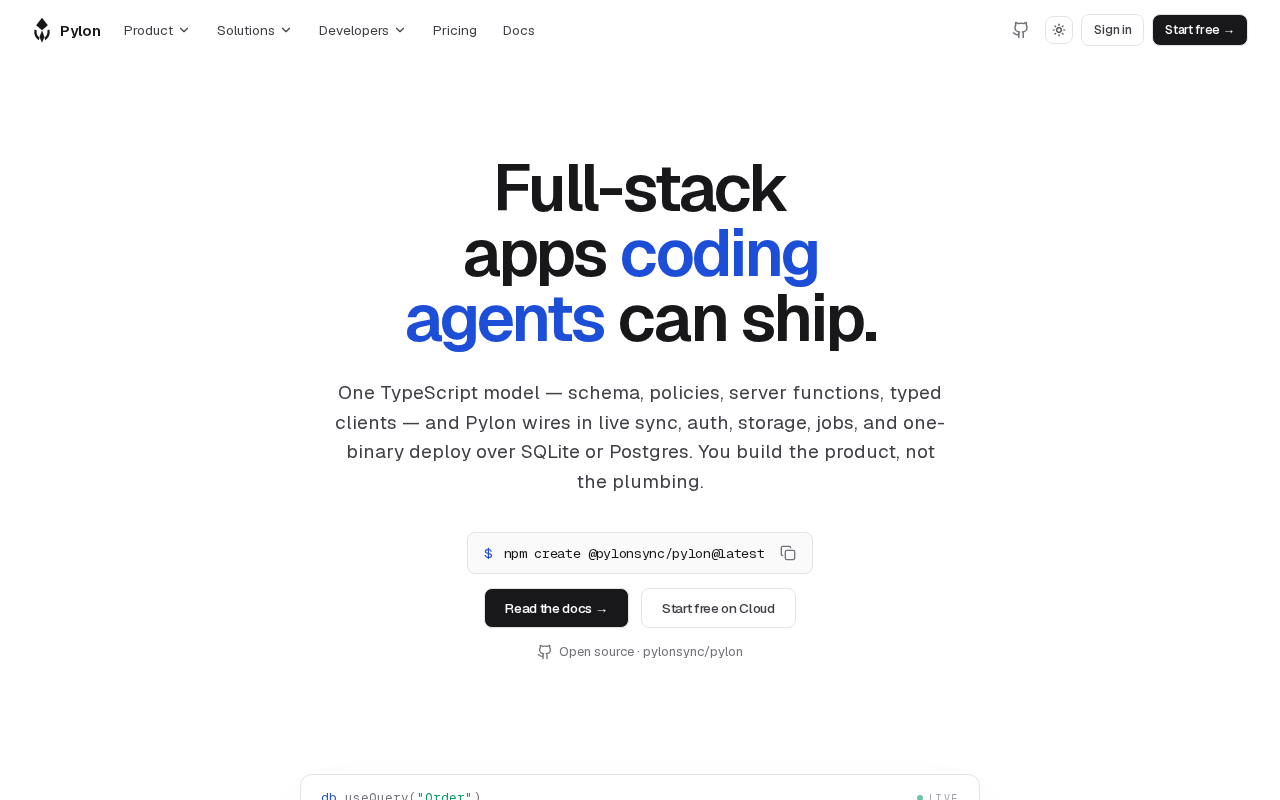
Pylon Sync: An In-Depth Look at the Full-Stack Realtime Framework Built for AI Agents
Pylon Sync is an "Agent-First" full-stack realtime framework that treats AI Agents as first-class design citizens, reducing coding errors via strong conventions.
Read more →

·3 min
GitHub Daily · July 10: The Agent Skills Ecosystem Explodes — AI Coding Enters the 'Skills Library' Era
July 10 GitHub Daily: The Agent Skills ecosystem explodes as over half of trending projects revolve around AI coding Agent skill libraries, with MCP as the standard interface.
Read more →

·6 min
A Three-Month AI Agent Learning Roadmap: From Zero to Hands-On Agent Development
A systematic breakdown of the complete AI Agent learning roadmap, covering prompt engineering, the ReAct paradigm, memory mechanisms, and multi-agent collaboration, with hands-on project advice.
Read more →

·7 min
21-Day Python Automation Testing Crash Course: A Complete Breakdown of the Three-Stage Learning Path
Learn automation testing from scratch! This article breaks down a three-stage path: Selenium/Appium tools, Requests+PyTest API testing, performance testing and CI/CD, with real projects—build a complete skill set in 21 days.
Read more →

·7 min
Context Warp Drive: A Deep Dive into Deterministic Context Folding for AI Agents
An in-depth look at 'Deterministic Context Folding' from Context Warp Drive: solving AI agent context window management with reproducible, cacheable, debuggable context compression for production-grade agents.
Read more →

·6 min
Hands-On with Mixar: An AI-Native Blender Fork That Handles Baking and LOD with a Single Prompt
Mixar is an AI-native fork of Blender 5.0 that embeds AI into the kernel layer. This hands-on review tests texture baking, LOD generation, mood boards, image-to-3D, and more, comparing it to MCP. Fully open source and free.
Read more →
YC CEO Claims 37,000 Lines of AI Code …
·3 min
YC CEO Claims 37,000 Lines of AI Code Per Day: The Truth Behind the Numbers
YC's CEO claims to ship 37,000 lines of AI-generated code daily. We break down what those lines actually consist of and how to properly measure AI coding productivity.
Read more →

·6 min
The Seven Core Components of Building Long-Running AI Agents
An in-depth look at the seven core components for building long-running AI agents: Goal, Evaluator, Verifier, Outer Loop, Orchestration, Observability, and Memory. Master this control system for reliable autonomous agents.
Read more →

·6 min
Can AI Antivirus Cure the Chronic Pop-Up Problem? An In-Depth Hands-On Review of Wukong Security
Struggling with Windows pop-ups and rogue software? This in-depth review of Wukong Security reveals how AI antivirus breaks past traditional virus-database limits, blocking ads and bundleware in real time, plus a comparison of five repair shops.
Read more →

·4 min
AI Agent for Automated WordPress SEO: A Complete Guide from Diagnosis to Execution
Learn how to use an AI Agent to fully automate WordPress SEO — covering image Alt tags, RankMath API integration, prompt configuration, and more.
Read more →

·4 min
Frontend to Full-Stack AI: A Complete NestJS + LangChain Roadmap
Pure frontend roles are shrinking fast. Learn how mastering NestJS and LangChain AI agent development can unlock a 20–30% salary boost on your full-stack AI transition path.
Read more →
Mouse: A Precision Code Editing Tool B…
·2 min
Mouse: A Precision Code Editing Tool Built for AI Programming Agents
Mouse provides structured precision editing primitives for AI coding agents, solving the token waste and fragility of full-file rewrites and string replacement.
Read more →

·7 min
Hermes Agent Deep Dive: An AI Agent Framework That Uses Fewer Tokens Than Open Cloud
Full comparison of Hermes Agent vs Open Cloud: lower token usage, 200+ model support, auto Skill encapsulation, WeChat/DingTalk integration. A cost-effective AI Agent alternative for long-term deployment.
Read more →

·3 min
Cursor & Claude Code Enterprise Training: AI Coding Tool Division of Labor and Practical Methodology
How can R&D teams truly leverage AI coding tools? This article breaks down Cursor vs. Claude Code division of labor, an eight-step framework, and how to build reusable AI collaboration assets.
Read more →

·3 min
Can AI Replace Traditional Code Generators? Playing to Each Tool's Strengths Is the Optimal Solution
AI-generated code is costly, unpredictable, and has a 50%+ rework rate. For standardized CRUD, traditional code generators far outperform AI. Learn how to combine both tools for the optimal dev workflow.
Read more →