#CUDA kernel generation
117 related articles

·2 min
NVIDIA Open-Sources Real-Time AI Animation Technology: Strategic Analysis and Developer Practice Guide
NVIDIA open-sources real-time AI animation tech for virtual streamers, game NPCs, and digital humans. Analysis of strategy, applications, and developer challenges.
Read more →

·3 min
Practical Guide to Accelerating LLM Inference with Apple Silicon Virtual Machines
A deep dive into accelerating llama.cpp inference in macOS VMs using Apple Silicon's unified memory architecture, covering Metal backend configuration, memory allocation, and quantization optimization.
Read more →

·3 min
Self-Hosting LLMs on Azure: A Complete Guide to vLLM + AKS + GPU Deployment
Complete guide to self-hosting LLMs on Azure Kubernetes Service with vLLM, covering GPU scheduling, NVIDIA GPU Operator setup, deployment troubleshooting, and cost control for production workloads.
Read more →

·3 min
The Rise and Fall of Programming Languages: The Interplay of Ecosystems, Markets, and Communities
An in-depth analysis of the forces driving programming language rise and fall—ecosystems, market shifts, corporate backing, and technical inertia—to help developers make rational technology choices.
Read more →

·3 min
Software Optimization Makes a Single B200 Rival Dedicated Inference Chips
Analysis of how a single NVIDIA B200 GPU surpasses Groq LPU and approaches Cerebras performance through software optimization alone, covering CUDA kernels, TensorRT-LLM, and FP8 quantization.
Read more →

·4 min
Quantization Illustrated: A Deep Dive into Core Compression Techniques for Large Language Models
A deep dive into LLM quantization techniques covering symmetric/asymmetric quantization, PTQ, QAT, GPTQ, AWQ, and outlier solutions for efficient model deployment.
Read more →

·3 min
Open-Source vs Closed-Source Models, Reward Hacking & Benchmark Gaming: A Deep Dive into Core AI Model Technical Issues
Deep analysis of six core AI model issues: open-source vs closed-source models, inference throughput vs accuracy tradeoffs, benchmark gaming, distillation vs RL, reward hacking defenses, and dynamic quantization technology.
Read more →

·3 min
GPU Utilization at 100% Doesn't Mean Full Load: How to Truly Diagnose Training Bottlenecks
nvidia-smi showing 100% GPU utilization doesn't mean optimal training efficiency. Learn about DCGM, PyTorch Profiler, and MFU metrics for diagnosing real GPU training bottlenecks.
Read more →

·3 min
Open Secure AI Alliance Launched: Building AI Safety on an Open-Source Foundation
The Open Secure AI Alliance launches with NVIDIA and other tech giants, building AI agent security through open-source model weights, safety evaluations, and frontier research for industry-wide standards.
Read more →

·3 min
Unsloth Now Supports AMD GPUs: 2x Training Speedup and 70% VRAM Savings Across 500+ Models
Unsloth officially supports AMD GPUs across RDNA 3-4, Strix Halo, and MI300 series, delivering 2x training speedup and 70% VRAM savings on 500+ models with RL and vLLM weight sharing support.
Read more →

·4 min
How to Choose Machine Learning Starter Tools? A Beginner's Development Environment Setup Guide
Confused about choosing between VS Code, Jupyter, Google Colab, and Anaconda for ML? This guide clarifies each tool's role and recommends a zero-cost beginner setup to help you start learning fast.
Read more →

·3 min
Walk on Decomposed Subdomains: A Mesh-Free Approach to Accelerating Monte Carlo PDE Solvers
Deep dive into Walk on Decomposed Subdomains, exploring how subdomain decomposition accelerates Monte Carlo PDE solving and improves WoS convergence in complex geometries.
Read more →

·3 min
MI355X Running Kimi K3 Benchmark: The Logic Behind Outperforming B300 in Performance per Dollar
Deep analysis of AMD MI355X running Kimi K3 with superior cost-efficiency vs NVIDIA B300, and its implications for the AI inference hardware market.
Read more →

·3 min
GPT-5.6 Sol Self-Optimization in Practice: How AI Cuts Its Own Costs and Boosts Its Own Efficiency
GPT-5.6 Sol achieves 20% GPU serving cost reduction and 15%+ token generation efficiency gains through self-optimization. A deep dive into AI recursive efficiency improvement.
Read more →

·3 min
GPT-5.6 Autonomously Optimizes Its Own Kernels: How AI Recursive Self-Improvement Could Cut Service Costs by 20%
OpenAI's internal model GPT-5.6 reportedly autonomously rewrites production kernels, achieving ~20% service cost reduction. Deep analysis of this AI recursive self-optimization event's technical plausibility and industry impact.
Read more →

·3 min
GPT-5.6 Autonomously Optimizes Its Own Kernels: How AI Recursive Self-Improvement Could Cut Service Costs by 20%
OpenAI's internal model GPT-5.6 reportedly autonomously rewrote production compute kernels, achieving ~20% cost reduction. Deep analysis of this AI recursive self-optimization event's technical plausibility, industry impact, and key questions.
Read more →

·3 min
GitHub Daily · July 29: Voice AI and On-Device Training Take Flight as Open-Source Alternatives Rise
GitHub Trending July 29: Microsoft's VibeVoice leads voice AI open-source wave, MoonshotAI's FlashKDA CUDA kernel surges 25%, and open-source alternatives rise.
Read more →
·3 min
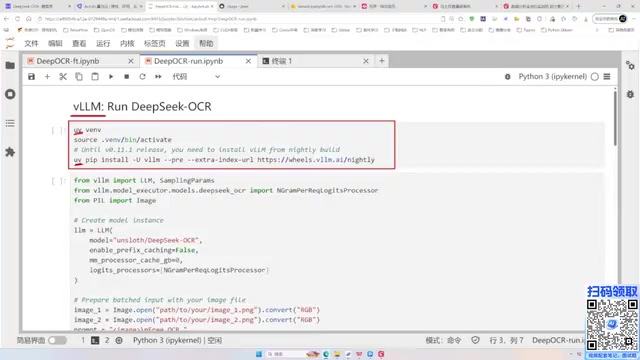
DeepSeek-OCR Deployment & Fine-Tuning in Practice: From vLLM Inference to Unsloth Fine-Tuning
Complete guide to DeepSeek-OCR from vLLM inference deployment and Unsloth model loading to fine-tuning, covering cloud server setup, GPU selection, and code examples — all on a single 4090 GPU.
Read more →

·7 min
DIY Companion Robot: Building Your AI Desktop Buddy with Jetson Orin
A maker builds a DIY companion robot with NVIDIA Jetson Orin and 4S LiPo battery. Explore the full development journey from first power-up to AI interaction, including edge computing, power design, and companion robot trends.
Read more →

·3 min
Rust and Mojo Are Quietly Replacing Python's Low-Level Engine
Python tops the language rankings again, but AI teams are quietly swapping its internals for Rust and Mojo. A look at Python's speed and GIL pains, the two-language problem, and the rise of Rust tooling and Mojo on GPUs.
Read more →