#Claude API wrapper risks
50 related articles

·4 min
The AI Story Bubble: Cutting Through the Hype to Find Real Value
When "AI-powered" becomes a magic phrase for valuation premiums, are companies paying for technology or for a story? A deep analysis of AI hype cycles, the gap between narrative and reality, and how to identify genuine AI value.
Read more →

·6 min
LangChain 1.0 Comprehensive Guide: Three Core Frameworks and Hands-On AI Application Development
Deep dive into LangChain 1.0's architecture: LangChain framework, LangGraph multi-Agent orchestration, and LangSmith observability platform, with hands-on RAG and intelligent customer service projects.
Read more →

·6 min
A 284B Model Running on a MacBook: The Real Breakthrough and Barriers of Local DeepSeek Inference
Redis creator runs 284B-parameter DeepSeek model on a MacBook Pro at 26 tokens/sec using a pure C engine, asymmetric quantization, and MoE architecture.
Read more →

·3 min
Exposing the 'Claude Fable 5' Scam: A Guide to Identifying Fake AI Products
"Claude Fable 5" doesn't exist. This guide exposes the AI scam's core red flags: fake version numbers, fabricated demos, "no-VPN China access" lies, and traffic funnel tactics.
Read more →

·7 min
App Builder: Generate Runnable Applications from a Single Sentence — A New Paradigm in AI Programming Tools
App Builder generates single-file runnable apps from natural language, with real-time sandbox preview and conversational revision. Deep analysis of its workflow, architecture, limitations, and costs.
Read more →

·7 min
Complete Guide to OpenCode: Installation, Configuration, and Custom Commands in Practice
A systematic guide to OpenCode, the open-source terminal AI coding tool: installation methods (including WSL), model configuration, rules files, Agent types, custom commands, and MCP tool extensions.
Read more →

·7 min
AI Agent Code Execution Sandbox Selection Guide: In-Depth Comparison of E2B and Four Other Solutions
In-depth comparison of five AI Agent code execution sandbox solutions—E2B, Daytona, Modal, Cloudflare Sandbox, and Vercel Sandbox—across isolation, cold start latency, state management, and pricing.
Read more →

·6 min
Is Claude Fable 5 Real? Exposing the AI Reseller Service Scam
Anthropic never released a Claude Fable 5 model. This article analyzes fake AI promotions, exposes wrapper service scam tactics, and provides tips for verifying AI claims.
Read more →

·3 min
Is Claude Fable 5 Real? A Deep Analysis and Guide to Spotting Fake AI Products
Deep analysis of a viral Bilibili video claiming to show Claude Fable 5 — examining naming conventions, business logic, and demo effects to help users spot fake AI products.
Read more →
·3 min
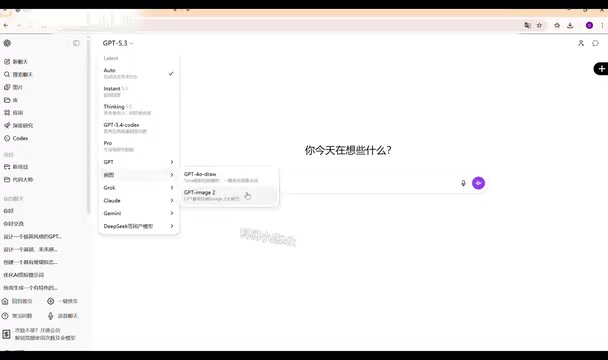
AI Aggregator Hub: Free Access to GPT, Gemini, Grok, and Other Major LLMs — A Hands-On Review
In-depth review of an AI aggregator site offering free access to GPT, Gemini, Grok, and Claude official versions. Analysis of account pool rotation, cross-model context memory, and shared account privacy risks.
Read more →
 Tutorials
·1 min
Harness AI Engineering in Practice: Using Claude Code to Master Enterprise-Level E-Commerce Development
Deep dive into Harness AI Engineering: master enterprise e-commerce development with Claude Code using the Rules, Skills, Wiki, and Changes framework.
Read more →

·3 min
Review of Domestic No-Registration AI Aggregation Platforms for GPT/Gemini/Claude and More
A detailed review of domestic Chinese platforms offering no-registration, no-VPN access to GPT-4, Gemini, Claude, DeepSeek and other top AI models, with security risk analysis.
Read more →

·3 min
Cursor Pay-Per-Use Billing Explained: How Account Pool Scheduling Reduces Usage Costs
Deep analysis of Cursor's low-cost usage solution: clean account pool scheduling, 35% pay-per-use billing, and intelligent quota flow mechanisms to help developers evaluate third-party alternatives.
Read more →

·2 min
sakana-mcp: Driving AI Scientist Autonomous Research Cycles via MCP Protocol
sakana-mcp wraps Sakana AI Scientist v2 as an MCP server, letting Claude and Cursor act as research directors to orchestrate autonomous research cycles.
Read more →

·4 min
Deep Dive into a Cursor Discount Renewal Plugin: Is 65%-Off Pay-Per-Use Legit?
Deep analysis of a third-party plugin claiming 65%-off Cursor Pro renewal. We break down its account scheduling architecture, pay-per-use model, and assess compliance risks, data security, and value for developers.
Read more →

·3 min
AI Engineering in Practice: The Progression Path from Vibe Coding to Enterprise-Level Development
Deep dive into AI engineering methodology, comparing Vibe Coding vs enterprise development, covering Claude Code, Codex tool selection, SuperPower plugin practices, and the path from prototype to production.
Read more →

·3 min
Codex vs Claude Code in Practice: A Complete Guide to AI-Engineered Programming for Enterprise Projects
In-depth comparison of Codex and Claude Code for enterprise AI development, covering Vibe Coding limitations, multi-Agent workflows, OpenRouter platform architecture, and programmer learning paths.
Read more →

·4 min
DeepSeek Forms Harness Team: AI Coding Competition Enters the Second Half
DeepSeek forms a dedicated Harness team to rival Claude Code. Analysis of the four-layer architecture, three core advantages, and 40x cost edge driving AI competition from model wars to engineering deployment.
Read more →

·4 min
AI Engineering in Practice: The Right Way to Build Enterprise Projects with Claude Code
Learn how to use Claude Code with Specification-Driven Development (SDD) to build enterprise projects, solving common AI coding pitfalls like infinite bug loops, code quality issues, and hallucination risks.
Read more →

·3 min
Kuaima Client Tutorial: A Detailed Guide to Pay-Per-Use Pricing for Cursor's Premium Models
A detailed guide to downloading, installing, configuring, and using the Kuaima client for pay-per-use access to Cursor's premium AI models, with troubleshooting tips and security advice.
Read more →