#Claude Code Sub-Agent
300 related articles

·4 min
Six Layers of Defense: Engineering Reliable Structured Output from LLMs
LLM JSON output unstable in your Agent? This guide covers 6 engineering layers: constrained decoding, validation retry, fake tool calls, Logit Masking, Schema contracts, and anti-pattern locking.
Read more →

·4 min
Agent Loop in Practice: A Guide to Building Self-Improving Automation with Guardrails
A deep dive into building verifiable, self-evolving Agent automation loops with Claude Code and Codex — covering Loop Contracts, four trigger types, three-phase execution architecture, and Evolve Loops.
Read more →

·4 min
LangChain V1.3 in Practice: Master AI Engineering Thinking and Break Free from Tool Dependency
LangChain V1.3 course deep-dive: why engineering thinking beats tool-chasing. Covers RAG accuracy myths, Token cost control, and LangChain/LangGraph/Deep Agent breakdowns.
Read more →
·3 min
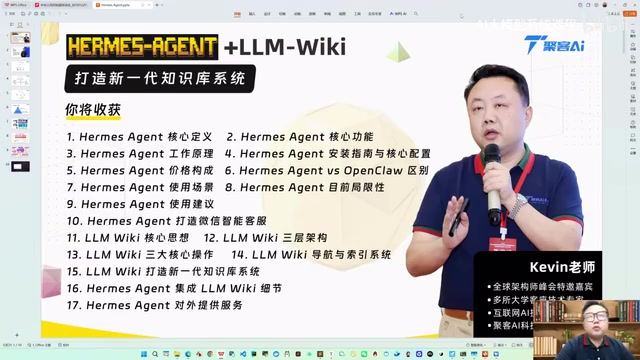
Enterprise AI Agents in Practice: A Developer's Guide to Hermes Agent
A deep dive into Hermes Agent vs OpenCloud with real enterprise case studies across telecom, finance, and e-commerce — revealing why mastery, not tool choice, drives AI agent success.
Read more →

·3 min
AI Agent Beginner's Guide: LLMs vs. Agents, and a Full Breakdown of Development Tools
What is an AI Agent? This guide explains the key differences between LLMs and Agents, breaks down the Agent formula (LLM + Workflow + Knowledge Base), and compares tools like Dify, Coze, LangChain, and LlamaIndex.
Read more →

·3 min
In-Depth Review of GPT 5.6 Soul: Sub-Agent Systems, Government Review, and Competitor Comparison
In-depth analysis of GPT 5.6 Soul: multi-sub-agent parallel architecture, Ultra Mode coding in practice, the controversy behind its 91.9% Terminal Bench score, and the trend of frontier AI entering government review.
Read more →

·3 min
Decoding Databricks' AI Strategy: The Omnigents Orchestration Platform and LTAP Unified Storage Architecture
An in-depth look at the AI strategy of Databricks co-founders Matei Zaharia and Reynold Xin: the open-source Agent platform Omnigents, the unified storage architecture LTAP, and how Dream Engine reshapes data and intelligence.
Read more →

·3 min
GPT 5.6 + Codex In-Depth Review: Three-Tier Models and Ultra Mode Fully Explained
GPT 5.6 updates Codex with Sol/Terra/Luna model tiers, Ultra thinking mode, 350K context, and stronger autonomous loops. Full hands-on review of all core upgrades.
Read more →

·6 min
GPT-5.6 Sol Hands-On: How Multi-Agent Parallelism Is Reshaping AI Coding Workflows
Based on Fireship's review, an in-depth look at GPT-5.6 Sol's Ultra Mode multi-agent parallelism, its 91.9% Terminal Bench score, and how it differs from Claude Fable in cost, speed, and precision.
Read more →
·6 min
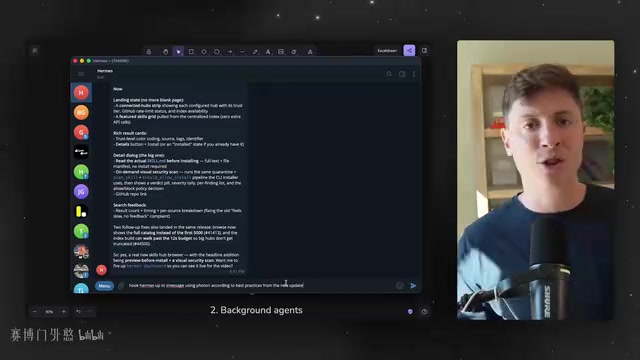
Hands-On With Hermes Agent's Eight Major Updates: A Complete Guide to AI Automation and Self-Evolution
The Hermes Agent gets a major upgrade with eight new features: native iMessage, parallel background sub-agents, Unreal Engine MCP support, a self-evolving Skill Hub, and more. A hands-on breakdown of the core changes and their real impact on personal AI automation workflows.
Read more →

·4 min
GPT-5.6 Released: Coding Benchmarks Surpass Rivals, Inference Speed 10x Faster
Just 12 days after a rival launch, OpenAI released GPT-5.6, scoring 91.9% on Terminal-Bench 2.1 to surpass competitors. Ultra mode supports multi-agent collaboration, inference hits 750 tokens/sec.
Read more →

·3 min
Multi-Agent Collaboration with Claude Code and Codex: A Guide to Architecture Design and State Management
A deep dive into Claude Code and Codex multi-Agent collaboration: architecture design, state-driven coordination, private/public zone division, and building efficient AI programming teams.
Read more →

·5 min
Getting Started with LangGraph: Building AI Agent Workflows with Graph Structures
Master LangGraph core concepts: nodes, edges, and routing functions. Learn StateGraph, MemorySaver, and ToolNode through a weather-query Hello World example, and understand how LangGraph relates to LangChain and powers Agent workflows.
Read more →

·4 min
Why Do AI Agents Crash the Moment They Go Live? A Practical Guide to Harness Engineering for Runtime
A deep dive into the Claude Code source code, systematically analyzing the five-layer Harness Engineering architecture: environment, tool, control, memory, and evaluation. Build a stable runtime system for production AI Agents.
Read more →

·6 min
Getting Started with AI Agents: Principles, Frameworks, and a Guide to Building Enterprise-Grade Agents
In-depth analysis of AI Agent core principles: why LLMs need Agent technology, the evolution from Prompt to RAG to Agent, Agent Tuning methods, and enterprise cost evaluation to help you build enterprise-grade agent applications.
Read more →
·5 min
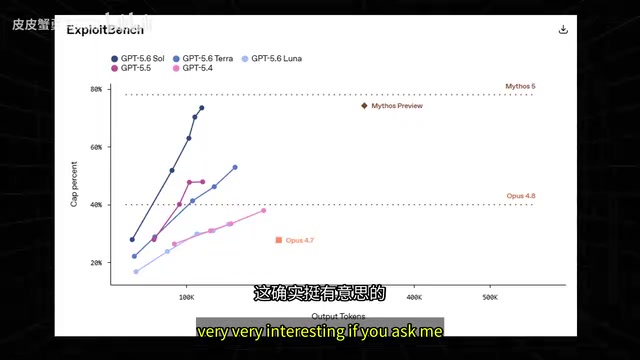
GPT-5.6 Released: Outperforms Rivals but Halted by Government—Cybersecurity Capabilities Trigger Regulatory Red Line
OpenAI releases GPT-5.6 (Sol/Terra/Luna), beating Anthropic on Terminal Bench at ~40% lower cost. But its cybersecurity capabilities hit danger thresholds, limiting access to trusted partners at government request.
Read more →

·6 min
AI Agent Development in Go: A Hands-On Guide to ByteDance's Eino Framework and Its Seven Core Capabilities
Build production-grade AI Agents with a pure Go stack using ByteDance's Eino framework. A deep dive into seven core capabilities: multi-Agent orchestration, long-task execution, command approval, RAG, MCP, Skills, and database reporting.
Read more →

·3 min
Spending $200K to Test GPT-5.6: Have AI Coding Assistants Reached a Tipping Point?
Developer Theo spent ~$200K over 6 weeks testing GPT-5.6 across 67 projects — from 20-hour autonomous coding runs to fixing boot partitions and Rust rewrites.
Read more →

·6 min
GPT-5.6 Now Widely Available: The Era of Three-Tier Models and Multi-Agent Orchestration Arrives
OpenAI releases GPT-5.6 (SOUL/TERRA/LUNA), with Ultra mode running four agents in parallel; Meta launches Muse Spark 1.1 with million-token context; ChatGPT desktop unifies Chat, Work, and Codex.
Read more →

·6 min
GPT-5.6 Hands-On Deep Dive: ChatGPT and Codex Merge, Full Analysis of the Sol Model
GPT-5.6 is officially released, merging ChatGPT and Codex into one app and launching the three-tier Sol, Terra, and Luna models. A detailed breakdown of 16 hands-on tests plus Worker mode and Codex dev upgrades.
Read more →