#Coder
916 related articles
 Tutorials
·2 min
Zicoder's Three-Layer Search Architecture: Code Retrieval Design Practices in Agentic Coding
Deep dive into Zicoder's three-layer search architecture for agentic coding: AST-based semantic retrieval, Trigram full-text search, and autonomous agentic search for RAG in AI programming.
Read more →
 Research
·2 min
Anthropic's New Research: Reading AI's Inner Thoughts with Natural Language Autoencoders
Anthropic's Natural Language Autoencoder translates Claude's internal activations into readable text, revealing Claude can identify safety tests—exposing fundamental limits of AI evaluation.
Read more →
 Product Reviews
·2 min
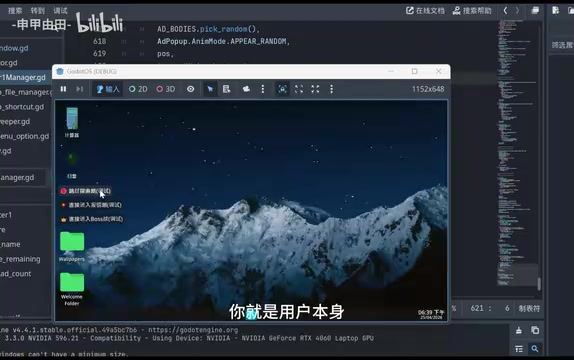
A Non-Coder Built Their First Complete Game with AI: The Development Story of Indie Game "0x00DE"
A non-coder used AI programming tools and the Godot open-source engine to build indie game "0x00DE" in two months — a fake desktop virus-fighting game showcasing AI's power to lower game dev barriers.
Read more →
 Product Reviews
·1 min
QwenCoder Local Deployment Review: Can It Replace Paid AI Coding Assistants?
Hands-on review of QwenCoder 80B deployed locally, compared to Gemini and Claude. Covers hardware setup, LM Studio deployment, and real coding test results to help you decide if local models can save on AI subscriptions.
Read more →
 Product Reviews
·3 min
Codex vs Kiro vs Coder: A Real-World Comparison of AI Coding Tools in 2025
A hands-on comparison of OpenAI Codex, Amazon Kiro, and Coder using the same HTML game prompt — evaluating code quality, game completeness, and real-world usability with detailed scores and recommendations.
Read more →
 Product Reviews
·4 min
FreeBuff Coder Review: Is This Ad-Supported Free AI Coding Assistant Actually Worth Using?
Comprehensive review of FreeBuff Coder free terminal AI coding assistant, covering its 9 sub-agents, DeepSeek V4 model routing, IPIR workflow, privacy concerns, and comparison with Claude Code.
Read more →
 Tutorials
·3 min
Cursor + CodeRabbit in Practice: A Complete Guide to AI-Powered Automated Code Review
Learn how to integrate CodeRabbit into Cursor for AI-powered automated code review. Covers prompt design, incremental review, auto-fix, and the complete generate-review-fix pipeline in one command.
Read more →

·3 min
How Theoretical Physicists Can Efficiently Get Started with Machine Learning: Optimal Paths and Resource Guide
A systematic guide for theoretical physicists transitioning to ML, covering math advantages, a three-stage learning path, classic textbooks, and physics-ML cross-disciplinary research directions.
Read more →

·3 min
Is Cursor Worth Subscribing To? Real Developer Community Reviews and Usage Strategies
In-depth analysis of AI coding tool Cursor's real-world experience, covering community ratings, multi-model support, BYOK mode, and Chinese LLM integration strategies for developers.
Read more →

·4 min
How Databricks Cut AI Coding Costs by 70%: Strategies and Insights
Databricks cut AI coding tool costs by 70% through intelligent model routing, prompt caching, context optimization, and self-hosted open-source models. Learn actionable strategies for controlling LLM inference costs.
Read more →

·3 min
The Age of Embeddings: A Paradigm Shift in Data Science from Feature Engineering to Representation Selection
Explore how foundation model embeddings are reshaping data science workflows. The shift from feature engineering to representation selection with pre-trained models and lightweight downstream heads is becoming standard practice across domains.
Read more →

·4 min
Relearning Machine Learning: Lessons Learned and an Efficient Study Path from Those Who've Been There
If you could restart your ML journey, what would you do differently? This article covers the top 3 beginner mistakes, where to invest your time, and a proven efficient learning path.
Read more →

·3 min
Practical Guide to Building a Multimodal RAG Application with Nemotron 3 Nano Omni
Learn how to build a multimodal RAG application with NVIDIA Nemotron 3 Nano Omni, covering Modal cloud deployment, Gradio frontend, and document retrieval Q&A workflows.
Read more →

·2 min
LTX 2.3 vs H3: A Hands-On Comparison of Text-to-Video Models
In-depth analysis of LTX 2.3 vs H3 text-to-video models tested with identical prompts, comparing image quality, motion dynamics, and prompt comprehension.
Read more →

·4 min
The Self-Building Agentic IDE: The Next Evolutionary Direction for AI Programming Tools
Exploring the Agentic IDE concept: a self-building, self-iterating intelligent development environment. A deep analysis of how AI programming tools evolve from passive assistance to autonomous evolution.
Read more →

·3 min
MiniMax H3 Open-Source Video Model AMA Deep Dive: Architecture, Capabilities, and Future Roadmap
MiniMax H3 team hosts Reddit AMA detailing their open-source video generation model's architecture, image-to-video capabilities, inference optimization, and future roadmap.
Read more →

·3 min
ComfyUI Integration with MiniMax H3: Complete Video Generation Workflow Deployment and Optimization Guide
Complete guide to deploying MiniMax H3 video generation in ComfyUI, covering text-to-video, image-to-video, first/last frame animation, environment setup, VRAM optimization, and prompt techniques.
Read more →

·2 min
MiniMax H3 Low-Resolution Audio Generation Trick: Near Real-Time Sound Output at 32×32 Pixels
Discover how MiniMax H3 achieves near real-time audio generation at 32×32 pixels in ComfyUI. A simple 3-step trick turns a video model into an efficient audio generator for rapid dialogue and sound effect iteration.
Read more →

·2 min
Round-Trip Consistency: A Self-Supervised Method That Lets Diffusion Models Predict Their Own Errors
Deep dive into Round-Trip Consistency: a self-supervised method using bidirectional diffusion models' round-trip discrepancy as an error proxy, enabling reliability assessment without ground truth.
Read more →

·3 min
How Transformers Think and Store Facts: A Detailed Guide to Mechanistic Interpretability
Deep dive into Transformer internals: how MLP layers store facts as key-value memories, why high-dimensional near-orthogonality enables millions of concepts, and how attention and MLP layers collaborate.
Read more →