#Codex update
514 related articles
ChatGPT Work Deep Dive: The Cloud-Loca…
·3 min
ChatGPT Work Deep Dive: The Cloud-Local Split and What It Means for Users
ChatGPT Work runs in the cloud on web/mobile but accesses local files on desktop — and they don't sync. A deep dive into the split design, UX tradeoffs, and broader AI agent challenges.
Read more →

·2 min
Vibe-Research Deep Dive: A Complete Guide to This Open-Source AI Investment Research System
A hands-on look at Vibe-Research, an open-source AI investment research tool supporting A-share, HK, and US stocks, with DeepSeek, Claude, and Codex integration.
Read more →

·7 min
The Complete Guide to LLM Application Engineer Interviews: Six High-Frequency Topics in the Agent Domain
A focused guide to the core interview topics for LLM application engineers, covering agent architecture, Multi-Agent, Langfuse evaluation & tracing, security, and RAG optimization.
Read more →

·7 min
The Complete Guide to LLM Application Engineer Interviews: Six High-Frequency Agent Topics
A focused guide to core LLM application engineer interview topics, covering agent architecture, Multi-Agent, Langfuse evaluation, security, and RAG optimization.
Read more →

·7 min
Harness Engineering: Why a Powerful Model Isn't Enough — Here's What Really Matters
A data-deletion disaster reveals the biggest AI Agent risk: the problem isn't the model, it's Harness design. Learn context management, process standards, and permission isolation.
Read more →

·7 min
From Chat to Agent Platform: A Practical Guide to Engineering AI Applications
A deep dive into engineering AI applications: from a simple chat page to a multi-layer Agent platform, covering RAG knowledge bases, Workflow scheduling, multi-model management, and run tracing.
Read more →

·2 min
Getting Started with Cursor: A Comprehensive Comparison of AI Coding Tools
A comprehensive comparison of Cursor, GitHub Copilot, Windsurf, Trae, and other top AI coding tools — helping developers and non-technical users choose the right AI programming assistant.
Read more →

·6 min
The Complete Codex Guide: From Beginner to Pro with the All-in-One AI Assistant
OpenAI Codex is more than a coding tool—it's an AI agent that writes code, makes slides, and operates browsers. This guide covers its four versions, permission modes, plugins, automation, and six best practices.
Read more →

·6 min
GPT-5.6 Hands-On Deep Dive: Three-Tier Models + Ultra Multi-Agent, Codex Fully Evolved
OpenAI launches GPT-5.6 with three tiered models—Sol, Terra, and Luna—Ultra multi-agent parallel collaboration, Codex integrated into ChatGPT desktop, and an upgraded Computer Use.
Read more →

·2 min
Codex in Practice: AI-Powered Programming with Natural Language Instructions — No Coding Background Required
Learn how to use Codex for AI-powered programming with natural language prompts — from generating origami assets to building a gesture-interactive portfolio site. No coding required.
Read more →

·4 min
Cross-Platform AI Agent Setup Guide: Breaking Free from Vendor Lock-In for Good
Model performance gaps are closing. Real competitive advantage lies in portable AI agent architecture. Learn how to build a workspace that works across Claude Code, Codex, and beyond — no vendor lock-in.
Read more →

·4 min
Codex Major Upgrade: GPT-5.6 Powers Full-Stack Development from Idea to Deployment
OpenAI Codex gets a major upgrade with GPT-5.6: extended reasoning, multi-agent parallelism, browser control, one-click Sites deployment, task orchestration, and mobile dev support.
Read more →

·3 min
GPT 5.6 Deep Dive Review: The Most Capable Model Yet — But Also the Most Confusing to Use?
GPT 5.6 brings major capability upgrades and new SOUL/TERRA/LUNA tiers — but also confusing entry points, hidden quota consumption, and a chat window crammed into a floating widget. A deep-dive review.
Read more →
·3 min
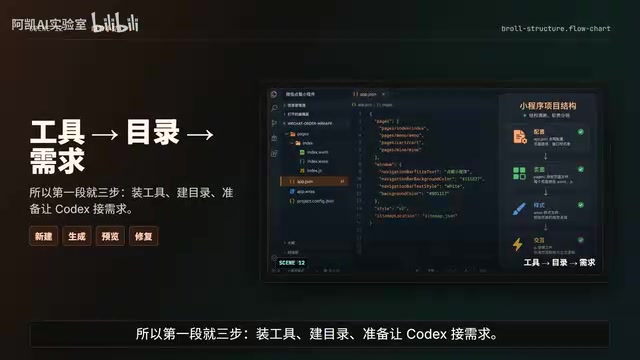
Build a WeChat Food Ordering Mini Program with Codex in 5 Steps — No Coding Required
No coding skills needed! Learn how to build a WeChat food ordering mini program from scratch using OpenAI Codex — covering requirements, file structure, cart logic, order dialogs, and error handling.
Read more →

·2 min
Building a WeChat Mini Program from Scratch with Codex: A Complete Beginner's Guide to AI Programming
No coding experience? Learn how to build a WeChat Mini Program using Codex and AI. A complete beginner's guide covering App ID setup, prompt writing, debugging, and publishing.
Read more →

·2 min
Open-Source Multi-Platform Auto-Publishing Skill: How AI Is Freeing Content Creators from Repetitive Busywork
A Bilibili creator open-sourced a Codex-based multi-platform auto-publishing Skill with 95% stability. It auto-fills titles, tags, and thumbnails on Bilibili, Douyin, and more, then waits for user confirmation before publishing.
Read more →

·4 min
AI-Powered Automated Testing: Using Pytest + MCP to Tackle Non-Determinism
Deep dive into AI-era automated testing: using Pytest + Playwright + MCP for stable automation, constraining code conventions with Skills, avoiding non-determinism and high token costs. Includes real debugging war stories.
Read more →

·2 min
ChatGPT's Three Modes Explained: How to Use Chat, Work, and Codex Without Burning Your Quota
ChatGPT now has three modes: Chat, Work, and Codex. Learn how each works, how the quota pools are calculated, and how to avoid burning tokens unnecessarily.
Read more →

·4 min
Pi Agent Deep Dive: Four Core Advantages of a Minimalist Open-Source Framework
Pi is a minimalist open-source Agent framework with just 4 default tools and under 1,000 tokens in its system prompt, with 70K GitHub stars. Deep dive into its 4 core advantages vs. Claude Code and Codex.
Read more →
·3 min
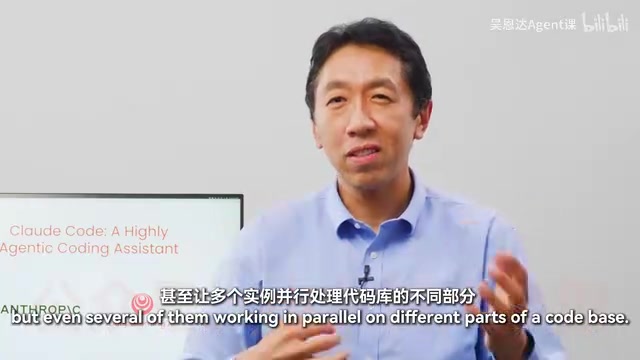
Andrew Ng × Anthropic: A Practical Guide to Claude Code and Its Core Methodology
Andrew Ng and Anthropic's Claude Code course covers RAG development, data analysis, and Figma-to-frontend projects, with deep dives into context management, MCP tools, and CLAUDE.md architecture.
Read more →