#Codex update
518 related articles

·4 min
AI-Powered Automated Testing: Using Pytest + MCP to Tackle Non-Determinism
Deep dive into AI-era automated testing: using Pytest + Playwright + MCP for stable automation, constraining code conventions with Skills, avoiding non-determinism and high token costs. Includes real debugging war stories.
Read more →

·2 min
ChatGPT's Three Modes Explained: How to Use Chat, Work, and Codex Without Burning Your Quota
ChatGPT now has three modes: Chat, Work, and Codex. Learn how each works, how the quota pools are calculated, and how to avoid burning tokens unnecessarily.
Read more →

·4 min
Pi Agent Deep Dive: Four Core Advantages of a Minimalist Open-Source Framework
Pi is a minimalist open-source Agent framework with just 4 default tools and under 1,000 tokens in its system prompt, with 70K GitHub stars. Deep dive into its 4 core advantages vs. Claude Code and Codex.
Read more →
·3 min
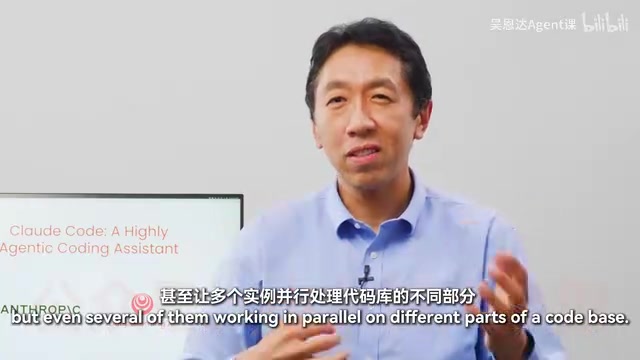
Andrew Ng × Anthropic: A Practical Guide to Claude Code and Its Core Methodology
Andrew Ng and Anthropic's Claude Code course covers RAG development, data analysis, and Figma-to-frontend projects, with deep dives into context management, MCP tools, and CLAUDE.md architecture.
Read more →

·2 min
OmniRoute: Manage 200+ Model Endpoints from One Console — No More Constant API Switching
OmniRoute is an open-source local model router supporting 200+ providers. Manage API Keys, quotas, and failover chains for Claude Code, Codex, and Cursor from one console.
Read more →

·2 min
ChatGPT Codex Helps RingCentral Scale Customer Management by 13x
RingCentral's PMO team used ChatGPT and Codex to scale customer tracking from 6 to 80 accounts — a 13x increase. Learn how enterprise AI is reshaping knowledge management and execution for customer success teams.
Read more →

·4 min
GPT-5.6 & OpenAI Super App Deep Dive: Loop Engineering as the New Paradigm Replacing Prompt Engineering
Deep dive into GPT-5.6 (Sol/Terra/Luna) and OpenAI's Super App: Loop Engineering, Parallel Agents, and Computer Use — unpacking the shift from prompt to loop engineering with real test cases and a startup framework.
Read more →

·4 min
Stop Shipping Skills Blindly! A Google DeepMind Engineer's Hands-On Guide to Agent Evaluation
Google DeepMind engineer Philip reveals: almost everyone uses coding agent Skills, yet almost no one writes evals for them. A deep dive into Skill evaluation methods, 8 actionable tips, and a real Gemini API case study.
Read more →

·3 min
GPT-5.6 Prompt Engineering in Practice: A Systematic Approach to Eliminating AI Verbosity
A deep dive into GPT-5.6's official eight-dimension prompt framework — tracing AI verbosity back to RLHF and training data, with practical constraint techniques to fix it.
Read more →

·3 min
GPT-5.6 Launches, Siri Gets a Major Overhaul: Your Complete AI Industry Roundup
OpenAI launches GPT-5.6, Apple rebuilds Siri, China's AI companionship regulations take effect, Google labels AI images — your one-stop global AI industry roundup.
Read more →

·3 min
OpenAI Codex IDE Extension in Practice: A Complete Guide to VS Code Installation and Local Development
A hands-on guide to installing and configuring the OpenAI Codex IDE extension, covering its three working modes and Agent demo. Supports VS Code, Cursor, and Windsurf.
Read more →

·4 min
GPT-5.6 + Codex Tested: 3 Prompts to Edit a 15-Minute Video, Efficiency Doubled
OpenAI's GPT-5.6 and Codex integration tested: 3 prompts to edit a 15-min video in just 20 minutes. Full breakdown of performance, Token costs, GPT Work automation, and Chat Card real-world results.
Read more →

·2 min
Codex Custom Instructions: Configure Once, Let AI Remember Your Work Habits Forever
Still explaining your coding preferences to Codex every time? Custom Instructions is a built-in global memory feature — configure once, apply across all projects forever.
Read more →

·3 min
40-Hour Stress Test: An In-Depth Evaluation of GPT-5.6's Coding Capabilities
A developer spent 40 hours exhausting Codex Pro's weekly quota to benchmark GPT-5.6 on real enterprise projects. Key findings: proactive root cause tracing, stronger global codebase understanding, and stable long-task execution.
Read more →

·3 min
OpenAI Merges ChatGPT and Codex: The Birth of an AI OS and Four Core Strategies
OpenAI merges ChatGPT and Codex into a Super App, unveiling the early blueprint of an AI OS. A deep-dive into four core strategies: Loop workflows, tool stack economy, multi-threading, and Sites.
Read more →

·2 min
Exposing the GPT-5.6 Marketing Scam: Are the Sol/Terra/Luna Sub-Models Real Releases or Just a Trap?
Is "GPT-5.6" with Sol, Terra, and Luna sub-models a real OpenAI release? We debunk the viral claims, expose third-party top-up risks, and show how to spot AI scams.
Read more →

·3 min
Four Paths for Frontend Engineers to Level Up in AI: From RAG to Vertical Agents
How can frontend engineers transition into AI development? This guide covers four agent development directions: RAG, workflow agents, vertical agents, and general-purpose agents — with framework picks like LangChain.js.
Read more →

·3 min
AI Coding Agents in Practice: An Efficient Configuration Guide for Cursor and Codex
How to configure Cursor, Codex, Devin, and other AI coding agents for context management, code quality, and cross-tool collaboration. Practical tips on rule files, TDD, and structured context storage.
Read more →

·4 min
OpenAI Reveals Agent Sandbox Cloud: Design Philosophy from microVMs to Global Orchestration
A deep dive into OpenAI's Agent sandbox cloud architecture: the security evolution from Fork and containers to gVisor and microVMs, plus copy-on-write snapshots and global orchestration.
Read more →

·3 min
Privacy Risks in Claude Code? Use Docker Sandboxes to Fully Isolate Your AI Coding Tools
Claude Code found to contain user monitoring logic, raising AI tool privacy concerns. Learn how to isolate Claude Code, Codex & Copilot with Docker Sandboxes — full setup and escape testing included.
Read more →