#DeepSeek VS Code
590 related articles

·3 min
Is Cursor Worth Subscribing To? Real Developer Community Reviews and Usage Strategies
In-depth analysis of AI coding tool Cursor's real-world experience, covering community ratings, multi-model support, BYOK mode, and Chinese LLM integration strategies for developers.
Read more →

·4 min
Why CodeAct Code-First Agents Haven't Won Yet: A Deep Dive into the Paradigm's Dilemma
Deep analysis of why CodeAct code-first agents haven't replaced ReAct chat-first frameworks. Examining model training bias, protocol limitations, MCP design flaws, and sandbox challenges.
Read more →

·3 min
Local LLM Selection Guide: Practical Applications for Cybersecurity Purple Teams
A deep dive into how cybersecurity Purple Teams and SOC analysts can select locally deployed LLMs, covering hardware constraints, censored vs. uncensored models, specific recommendations, and RAG integration.
Read more →

·4 min
Q8_K_XL vs. MXFP4 Naming Debate: The Quantization Truth That FP8 ≠ Q8_0
Deep dive into LLM quantization formats Q8_K_XL vs MXFP4, explaining why FP8 ≠ Q8_0, debunking the "8-bit is lossless" myth for local deployment users.
Read more →

·3 min
GitHub Daily · August 5: AI Agents Enter the 'Production Engineering' Era
GitHub Trending Aug 5: AI Agents shift from demos to production with new projects for state management, long-term memory, skill systems, and security.
Read more →

·2 min
Qwen3.8-Max Preview Continues Iterating with Major Improvements in Frontend Development Capabilities
Alibaba's Qwen3.8-Max-Preview iterates daily with significant frontend development improvements. The team uses an open preview strategy to collect community feedback, promising open-weight release.
Read more →

·3 min
Why Musk's xAI Can Keep Pace with the AI Leaders While Meta Falls Behind
Deep comparison of Musk's xAI vs Zuckerberg's Meta in the AI race. Analyzing why xAI achieves more with less while Meta's massive spending yields limited breakthroughs.
Read more →

·3 min
Tigriden: A 40MB Rust Minimalist IDE Designed Specifically for AI Coding Agents
Tigriden is a minimalist Rust workbench using only 40MB of memory, designed for AI coding agents like Claude Code. No Electron, no LSP—leaving resources for AI.
Read more →

·6 min
AI Coding Boosts Productivity 10x: Are Programmers Writing Their Own Pink Slips?
A senior developer admits 95% of work is done by Claude Code, with 10x productivity gains. From coding to architecture, AI is eroding programmers' core skill moats. Deep analysis of AI coding's impact on tech employment.
Read more →

·3 min
DeepSeek-V4-Flash Local Deployment Test: $8,000 Hardware Approaches Frontier Model Performance
DeepSeek-V4-Flash-0731 scores 50 on the Intelligence Index, nearly matching the frontier model score of 51 from five months prior. We analyze local deployment, hardware requirements, and implications.
Read more →

·2 min
DeepSeek V4 Flash Weights Open-Sourced: A New Option for Lightweight LLM Deployment
DeepSeek V4 Flash model weights reportedly open-sourced. This article analyzes its lightweight positioning, open-weight value, comparisons with closed-source models, and deployment guidance.
Read more →

·3 min
LLM Inference Speed Formula: Memory Bandwidth Determines Your tokens/sec
Why memory bandwidth (GB/s), not VRAM size, determines local LLM inference speed. Includes tokens/sec formula, GPU bandwidth comparison, and a practical card selection framework.
Read more →

·3 min
LLM Inference Speed Formula: Memory Bandwidth Determines Your tokens/sec
Learn why memory bandwidth (GB/s)—not VRAM size—determines local LLM inference speed. Get the tokens/sec formula, GPU bandwidth comparisons, and a practical card selection hierarchy.
Read more →

·3 min
Self-Hosting Kimi K3: Is Spending 20% More on Hardware Worth a 20% Improvement in Task Performance?
Analysis of whether spending 20% more on hardware for self-hosting Kimi K3 to gain 20% task performance improvement is worthwhile, covering inference precision, VRAM optimization, and tiered deployment.
Read more →

·3 min
Complete Guide to Running Claude Code with Ollama: API Error Troubleshooting & Local Model Optimization
Guide to running Claude Code via Ollama locally: troubleshooting API errors, output token limits, model freezes, with model selection, parameter tuning, and alternative tool recommendations.
Read more →

·3 min
Is LLM Inference Actually Profitable? Breaking Down the Cost Structure and Business Logic of Large Model Inference
A deep dive into LLM inference cost structure and profitability models—from GPU throughput, MoE architecture, and KV Cache to scale effects—revealing the business logic behind API price wars.
Read more →

·2 min
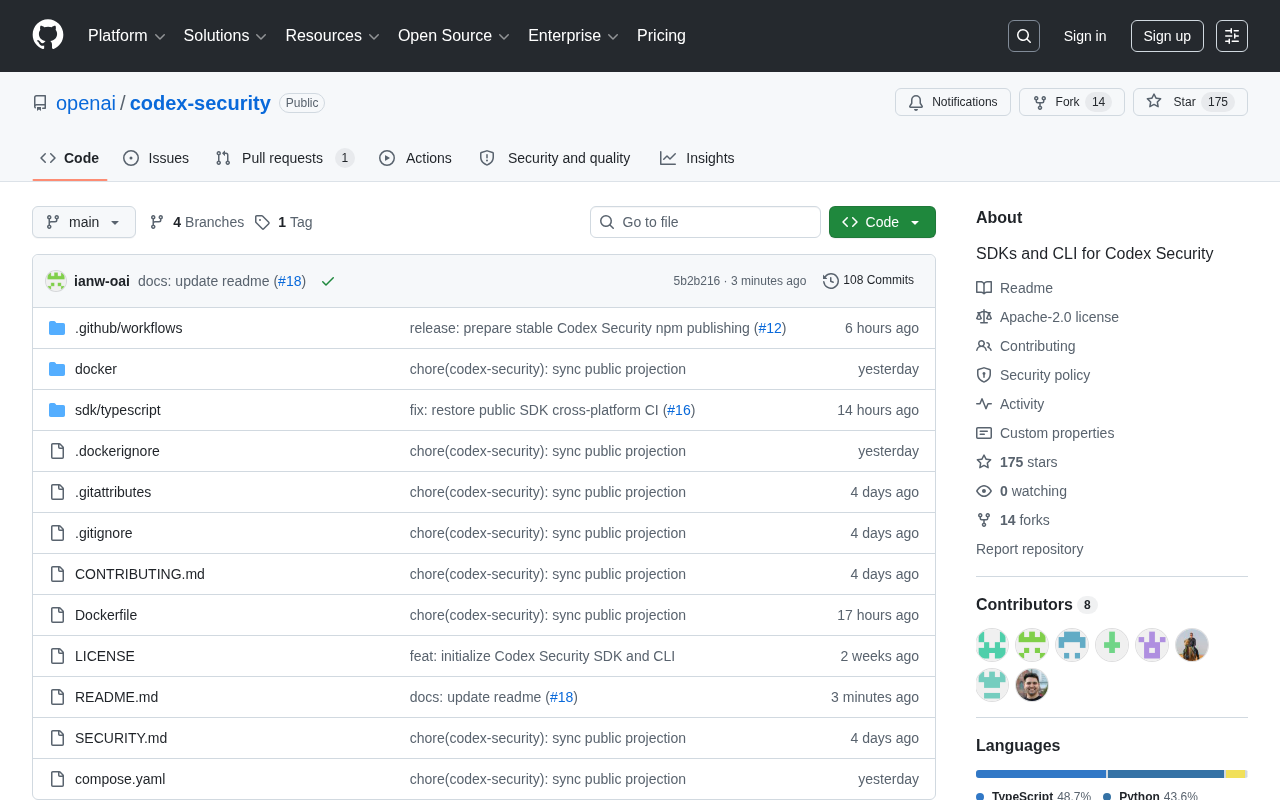
OpenAI Open-Sources Codex Security Components: Setting a New Standard for AI Coding Safety
OpenAI open-sources Codex Security components, bringing automated security detection to AI code generation. Analysis of its strategic value, developer impact, and the industry shift from capability to security.
Read more →
·2 min
OpenAI Open-Sources Codex Security Components: Setting a New Standard for AI Coding Safety
OpenAI open-sources Codex Security components, bringing automated security detection to AI code generation. Analysis of its strategic significance and industry impact.
Read more →

·4 min
Getting Started with Claude Code: Environment Setup, Common Commands, and Git Workflow in Practice
A detailed guide to Claude Code installation, domestic model switching, project analysis commands, and Git workflow practice to help developers quickly master this AI programming collaboration tool.
Read more →

·4 min
GPT-6 Reportedly Completed, Claude Opus 5 Leaked: The AI Model Race Accelerates
GPT-6 may be completed, Anthropic's Claude Honeycomb appears to be an early Opus 5 version, Kimi K3 is imminent, and Google Gemini faces further delays. Deep analysis of the latest AI model competition.
Read more →