#Docker RAG setup
192 related articles

·3 min
Antigravity CLI Weekly Limit Real-World Testing: A Practical Guide to Maximizing Quota for Ops Workflows
Deep analysis of Google Antigravity CLI weekly usage limits, Flash vs Pro quota weights, and practical tips for sysadmin/homelab users to maximize subscription quota.
Read more →

·3 min
Running Android Apps in Docker Containers: A Comparison of Three Approaches with Practical Guide
Explore running Android apps in Docker containers, comparing containerized emulators (redroid/docker-android), API packet capture, and notification forwarding tools with GMS push limitations analysis.
Read more →

·4 min
IntelliJ IDEA Efficiency Configuration Guide: Lessons from Seven Years of Java Development
A senior Java developer shares 7 years of IntelliJ IDEA configuration tips: JVM tuning, AI-assisted coding, Testcontainers testing, debugging tricks, and Spring toolchain setup.
Read more →

·3 min
Docker Containers vs Virtual Machines for Home Servers: How to Choose the Best Architecture
Docker containers vs VMs for home servers: compare resource usage, management, security isolation, and TrueNAS considerations to find the optimal Home Lab architecture.
Read more →

·3 min
Self-Hosting Hardware Upgrade Guide: From an Old NUC to a Game Server and Beyond
A detailed guide to self-hosting hardware upgrades: analyzing NUC bottlenecks, comparing used enterprise Mini PCs and ITX builds for Jellyfin, Immich, and Minecraft servers.
Read more →

·3 min
Getting Started with Codex: A Zero-to-Hero Guide to AI Agentic Coding Tools
A detailed guide to getting started with Codex and Claude Code—two leading AI agentic coding tools. From environment setup to hands-on practice, even beginners with no coding experience can master AI programming assistants.
Read more →

·3 min
Getting Started with Codex: A Beginner's Guide to AI Agentic Coding Tools
A detailed guide to getting started with Codex and Claude Code AI agentic coding tools, from environment setup to hands-on practice, helping beginners master AI programming assistants.
Read more →

·3 min
Readest Alternatives: Free Self-Hosted Reading Apps with Sync
Readest charges for self-hosted sync, sparking user backlash. Discover free open-source alternatives like KOReader, Calibre-Web, and Kavita for cross-platform reading progress sync.
Read more →

·3 min
Why IPFS and Filecoin Failed to Gain Traction in the Self-Hosting Community
IPFS and Filecoin promise decentralized storage and censorship resistance, yet the self-hosting community ignores them. This article analyzes why simpler tools like Syncthing and BitTorrent win.
Read more →
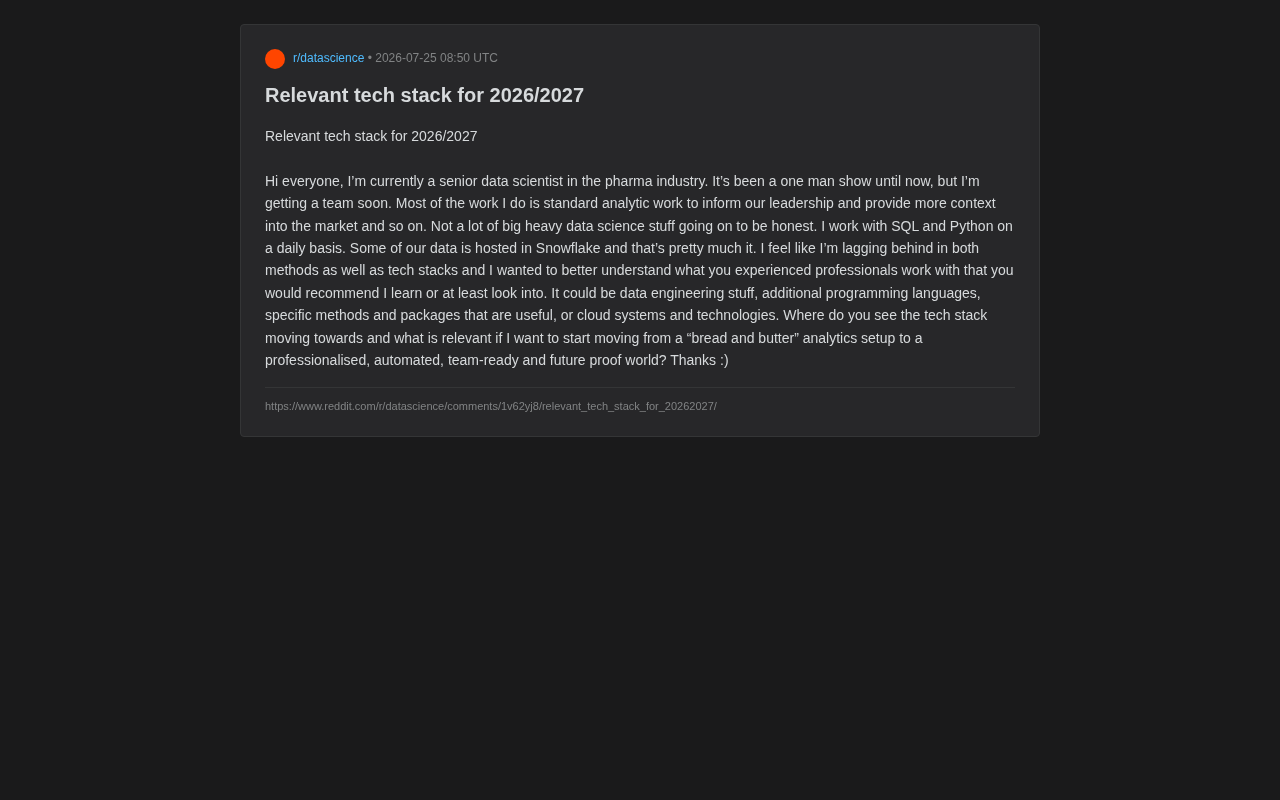
·4 min
From Solo Analyst to Team Data Platform: A Practical Guide to Leveling Up Your Tech Stack
How should a data scientist upgrade their tech stack when transitioning from IC to team lead? A phased roadmap covering Git, dbt, Snowflake, modern data stack, and generative AI.
Read more →

·2 min
OpenCode: The Complete Guide to the Open-Source Coding Agent Chosen by 8 Million Developers
OpenCode has become the world's most popular open-source coding agent—8M monthly active developers, 75+ model providers, and custom sub-agent routing. This deep dive covers its core features, config tips, and business model.
Read more →

·7 min
Enterprise AI Agent Security Isolation and Memory Design: NanoClaw Founder Breaks Down Real-World Lessons
NanoClaw founder David Boyd breaks down the core engineering of enterprise autonomous Agents: a triple security isolation model, LLM Wiki memory design, and the real-world path from personal Agents to team-scale deployment.
Read more →

·2 min
OfficeCLI Hands-On: AI Batch Read, Edit & Generate Word/Excel/PPT Without Installing Office
Hands-on test of open-source OfficeCLI: a single binary reads, edits, and generates Word/Excel/PPT. 1,000 cells rewritten in 0.37s, Chinese text supported. Covers XML internals, real failures, and AI Agent integration.
Read more →

·4 min
Dify Local Deployment Guide: One-Click Private AI Platform with Docker
Step-by-step guide to deploying Dify AI platform locally with Docker. Covers Linux, Windows, macOS setup, docker compose launch, and first-time initialization in under 30 minutes.
Read more →

·7 min
The Complete AI Character LoRA Training Workflow: Hands-On Multi-Character Consistency Generation with Local Deployment
A detailed guide to a complete local AI character generation workflow: from the five golden rules of LoRA training and automated ComfyUI dataset construction to hands-on comparisons of Crea2, Ideogram4, and Wan for multi-character same-frame interaction—all running free on personal hardware.
Read more →

·3 min
Dify Getting Started Guide: A Complete Walkthrough of Low-Code AI App Development
Dify is a low-code AI app platform supporting chatbots, Agents, and workflows. Compatible with DeepSeek, ChatGPT, and more. Learn cloud and local deployment options.
Read more →

·3 min
Dify 1.8 Complete Beginner's Guide: Build 20+ AI Apps Fast
A complete Dify 1.8 guide covering 3 deployment methods (Docker/cloud/source), MySQL integration, 5 app types (Chatbot/Agent/Workflow), model selection, and publishing strategies.
Read more →

·3 min
Dify for Beginners: A Complete Guide to Building AI Applications
A beginner's guide to Dify covering Docker deployment, MySQL setup, model integration, five app types (Chatbot/Agent/Workflow), and publishing — build LLM apps fast.
Read more →

·2 min
Spring AI Alibaba Admin: A Deep Dive into the Java Visual AI Workflow Platform
Spring AI Alibaba Admin is a visual AI workflow platform for Java, comparable to Dify. It supports Dify-to-Graph migration, multi-model integration, and code export. This article covers core features and local deployment tips.
Read more →

·3 min
Free Claude Opus 4.6 Access: Complete Guide to Connecting Antigravity via CLIProxyAPI
Use CLIProxyAPI to connect Antigravity's free models to Claude Code, Cline, and more. Access Claude Opus 4.6 Thinking and Gemini 3 Pro at zero cost. Full setup guide included.
Read more →