#Electron proxy configuration
31 related articles

·2 min
Cogpit: A Self-Hosted Web Monitoring Console for Remote AI Coding Agents
Cogpit is an open-source self-hosted Web UI for remote Claude Code and Codex AI coding agents. Monitor in real time, manage multiple machines, and respond to permissions without SSH.
Read more →

·3 min
Building Your Own Smart Home Climate Control System: A Complete Guide to the Home Assistant Open-Source Solution
Complete guide to building a self-hosted smart climate system with Home Assistant, ESPHome, and Zigbee sensors—covering dashboards, DIY Nest alternatives, and VPN remote access for fully local control.
Read more →

·4 min
Foundry VTT Public Access Guide: The Right Way to Securely Expose Self-Hosted Services
Learn how to securely expose Foundry VTT to the public internet. Compare port forwarding, Cloudflare Tunnel, and reverse proxy solutions with practical advice on network isolation and layered defense.
Read more →

·4 min
Getting Started with PiDeck: A Complete Guide to the Local AI Coding Workbench
PiDeck is a free, open-source local AI coding workbench that provides graphical management for CLI tools like Claude Code and Cursor. This guide covers installation, model authentication, project management, and advanced conversation tips.
Read more →
·4 min
Getting Started with PiDeck: A Complete Guide to the Local AI Coding Workbench
PiDeck is a free, open-source local AI coding workbench that provides graphical management for CLI tools like Claude Code and Cursor. This guide covers PiDeck installation, model auth, project management, and advanced conversation tips.
Read more →

·2 min
Claude Code Installation Guide for China: Complete Setup from Scratch
Complete guide to installing Claude Code in China: platform steps for Windows/macOS, VPN requirements, Git dependency, error fixes, and how it differs from Cursor and VS Code.
Read more →

·7 min
Codex Direct Connection Configuration Guide for China: Complete GPT Agent Setup Tutorial
Complete guide for configuring OpenAI Codex Agent in China, covering installation, API key setup, permission modes, reasoning intensity, and security considerations for third-party relay services.
Read more →

·6 min
Codex China Direct Access Tutorial: Guide to Using DeepSeek as a ChatGPT Replacement
Use Codex without a ChatGPT account! This guide explains a China direct access solution for integrating the DeepSeek API via the Codex++ management tool.
Read more →

·3 min
Fix Codex Reconnecting Loop: Switch Network Protocol via Environment Variables
Codex's Reconnecting 5/5 loop is caused by WebSocket being the default protocol. Learn how to set .env environment variables to switch Codex to HTTP/HTTPS and eliminate the wait.
Read more →

·2 min
Complete Guide: Connecting Codex and Claude Code via an API Relay Service
Step-by-step guide to connecting Codex and Claude Code via an API relay service — covering key creation, group selection, CCS import, installation tips, and risk warnings.
Read more →

·3 min
Complete Guide to Claude Code Desktop: No Account Required + Chinese Localization + DeepSeek Integration
Complete guide to Claude Code Desktop setup: account-free usage, DeepSeek integration via CC Switch, Chinese localization, and custom Skill import for low-cost AI coding.
Read more →

·3 min
Claude Code vs. Codex: A Practical Guide to Enterprise-Grade AI Programming
A deep dive into enterprise AI programming with Claude Code and Codex — from Vibe Coding limitations to SuperPower engineering workflows, model selection, and AI aggregation platforms.
Read more →

·2 min
Using UU Accelerator to Speed Up Cursor: A Compliant Solution for Stable AI Coding in China
Learn how to use NetEase UU Accelerator to speed up Cursor AI coding tool in China, with step-by-step setup including node selection and launch configuration.
Read more →

·3 min
PiDeck 0.5.0 Released: Ten Versions in One Week, a Complete Overhaul of the Desktop AI Agent
PiDeck 0.5.0 completes the rebrand from PiDesktop, shipping 10 versions with ~100 changes in one week: design system overhaul, dark mode, LAN sharing, Git integration, and dual-layer proxy config.
Read more →

·3 min
Kuaima Client Tutorial: A Detailed Guide to Pay-Per-Use Pricing for Cursor's Premium Models
A detailed guide to downloading, installing, configuring, and using the Kuaima client for pay-per-use access to Cursor's premium AI models, with troubleshooting tips and security advice.
Read more →

·3 min
Claude Code Desktop Installation Guide: Connect DeepSeek & Other Chinese AI Models + Chinese Localization
Step-by-step guide to installing Claude Code Desktop, connecting DeepSeek models via CC Switch, enabling account-free usage, and applying Chinese localization.
Read more →

·2 min
Comprehensive Review of Mainstream AI Coding Tools: Why Cursor Remains the Best Choice
Comparing Cursor, Claude Code, Codex, Windsurf, Kiro and other AI coding tools across learning cost, setup difficulty, and network accessibility, plus a practical multi-model API proxy setup guide.
Read more →

·4 min
Claude + Trae IDE with Yakit: Automated Penetration Testing via MCP in Practice
Learn how to use Claude LLM with Trae IDE and MCP protocol to orchestrate Chrome browser and Yakit for automated penetration testing, covering setup, agents, and vulnerability detection.
Read more →
·3 min
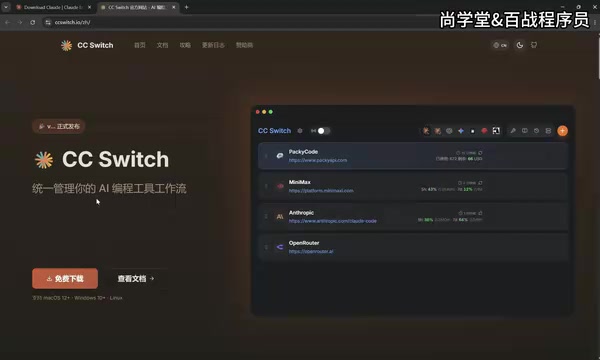
Claude Code Desktop Configuration Guide: Login-Free Setup + Chinese Localization + DeepSeek Integration
Complete guide to configuring Claude Code Desktop: login-free setup via Developer Mode, DeepSeek integration through CC Switch, Chinese localization, and custom Skill loading.
Read more →

·3 min
Hands-On Testing of DS4 Engine by Redis Creator: How Does DeepSeek V4 Perform Locally on a 128GB Mac?
Redis creator Antirez's DS4 inference engine tested: running DeepSeek V4 Flash locally on a 128GB Mac via asymmetric structure-aware quantization, with real-world coding benchmarks.
Read more →