#FTS5 vs vector search
50 related articles

·5 min
Loop Engineering Explained: The New Programming Paradigm Where AI Prompts Itself
Loop Engineering is a paradigm shift in AI usage. Learn how to build automated loops where agents explore, execute, and verify tasks autonomously, with a hands-on e-commerce case study.
Read more →

·2 min
A Beginner's Guide to Vibe Coding: Building Your Career Moat with AI Programming
A detailed guide to Vibe Coding with AI programming tools like Claude Code, Cursor, and Codex. Learn how to leverage AI-driven development to ship products independently and build lasting career value.
Read more →

·6 min
The CivitAI Early Access Controversy: Where Is the Boundary Between Open-Source Ethos and Commercialization?
CivitAI's paid "Early Access" mechanism has sparked heated debate on Reddit: should functional models stay locked behind paywalls long-term? An in-depth look at creator monetization, community consensus, and platform responsibility.
Read more →

·3 min
LoRA Fine-tuning or Prompt Engineering? Two Paths to Solving LLM Long-Conversation Memory
A developer fine-tunes a small model with LoRA to extract conversation state, tackling the LLM long-conversation memory problem. A deep dive into the technical approach, dataset design, and the real trade-offs between fine-tuning and prompt engineering.
Read more →
Kronos Financial Foundation Model: Usi…
·7 min
Kronos Financial Foundation Model: Using AI to Read the Market Language of Candlesticks
Kronos is the first open-source foundation model treating candlestick data as the "language of financial markets," using an autoregressive Transformer and earning 32K GitHub Stars. A deep dive into its principles, applications, and limits.
Read more →
·2 min
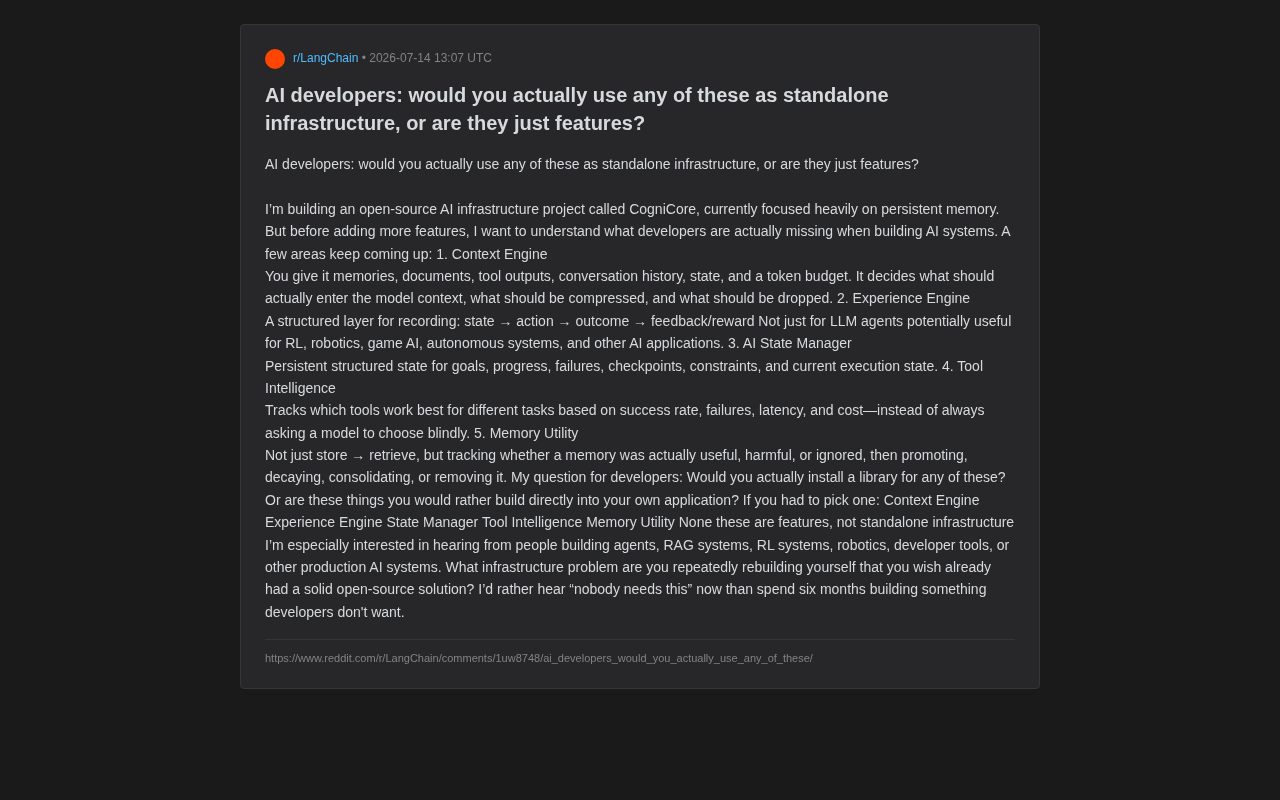
AI Infrastructure or App Feature? The Architecture Debate Sparked by CogniCore
CogniCore asks: should persistent memory, context engines, and state management be standalone AI infrastructure or in-app features? A deep dive into 5 key directions and the missing middleware of the agent era.
Read more →

·3 min
Coze for Beginners: A Complete Guide to Getting Started with the AI App Development Platform
Coze by ByteDance is an all-in-one AI app development platform for non-coders. Build AI agents with drag-and-drop — no programming needed. Complete beginner's guide.
Read more →
·3 min
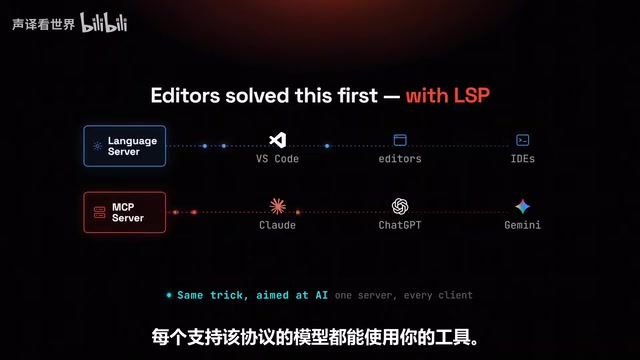
Build an MCP Server in 10 Minutes: Let AI Call Your Code Directly
MCP (Model Context Protocol) is the open standard for AI tool integration. Build your own MCP server with ~20 lines of Python. Learn tools, resources, prompts, and both local and remote deployment.
Read more →

·3 min
New Retrieval Paradigms: Hobbit's Hard Negative Construction and Disco's Collaborative Coverage Index Design
A deep dive into two frontier dense retrieval works: Hobbit uses gradient analysis to automatically construct hard batches; Disco replaces single-document competition with submodular collaborative coverage, reshaping Top-K retrieval.
Read more →

·3 min
iOS 27 In-Depth Review: Five Major New Features Tested and Analyzed
iOS 27 deep dive: AI photo Extend & Spatial Reframe, a rebuilt Siri with personal data access, 30%+ system-wide speed gains, and long-overdue quality-of-life fixes — all tested and explained.
Read more →
Continual Learning: The Overlooked Cor…
·3 min
Continual Learning: The Overlooked Core Bottleneck on the Road to AGI
Why is Continual Learning the biggest barrier to AGI? This deep dive covers catastrophic forgetting, real-world deployment challenges, and the Amodei vs. Dwarkesh debate on AGI pathways.
Read more →
Latent Reasoning: The Next-Generation …
·3 min
Latent Reasoning: The Next-Generation AI Reasoning Paradigm Beyond Chain of Thought
Is CoT really AI 'thinking'? This deep dive covers latent reasoning's rise — Coconut, HRM, BDH — and the core trade-offs between interpretability, efficiency, and governance in high-stakes AI.
Read more →

·5 min
The Definitive Guide to Claude Code: Core Methodology and Best Practices for Agentic Programming
A deep dive into Claude Code, the definitive course from DeepLearning.AI and Anthropic: from agentic principles and context optimization to three hands-on cases—RAG chatbot, Figma-to-frontend, and data analysis. Master AI-assisted coding methodology.
Read more →

·3 min
Enterprise AI Evaluation Tools: An In-Depth Comparison of Six Leading Platforms
An in-depth comparison of five AI evaluation tools—Arize, Braintrust, Confident AI, Langfuse, and LangSmith—across governance, framework lock-in, and evaluation vs. monitoring.
Read more →

·6 min
A Deep Dive into AI Agent Harnesses: The Core Engineering Behind Agent Frameworks
What is an AI Agent's harness? This article systematically dissects the core components of agent frameworks: context management, tool use, control loops, and caching strategies—revealing why the same model performs so differently across harnesses.
Read more →

·6 min
Home Self-Hosting Server Setup Guide: Building a Private Cloud Ecosystem from Scratch
One 32GB server, 8 hours to build a complete home self-hosting ecosystem. This article details the selection logic behind core services like Jellyfin, Forgejo, Immich, and Ollama, plus infrastructure setup essentials for Nginx Proxy Manager and Podman Compose.
Read more →
·7 min
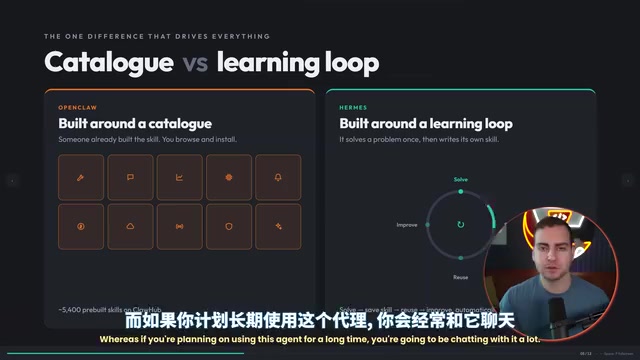
OpenClaw vs Hermes: An In-Depth Comparison and Selection Guide for AI Agent Tools
An in-depth comparison of OpenClaw and Hermes Agent, covering skill management, memory mechanisms, security, and gateway configuration to help you find the right AI agent solution.
Read more →

·5 min
Prismata Analysis: How to Defend Web Agents Against Cross-Site Prompt Injection Attacks
Cross-site prompt injection is becoming the trickiest security threat for Web agents. This article analyzes the Prismata project's 'confining defense' approach—controlling injection's blast radius via context isolation, permission boundaries, and trust grading.
Read more →

·6 min
Cursor Meets Grok 4.5: A Hands-On Test of an AI Coding Assistant That's 5x Faster with Cleaner Output
A developer deeply tests Grok 4.5 High Fast in Cursor, finding it rivals Claude Opus in quality but runs 5x faster with cleaner, filler-free output. Full hands-on review and analysis.
Read more →

·7 min
Krea2 Tested: Does the FP8 vs BF16 Quality Gap Still Exist?
A Reddit user compared FP8 and BF16 precision on the Krea2 model and found almost no difference in image quality. This article analyzes the technical reasons behind the shrinking quantization gap and its real-world impact on VRAM usage and inference speed.
Read more →