#Figma Make AI
204 related articles

·2 min
Firstpass: Preview How Your Copy Actually Appears Across Platforms Before You Hit Publish
Firstpass is a pre-launch copy preview tool that helps product teams visualize how taglines get truncated across Product Hunt, app stores, and other platforms before publishing.
Read more →

·2 min
RecipeBook: A New Paradigm for Buying AI Video Training Data by the Hour
RecipeBook is a video data marketplace with 25M+ clips, offering semantic search and preference learning, letting developers buy AI training data at $3/hour in a self-service, pay-as-you-go model.
Read more →

·2 min
RecipeBook: A New Paradigm for Buying AI Video Training Data by the Hour
RecipeBook is a video data marketplace with 25M+ clips, featuring semantic search and preference learning, letting developers buy AI training data at $3/hour in a self-service, pay-as-you-go experience.
Read more →

·3 min
Athena: One-Click AI Orchestrator Agent for Building Ready-to-Operate E-commerce Businesses
Shoplazza launches Athena, an AI orchestrator agent that topped Product Hunt. It covers the full e-commerce chain—store setup, product sourcing, logistics, and ad campaigns—enabling solo entrepreneurs to build truly operational cross-border businesses.
Read more →

·4 min
Banquish: A Mac Productivity Tool That Pins Live Web Fragments onto a Canvas
Banquish is a Mac app that clips live web fragments onto a free-form canvas, eliminating tab-switching hell. Combined with AI Agent automation, it creates personalized information dashboards.
Read more →

·5 min
Opus 5 Builds a No Man's Sky-Style Exploration Game in One Day: MCP and Sub-Agent Architecture Explained
A developer used Anthropic's Opus 5 model to build a No Man's Sky-style space exploration game in one day using Blender MCP and sub-agents. Deep dive into the technical architecture and industry implications.
Read more →
·4 min
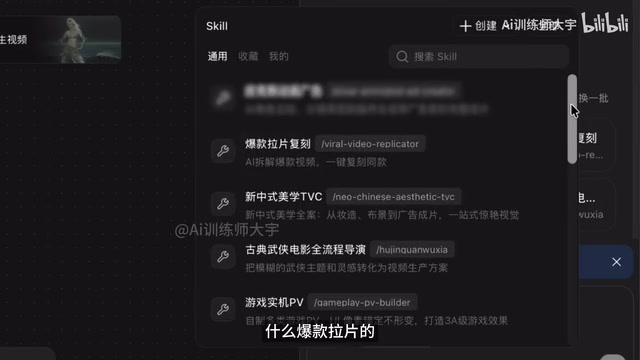
LibTV Hands-On: A Full Breakdown of How an AI Agent Produces an Animated Short in One Day
Hands-on test of LibTV's AI Agent: from script and storyboarding to video compositing, one person completes an animated short in a day. Full breakdown of the Skill library, node workflow, and Story Board features.
Read more →

·5 min
Getting Started with Codex: Four Product Forms Explained & How to Choose Between Cursor, Claude Code, and Codex
In-depth analysis of OpenAI Codex's four forms (CLI, web, plugin, app), comparing Codex, Claude Code, and Cursor on price, stability, and use cases to help developers choose the right tool.
Read more →

·2 min
Hands-On with the CodeWorld Plugin: An AI Photo-Editing Tool Where You Point and It Changes
CodeWorld is a Codex-native infinite canvas plugin that lets you edit photos directly by drawing annotated leader lines. In our test, editing three spots at once only changed the marked areas while preserving overall detail—beginner-friendly, one line to install.
Read more →

·4 min
Gemini API in Practice: Building AI Agents with Files
Google's official hands-on: how to go from idea to production fast with AI Studio and build AI Agents using the now-GA Interactions API. The core idea—Agents are just combinations of files.
Read more →

·5 min
Gemini API in Practice: Building AI Agents with Files
Official Google hands-on: go from idea to production fast with AI Studio, and build AI Agents with the now-GA Interactions API. The core idea: an Agent is just a composition of files—Markdown plus a few scripts, no complex Python loops needed.
Read more →

·4 min
Teaching AI to Have "Taste": Exploring Multi-Agent Design with Open-Source Skill Taste
Why does AI-generated UI all look the same? Designer SEN open-sourced a Skill called Taste that uses a four-agent pipeline to reverse-engineer website "taste" into verifiable design principles called Taste DNA.
Read more →

·3 min
GPT 5.6 Deep Dive Review: The Most Capable Model Yet — But Also the Most Confusing to Use?
GPT 5.6 brings major capability upgrades and new SOUL/TERRA/LUNA tiers — but also confusing entry points, hidden quota consumption, and a chat window crammed into a floating widget. A deep-dive review.
Read more →

·3 min
Codex in Action: A Complete Guide to Building a WeChat Mini Program with AI — No Coding Experience Required
A complete walkthrough of building and launching a WeChat Mini Program using OpenAI Codex and ChatGPT — from AI prototyping to ICP filing. MVP delivered in 5 days, no coding required.
Read more →

·2 min
Vibe Coding in Practice: From Idea to Real Product — No Coding Required
Vibe Coding is an AI-driven development paradigm that requires no coding skills. Use natural language to guide AI through design, development, and testing. Learn the 4-step workflow using Gemini, Figma Make, and Claude Code.
Read more →

·4 min
Vibe Coding in Practice: Ship an App from Idea to Live in 5 Steps with AI Tools
Use Google Stitch, AI Studio, AntiGravity, GitHub, and Vercel to go from idea to live app in 5 steps. A complete Vibe Coding walkthrough — minimal cost, no deep coding required.
Read more →
ChatGPT's Popup Interface: The Key Ste…
·3 min
ChatGPT's Popup Interface: The Key Step in AI's Shift from 'App' to 'Gateway'
ChatGPT is exploring a popup chat interface that makes AI "summon and dismiss." This article unpacks the product logic: reducing friction, capturing system-level gateways, and embedding AI into everyday workflows.
Read more →

·3 min
Intent-Driven Development: Claude Code's Evolving Paradigm and Practical Tips
Anthropic engineer Lydia and YK Sugi break down Claude Code's Intent-Driven Development paradigm, covering dynamic workflows, auto mode, sub-agent orchestration, and the evolving role of software engineers in the AI era.
Read more →
·3 min
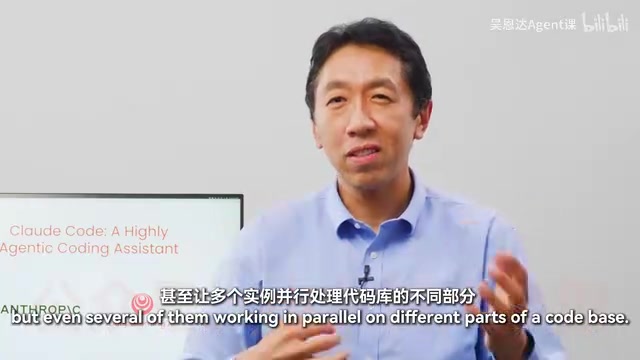
Andrew Ng × Anthropic: A Practical Guide to Claude Code and Its Core Methodology
Andrew Ng and Anthropic's Claude Code course covers RAG development, data analysis, and Figma-to-frontend projects, with deep dives into context management, MCP tools, and CLAUDE.md architecture.
Read more →

·2 min
How Designers Can Thrive in the AI Era: Build Fun, Hands-On Agents
AI agents are reshaping what designers do. A senior designer shares why understanding agent infrastructure is essential and how to learn by building fun projects.
Read more →