#GSM8K
274 related articles

·2 min
Anti-Surveillance Fashion: How Adversarial Examples Can Make Cameras Fail to Recognize You
Anti-surveillance fashion uses adversarial examples to fool facial recognition and person Re-ID systems. We break down the tech, real-world limits, and what it means for privacy in a surveillance society.
Read more →

·2 min
Training Just One Transformer Layer Can Match Full-Parameter RL Training?
A controversial study shows training just one Transformer layer can match full-parameter RL training. We analyze the technical principles, engineering value, and limitations of this approach.
Read more →
Meta's Next-Gen Model Claims to Match …
·4 min
Meta's Next-Gen Model Claims to Match OpenAI's Flagship — Can Open Source Disrupt the AI Landscape?
Meta's Chief AI Scientist claims its next-gen LLM matches OpenAI's flagship. We break down the strategic intent, open vs. closed source dynamics, and what this means for the AI industry.
Read more →

·7 min
Harness Engineering: Core Methodology and Practical Guide for Enterprise-Level AI Programming
Can AI really replace programmers? This article explains Harness Engineering principles and its three evolutionary stages, revealing real pain points of enterprise AI programming.
Read more →

·6 min
LangChain Open-Sources OpenWiki: Automatically Generate and Maintain AI-Readable Wikis for Your Codebase
LangChain open-sources OpenWiki, a tool that auto-generates and maintains AI-readable wiki documentation for codebases via a single command, powered by Git history and agents.md integration.
Read more →
·5 min
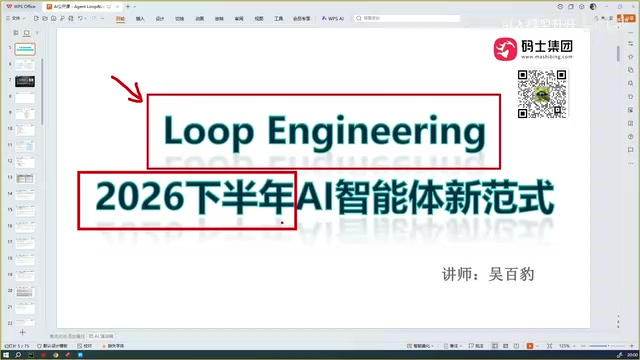
Loop Engineering: A Comprehensive Guide to AI Agent Loop Design
A deep dive into Loop Engineering for AI Agents — what loop feedback mechanisms are, how they differ from Harness Engineering, and a complete guide from principles to production implementation.
Read more →

·6 min
LangChain 1.0 Comprehensive Guide: Three Core Frameworks and Hands-On AI Application Development
Deep dive into LangChain 1.0's architecture: LangChain framework, LangGraph multi-Agent orchestration, and LangSmith observability platform, with hands-on RAG and intelligent customer service projects.
Read more →

·4 min
Enterprise AI Agent Development Guide: Multi-Task Recognition and Dynamic Tool Calling in Practice
A deep dive into AI Agent architecture and enterprise deployment. From LangChain and ReAct design to dynamic tool calling and multi-task recognition — build autonomous enterprise AI assistants.
Read more →

·4 min
How to Subscribe to Claude in China Without Getting Banned: Registration, Payment, and API Guide
How can users in China safely subscribe to Claude and avoid getting banned? This guide covers email selection, phone verification, payment channels, refund requests, and using the official API as a long-term alternative to personal subscriptions.
Read more →

·7 min
Claude Code Command Orchestration: One-Click Content Research and Auto-Publishing
Learn how to orchestrate Claude Code custom commands to chain content research and social media publishing agents into a fully automated workflow with one command.
Read more →

·7 min
Andrew Ng Teams Up with LangChain: Core Principles of LangGraph Agent Development
Andrew Ng and LangChain CEO Harrison Chase present AI Agents in LangGraph, covering five core agent design patterns and LangGraph's graph-based framework for building cyclical agentic workflows.
Read more →
·7 min
Andrew Ng Teams Up with LangChain: Core Concepts of LangGraph Agent Development
Andrew Ng and LangChain CEO Harrison Chase's AI Agents in LangGraph course covers five agent design patterns and LangGraph's graph-based framework for building cyclical AI workflows.
Read more →

·6 min
5 Critical Engineering Pitfalls in Enterprise RAG Knowledge Base Deployment: The Real Barriers from Demo to Production
Why do enterprise RAG knowledge bases dazzle in demos but fail in production? This article dissects five critical engineering pitfalls with real-world case studies from million-doc platforms and ops agents.
Read more →

·6 min
Codex Beginner's Guide: Four Product Forms Explained, Plus Comparison with Claude Code and Cursor
In-depth analysis of OpenAI Codex's four usage forms, comparing Codex, Claude Code, and Cursor across price, stability, and frontend/backend fit to help developers choose the right AI programming tool.
Read more →

·3 min
Building Your Own AI Studio: Full Automation from Code Generation to Deployment
A developer built Manifest Studio to automate the full pipeline from AI code generation to app deployment, using a Skill mechanism for one-sentence publishing.
Read more →

·3 min
Fixing the Three Big Weaknesses of LLMs: Knowledge, Computation, and Tool Use
LLMs struggle with knowledge accuracy, math, and external capabilities. This article explains three prompt engineering solutions — generated knowledge prompting, PAL/PoT, and tool use — to systematically strengthen LLM reliability and build better AI Agents.
Read more →

·7 min
AI Agent Development: A Four-Stage Competency Model from 15K to 40K RMB Salary Growth Path
A detailed four-stage competency model for AI Agent development: from Python/RAG basics (15K) to workflow orchestration (20K), inference optimization (30K), and Agent cluster governance (40K RMB).
Read more →

·7 min
Agent Loop Explained: The Core Runtime Mechanism and Think-Act Cycle of AI Agents
Deep dive into Agent Loop mechanics: the think-act cycle, how agents differ from LLMs, termination conditions, and design principles for building autonomous AI Agent systems.
Read more →

·7 min
AI Agent Code Execution Sandbox Selection Guide: In-Depth Comparison of E2B and Four Other Solutions
In-depth comparison of five AI Agent code execution sandbox solutions—E2B, Daytona, Modal, Cloudflare Sandbox, and Vercel Sandbox—across isolation, cold start latency, state management, and pricing.
Read more →

·7 min
AI Agent Practical Guide: The Complete Path from Building to Production Deployment
A deep dive into AI Agent architecture and engineering practices, covering tool design, ReAct execution patterns, Vercel deployment, and production considerations to bridge the prototype-to-production gap.
Read more →