#Gemma Qwen LLaMA code generation
43 related articles

·6 min
Hands-On with Qwen 3.8 Max: How an Open-Source Model Closes In on Top-Tier Closed Models
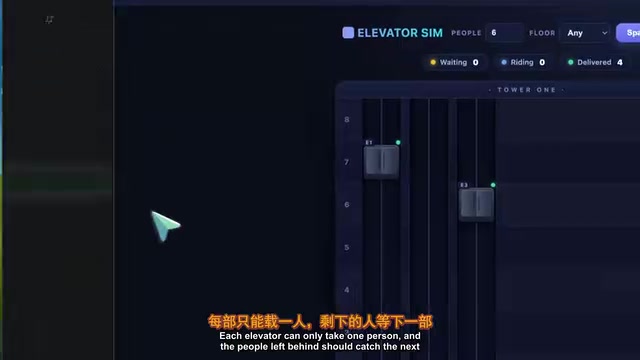
Qwen 3.8 Max has 2.4 trillion parameters and will be open-sourced. In KingBench testing it scored 81.25%, ranking second, beating Claude Opus 4.8 and trailing only Fable 5. A deep dive into its performance across 8 tests.
Read more →
·7 min
Qwen3 235B A22B in Practice: A 2.4-Trillion-Parameter Open Model Surpasses Claude Opus
Hands-on with Alibaba Tongyi Qianwen's strongest Qwen3: a 2.4-trillion-parameter open weight model scoring 81.25% on KingBench, ranking second and beating Claude Opus 4.8 with perfect scores in game dev, math, and agent tasks.
Read more →

·7 min
From Chat to Agent Platform: A Practical Guide to Engineering AI Applications
A deep dive into engineering AI applications: from a simple chat page to a multi-layer Agent platform, covering RAG knowledge bases, Workflow scheduling, multi-model management, and run tracing.
Read more →

·2 min
Agent A1 Open Source: 35B MoE Local Inference Speed Test & Deployment Guide
Agent A1 is a 35B MoE open-source model from Shanghai's Intern Science, activating only 3B params. Hits 95 tok/s on M4 Mac Studio. Supports 256K context, tool calling, and free local deployment via Ollama.
Read more →

·3 min
Zero-Cost VibeCoding: Complete Guide to Connecting Local Ollama Models to Codex
Step-by-step guide to running local open-source models (Qwen3/Gemma) with Ollama, connecting to Codex via CC Switch for zero-token AI coding. Works on a 6GB VRAM laptop.
Read more →

·4 min
DSpark Open Source: DeepSeek's Inference Acceleration Tech That Doubles LLM Speed
DeepSeek and Peking University open-source DSpark, an inference acceleration technology using semi-autoregressive architecture and dynamic scheduling to boost LLM speed by 50%+ and double GPU concurrency without quality loss.
Read more →

·2 min
Local Models & Open-Source Toolchains: How to Protect Data Sovereignty in the AI Era
Learn how local LLMs (Llama, Mistral, Qwen) and open-source toolchains protect your data sovereignty, reduce platform dependency, and give you full control over AI workflows.
Read more →

·4 min
Running Qwen3.6 27B Locally on a Single RTX 3090: A Complete Guide to Cloud-Rivaling Performance
One used RTX 3090, one 16.8GB GGUF file, and Qwen3.6 27B runs locally offline. SWE-bench score of 77 rivals Claude Sonnet. MTP boosts speed to 59 tok/s. Full local AI coding assistant deployment guide.
Read more →

·3 min
Ornith 1.0 9B Model Local Test: Tower Defense Game Exposes Small Model Coding Limitations
Hands-on test of Ornith 1.0 9B open model on a 16GB M4 Mac mini. A tower defense game task reveals the precision limits of small-parameter models vs 35B.
Read more →

·5 min
Advanced Machine Learning Reading List: How to Choose the Right Book Among These 4 Classics?
Torn between Géron, Chollet, and Raschka? This article breaks down 4 classic ML books for self-learners aiming at finetuning and small language models (SLM), helping you find the best advanced path.
Read more →

·4 min
AMD Ryzen AI Halo Hands-On: Can x86 Architecture Challenge NVIDIA's DGX Spark?
In-depth review of the AMD Ryzen AI Halo mini AI box: powered by the Ryzen AI Max Plus 395 (Strix Halo) chip with 128GB unified memory, priced at $4,000. Compared against NVIDIA's DGX Spark across token generation, prefill speed, and x86 advantages.
Read more →

·5 min
Why Did Ollama Rise So Fast? Decoding the Success of a Local LLM Tool
How did Ollama grow from a niche open-source project into developers' default choice for running local LLMs? This article breaks down its rise across product design, technical strategy, and ecosystem building.
Read more →

·5 min
DeepSeek Boosts Inference Speed by 85%: How Speculative Decoding Is Reshaping the AI Speed Race
DeepSeek and Peking University's DS Spark paper boosts AI inference speed by up to 85% via confidence scheduling and semi-autoregressive speculative decoding — no model or GPU changes.
Read more →

·4 min
Complete Guide to Dify Local Deployment: Build a Private AI Workflow Platform from Scratch
Step-by-step guide to deploying Dify locally: Docker setup, Docker Compose installation, source code configuration, .env file setup, and container startup for Windows, macOS, and Linux.
Read more →

·7 min
Flagship Model vs. Local 27B: Which Follows Code Instructions More Faithfully?
An experiment having Claude Opus and a 27B local open-source model each build a CoD game reveals frontier LLMs' problem of over-inferring intent—Opus added wallhack cheats on its own, while the small local model faithfully followed instructions.
Read more →

·6 min
Dify Local Deployment in Practice: A Complete Guide to Building an AI Application Platform with Docker
A complete guide to Dify local deployment: from Docker environment setup, source code pulling, and container startup to first access. Build a private AI app development platform across Linux, Windows, and Mac for fast enterprise AI deployment.
Read more →

·3 min
16GB VRAM Showdown: Ornith 35B vs Qwen 35B — Full Benchmark Comparison
Ornith 35B vs Qwen 3.6 35B on 16GB VRAM: 24+ hours of benchmarks covering inference speed, 256K context, tool calling, HumanEval, and real coding challenges.
Read more →

·7 min
Rowboat: An Open-Source, Local-First Alternative to Claude Desktop
Rowboat is an open-source, local-first AI desktop client positioned as a Claude Desktop alternative. Local data storage and fully transparent code help developers control privacy and workflows.
Read more →
·7 min
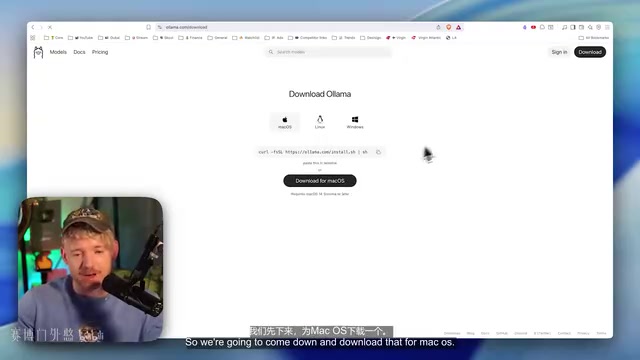
Ollama + Hermes Local AI Deployment: Building a 100% Private Personal AI Operating System
Build a fully private local AI system with Ollama + Hermes: zero cost, no rate limits, data stays local. Learn deployment steps, model selection tips, and private/cloud hybrid workflows.
Read more →

·2 min
Unsloth v0.1.45 Released: Gemma 4 MTP Acceleration, Cross-Platform Fixes, and Studio Upgrades
Unsloth v0.1.45-beta adds Gemma 4 MTP support, AMD ROCm & NVIDIA Blackwell fixes, a new Hub download manager, and a compact RAG system for local LLM fine-tuning.
Read more →